
Every spring, I catch myself doing the same thing: tidying up winter boots while a child somewhere behind me is hopping through the hallway with a stuffed bunny, narrating a very serious mission to “find the eggs.” And that is exactly why I love a springtime story basket. It takes that natural pretend play energy and gently hooks it to a book, so stories stop feeling like something we only read and start feeling like something we can do together.
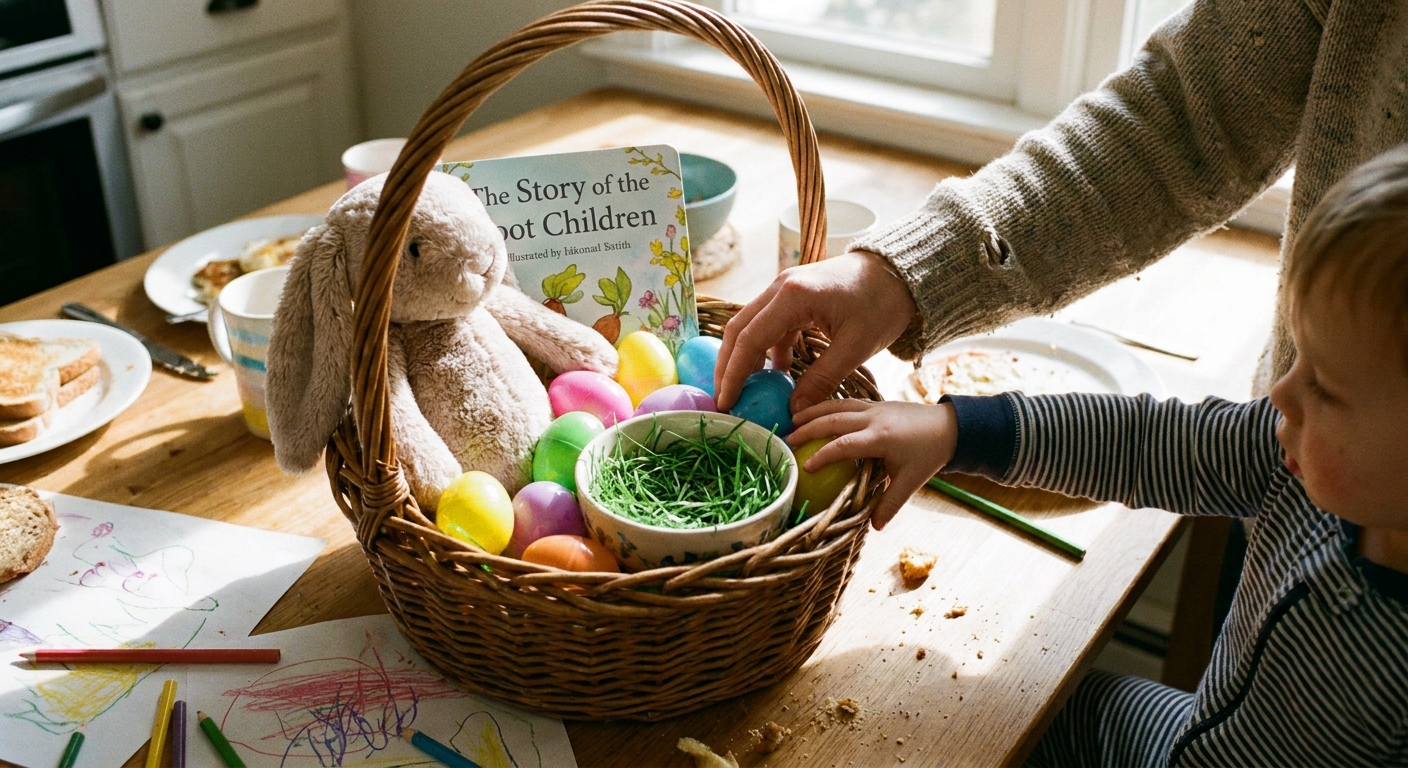
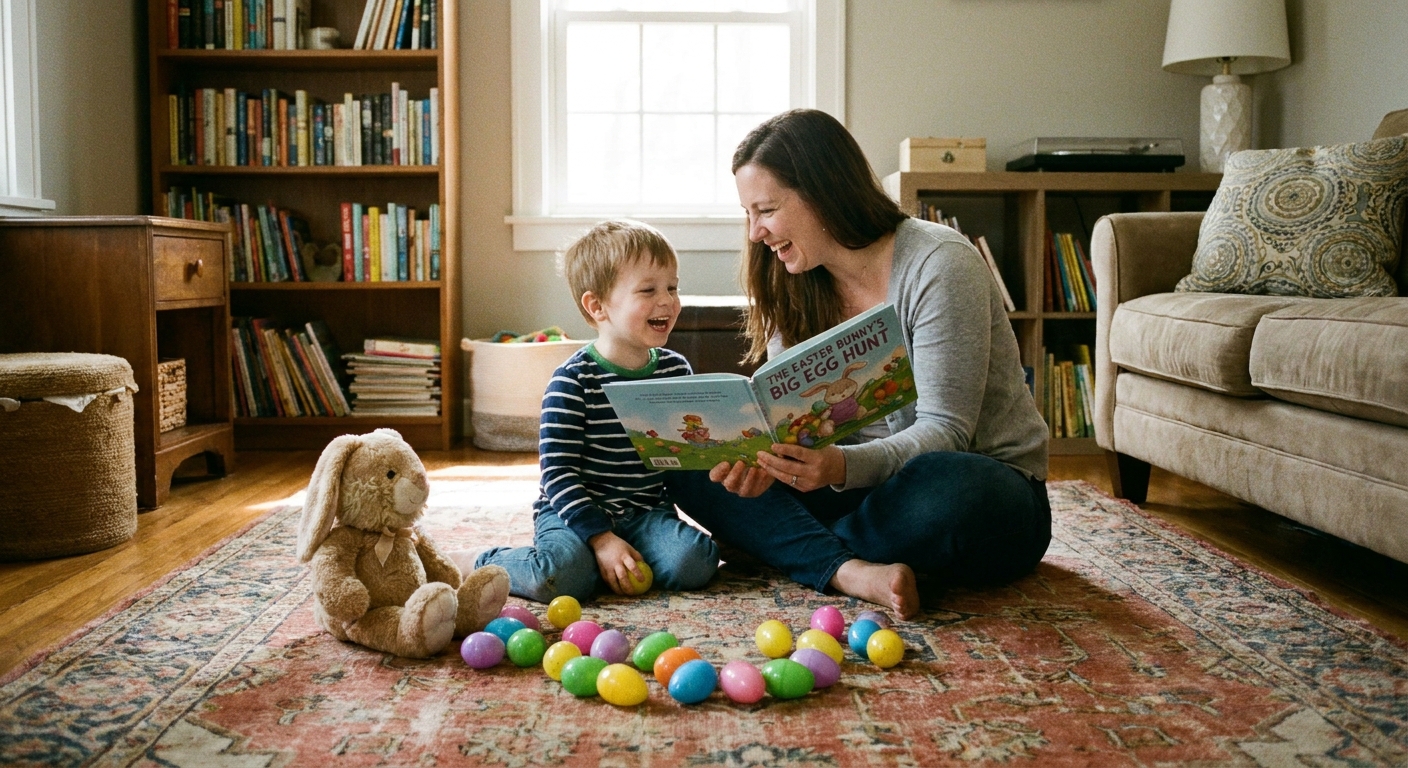
A story basket is simply a small basket (or bin, or tote bag) filled with a few tactile props that match the themes in your favorite spring and Easter books. You bring it out during storytime, and as you read, your child can hold, move, and act out parts of the tale. It is cozy and interactive, which is my favorite kind of family activity.
Why story baskets work in spring
Spring stories are full of sensory-friendly ideas: soft animals, bright colors, little surprises hidden inside eggs, and nature waking up. When kids can touch something while they listen, it can support:
- Longer attention spans during read-aloud time, especially for toddlers and wiggly preschoolers
- Language practice as they narrate what the bunny is doing or count eggs out loud
- Calmer bodies through repetitive actions like placing eggs in a nest
- More confident storytelling when kids retell the book later using the same props
Also, from a practical parent standpoint: a story basket keeps the props contained. One basket in a closet is better than “random plastic eggs in every room until July.”
Pick your basket and set the stage
Choosing the container
Use whatever you already have. My rule is: if a child can carry it proudly from the shelf to the couch, it is the right size. And yes, bins count as baskets in my house.
- A small woven basket
- A fabric storage bin
- A shoebox with the lid off
- A reusable tote bag
Make a reading spot feel special
You do not need a Pinterest setup. Two simple touches go a long way:
- Lay down a small blanket or towel as the “meadow.”
- Dim the room slightly or switch on a lamp for that cozy, storytime glow.
Then place the basket right next to you on the blanket (not in the middle of the room). It sounds obvious, but this one tiny choice cuts down on the “dump everything out and sprint away” impulse.
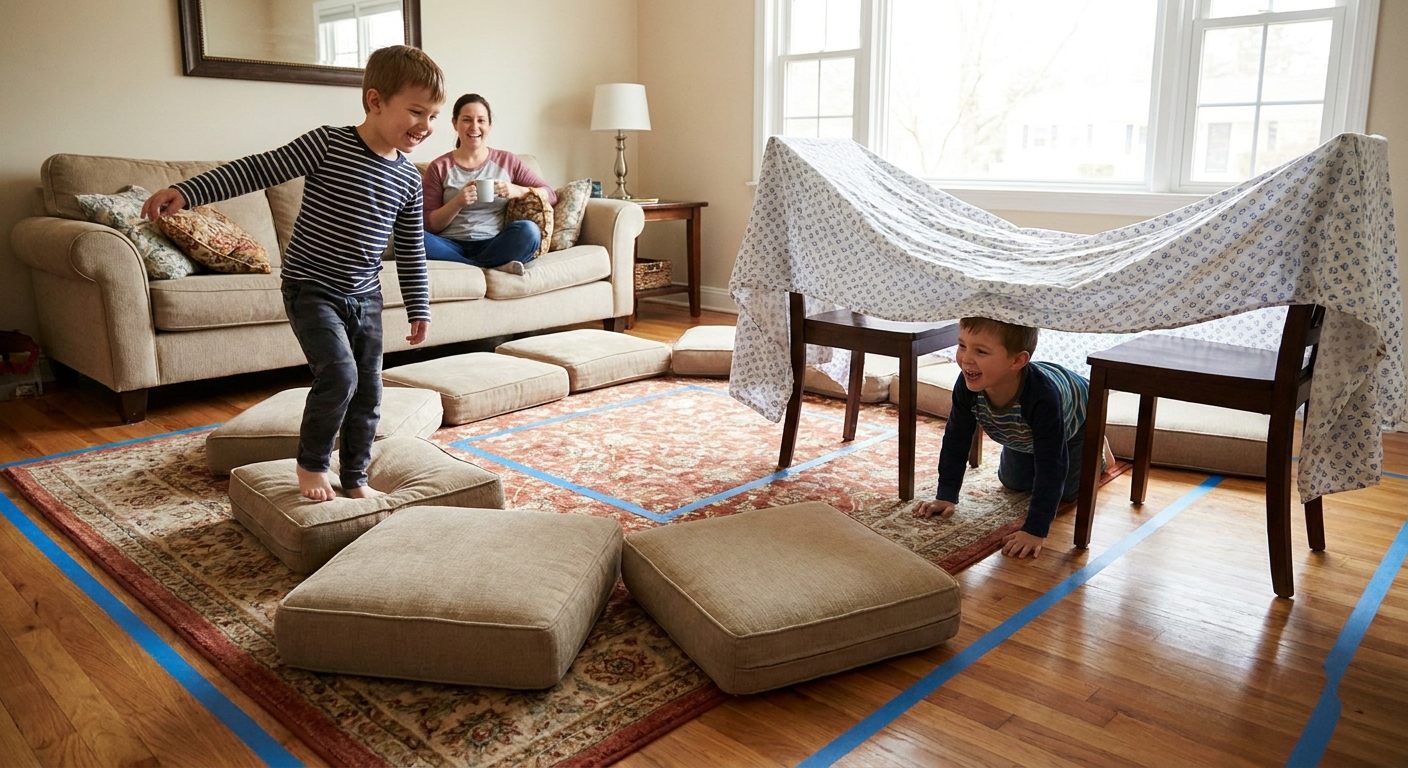
If your crew loves building nests and forts, pair this with our cozy reading nook idea: Cozy DIY Reading Fort for Family Story Time.
Choose books that match the props
You do not need a huge stack. One to three books is plenty. What helps most is picking books that give your props a clear “job.”
- For babies and young toddlers: board books with simple pictures, a repeated phrase, or one main character (bunny, chick, lamb).
- For toddlers: shorter picture books with a clear action loop (hide, hop, find, open).
- For preschoolers: a story with a beginning-middle-end so they can retell it using the basket later.
- Familiar is your friend: if the book is brand-new, kids often want to just look. If the story is familiar, they are more likely to act it out.
What to put inside: the core set
Think of your basket like a little cast of characters and a few reusable scene pieces. You can keep it simple and still get lots of storytelling mileage.
Must-have props
- Plush bunny (one small enough to “hop” across the pages)
- Plastic eggs (6 to 12 is plenty)
- “Grass” you feel good about (more on that below)
- A small bowl or basket within the basket for collecting eggs
- A chick, lamb, or duck figure or plush (optional, but kids love variety)
Sensory grass options (the not-so-scratchy kind)
Traditional plastic Easter grass can be poky, staticky, and not my favorite when you have little ones who still mouth things. Here are kinder swaps:
- Green yarn snips: Cut yarn into 2 to 3 inch pieces and fluff them up in a bowl. (Skip yarn for babies and kids who mouth, and avoid long strands.)
- Green tissue paper strips: Tear or cut into wide ribbons for a crinkly texture.
- Ribbon scraps: Soft and re-usable, especially if you already collect craft bits like I do. (Keep pieces short and supervised.)
- Felt strips: Cozy, quiet, and toddler-friendly.
If your child loves soothing sound-and-touch activities, you can also add a simple homemade instrument for “spring rain.” This is a sweet add-on: Calming Sensory Rainstick From a Paper Towel Tube.
Add-ons for Easter and spring stories
Different families read different kinds of Easter books. Some are faith-based, some are bunny-and-egg adventures, and some are simply springtime nature stories. A good story basket can flex for all of them.
For egg hunt stories
- A simple paper “map” (just a blank page your child scribbles on)
- Painter’s tape (to mark a pretend path on the floor, then peel up easily)
- A small flashlight for “searching” under the couch
For gentle retellings and classic Easter narratives
- A small piece of white or gold fabric to use as a “special cloth” in the story
- Wooden people peg dolls (plain is perfect, kids will assign roles)
- A smooth stone to represent a “doorway stone” that can be moved aside
Keep it respectful and age-appropriate for your family. With little kids, I focus on themes they truly understand: love, kindness, hope, helping, and new beginnings.
For spring nature books
- Silk flowers or faux greenery
- A small pinecone or a smooth rock
- A bird feather (store-bought is fine, no need to collect outside)
- A magnifying glass for “looking closely” at pictures
Set it up in 10 minutes
Here is the no-fuss method I use when I want this to happen today, not someday.
- Choose 1 to 3 books that fit your spring or Easter theme.
- Pick 5 to 8 props total. Fewer is better for toddlers.
- Make one “home base” inside the basket: a small bowl, cup, or mini basket where eggs get collected.
- Add one sensory layer (yarn grass, tissue strips, felt).
- Park the basket next to you on the blanket, and keep the lid (or a small towel) nearby if you want a quick “close it up” reset.
- Do a 30-second preview: flip through the book and decide where the props come in. You do not need a script, just a sense of timing.
That is it. You are ready for a story.
How to use it during read-aloud
If I dump all the props out at the beginning, the story disappears into a bunny parade. So I use a simple rhythm:
One prop at a time
- Keep everything in the basket at first.
- When the bunny appears in the book, hand over the bunny.
- When the eggs appear, add only 2 or 3 eggs at first.
- Swap or rotate props as the story changes scenes.
Gentle prompts
- “Where should the bunny hop next?”
- “Can you hide an egg near the book?”
- “What do you think is inside this egg?”
- “Can you show me ‘quiet feet’ for sneaky searching?”
And if your child ignores the book and makes the bunny eat the eggs, that is still storytelling. Just narrate it like it was the plan.
Three simple story scripts
You do not need to perform. These are just little patterns that help kids retell a story even if you are reading a book you have never seen before.
1) Hide and find
Hide 3 eggs in the sensory grass. As you read, pause and let your child find an egg whenever the story mentions searching, looking, or finding.
2) Build a nest
Use grass, ribbon, or felt strips to make a nest on the blanket. Every time the story shows something being gathered or prepared, add one item to the nest.
3) Hop, stop, listen
Move the bunny while you read. When you reach a page turn, say, “Hop, hop, hop… stop.” Your child freezes the bunny, you read the next page, and then the bunny continues.
If your kids love freeze games, you might also enjoy: Educational Family Freeze Dance Party.
Make it work for different ages
Babies (yes, really)
For babies, a story basket is mostly a touch basket. Keep it extra simple:
- One soft bunny
- One fabric egg (or a plastic egg that stays in your hand)
- One scarf or ribbon for peekaboo (short, supervised, and put away when you are done)
Read a short board book, sing a gentle springtime tune, and let baby explore textures with close supervision.
Toddlers
Toddlers thrive with repetition and clear boundaries:
- Offer 3 to 5 props total
- Use a small “egg basket” to practice putting in and taking out
- Add simple words: “hop,” “hide,” “open,” “in,” “out”
Preschool and early elementary
Older kids can handle more characters and love being the storyteller:
- Add a second bunny or a chick sidekick
- Put tiny story prompts inside eggs (simple drawings on paper)
- Invite them to retell the book to a sibling
If your family likes turning stories into playful performances, you can also try a shadow version later on: Nursery Rhyme Shadow Puppet Show at Home.
Safety and sanity
- Mind small parts: Plastic eggs, tiny figures, and shredded grass can be choking hazards for babies and young toddlers. Use only what is age-appropriate and supervise closely.
- Watch strings and strips: Yarn and ribbon should be kept short (think a few inches, not long strands), and they are not a great choice for babies or kids who mouth items.
- Skip food items in eggs: Candy melts, crumbs attract bugs, and it is harder to keep the basket as a clean, anytime activity. If you want surprises, use stickers or a tiny pom-pom instead.
- Store it with a lid: A simple lidded bin keeps the sensory filler from migrating all over your house. If you are using a basket, a towel laid over the top works surprisingly well.
Reset and store (fast)
This is my “save future me” routine. It takes one minute, and it keeps the basket ready for the next day.
- Sing a tiny tidy-up chant while items go back in: “Eggs in, eggs in, bunny too. Close it up, we’re all through.”
- Let your child do the last step (placing the bunny on top or “tucking in” the grass). Ownership is magic.
- Put the basket away in the same spot every time so it stays special, not scattered.
If transition songs work well in your house, you might also like: 8 Transition Songs for Tidy-Up Time.
Keep it fresh all season
I like a basket that lasts from “first warm day” all the way to the week after Easter. Here are easy swaps that use the same core pieces:
- March: add a paper flower, a “rain cloud” cotton ball, and your rainstick
- Easter week: add more eggs and a tiny basket for sorting by color
- After Easter: remove half the eggs and turn it into a spring nature basket with flowers and a magnifier
And if your child loves hands-on storytelling props year-round, this is another favorite in our house: Nursery Rhyme Story Stones.
One sweet closing ritual
When storytime ends, I like to tuck one egg back into the grass and say, “Let’s save one last egg for tomorrow’s story.” It gives kids a tiny sense of continuity, and it makes the next read-aloud feel like a sequel.
Spring is already full of little miracles. A story basket just helps us slow down long enough to notice them, right there on the living room rug with a bunny in our hands.