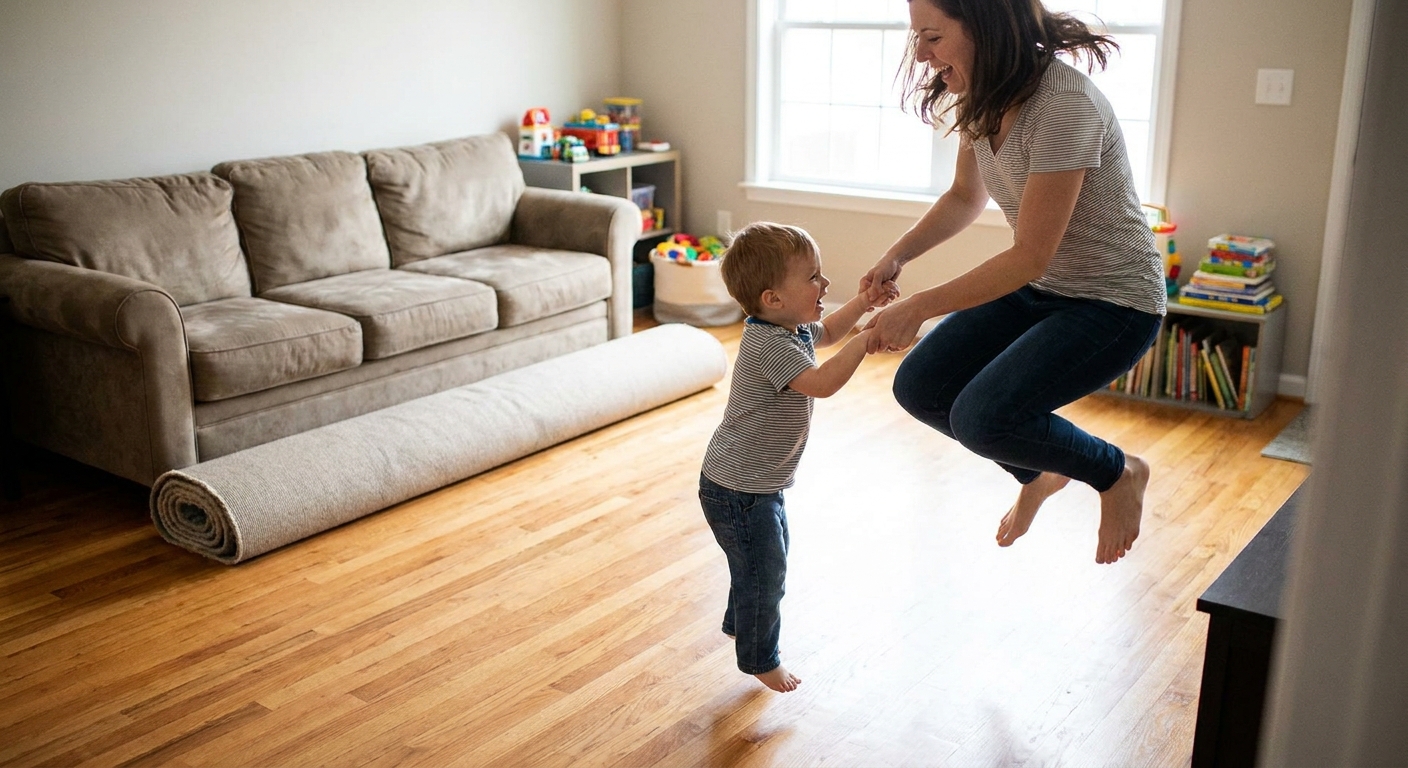

One rainy Saturday, I told my kids we were doing a “two-song tidy up.” Somehow that turned into freeze dance in the hallway, which turned into my youngest roaring like a lion every time the music stopped. By the end, the floor was cleaner, everyone was laughing, and I realized something: freeze dance is already a little lesson in listening, self-control, and pattern spotting. With a few tiny tweaks, it becomes a full-on learning game that still feels like pure, glorious chaos.
This guide walks you through hosting an educational family freeze dance party using musical cues, sudden changes, and specific animal movements. You bring the music. I will bring the cues and the kid-tested tricks.
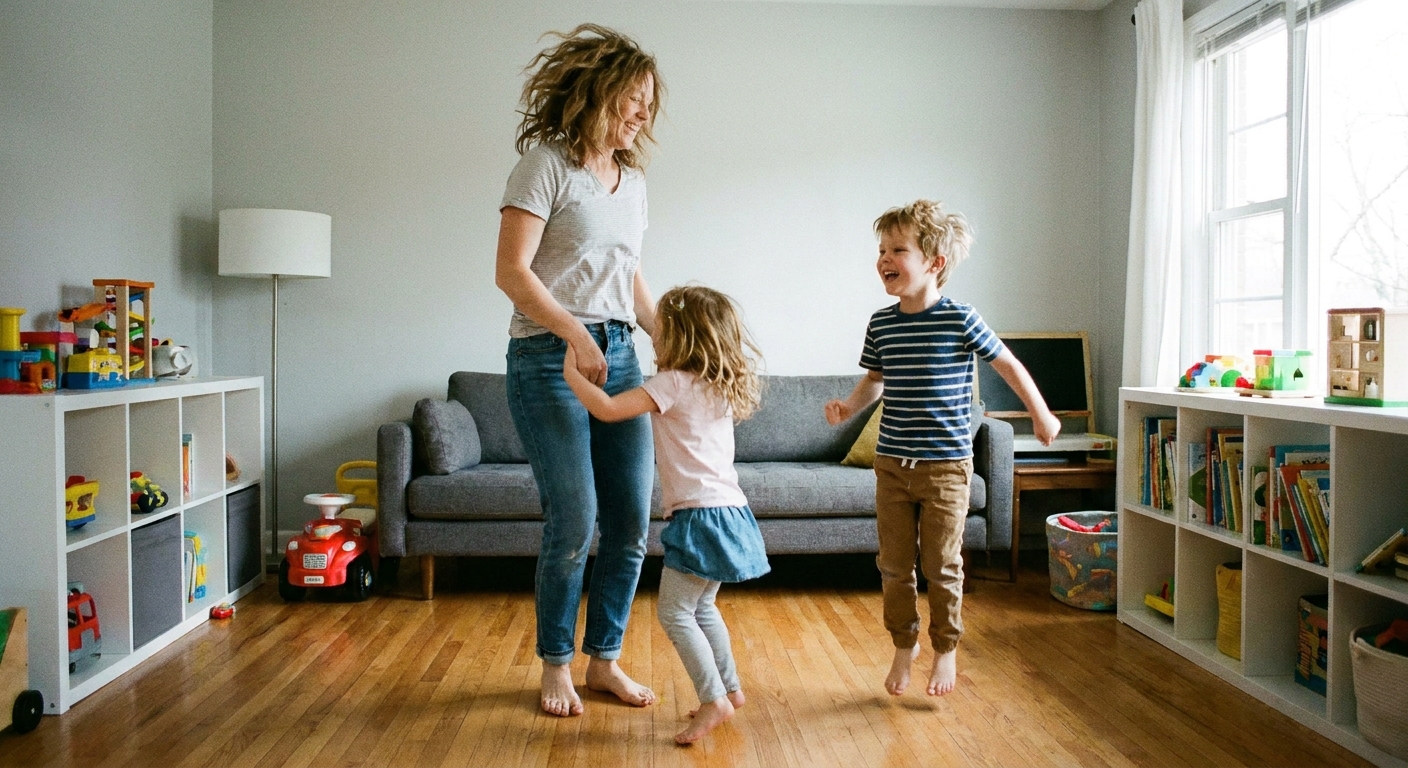
What makes freeze dance educational
Freeze dance works because kids practice switching between two big jobs: move, then stop. That simple switch can quietly support skills that show up in everyday life.
- Listening and attention: Kids tune in for the stop, start, and cue words.
- Impulse control: Freezing is kid-friendly self-regulation practice.
- Memory and sequencing: Remembering “Do cheetah, then turtle” is a gentle working-memory challenge.
- Rhythm and tempo awareness: Fast, slow, and sudden changes help kids notice what music is doing.
- Gross motor skills: Jumping, balancing, crawling, tiptoeing, marching.
- Vocabulary and science facts: Animal names, habitats, how animals move.
If you want more movement songs for the same age range, you might also like High-Energy Nursery Rhymes for Gross Motor Skills.
Quick setup (10 minutes or less)
Space
- Clear a “dance zone” about the size of a small rug. Move lamps, coffee tables, and tripping hazards.
- Pick a boundary kids can see. Painter’s tape, a blanket edge, or “stay on the rug.”
- Choose a freeze-safe surface. Socks on slick floors can turn into accidental skating.
Sound
- Any speaker works. If your speaker gets loud, keep volume at “excited conversation” level.
- If you have neighbors below you, choose low-stomp moves like tiptoes and wiggles.
Music (simple picks that work)
- Clear beat: Anything with an obvious pulse makes it easier to start and stop together.
- Mix of fast and slow: You want contrast so kids can feel the difference in their bodies.
- Instrumental is your friend: It is often easier to talk over when you are calling cues.
Props (optional but delightful)
- A scarf or ribbon wand for “float like a jellyfish.” You can make your own using our DIY sensory ribbon wands.
- Homemade shakers for a “shake cue.” Try DIY shakers and rhythm sticks.
- Paper plate animal masks if your crew loves pretending. See 10 easy paper plate animal masks.
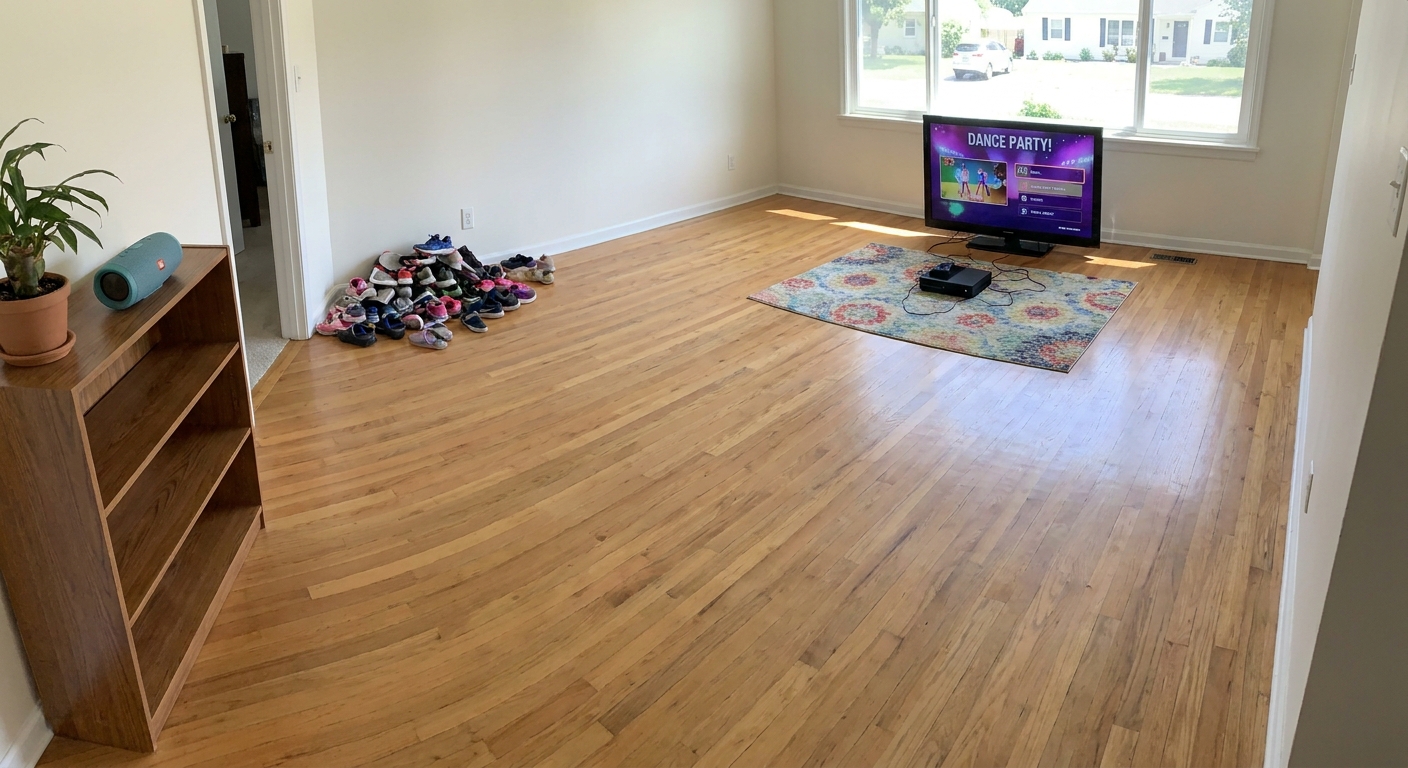
The simple party plan (45 minutes)
Here is a plan that works for mixed ages without feeling over-planned.
1) Warm-up (5 minutes)
Pick one easy song and do big, friendly motions: reach high, reach low, march, gentle spins. Then practice one freeze together.
- Say: “When the music stops, our bodies turn into statues.”
- Do a silly practice freeze: “Freeze like you are holding a giant ice cream cone!”
2) Skill round: Tempo changes (10 minutes)
This is where tempo becomes the teacher. Your job is to help kids notice fast versus slow.
- Fast music: cheetah run in place, rabbit hops, hummingbird flutters.
- Slow music: turtle crawl, sloth stretch, elephant steps.
- Tempo switch: jump from a fast song to a slow one (or the other way around) so they feel the change right away.
Learning tip: name the tempo out loud. “This one feels fast. Now it feels slow.” Kids absorb those words through their bodies.
3) Listening round: Sound changes (10 minutes)
This round is not about tempo, it is about listening for changes in the sound.
- Volume cue: “When it gets quiet, tiptoe.”
- Instrument cue: “When you hear a drum beat, stomp like a dinosaur.”
- Stop and start: Random pauses build attention and control.
4) Learning round: Animal cues (10 minutes)
You call out an animal movement. They dance like that animal until the freeze. On each freeze, add a quick fact or question.
- “Dance like a penguin.” Freeze. “Do penguins live where it is hot or cold?”
- “Dance like a frog.” Freeze. “Show me a frog jump. Is it big or small?”
- “Dance like a snake.” Freeze. “Snakes have legs or no legs?”
5) Challenge round: Patterns and memory (10 minutes)
Now you stack cues in a pattern.
- AB pattern: “Lion, butterfly, lion, butterfly.”
- ABC pattern: “Crab, owl, horse, crab, owl, horse.”
- Memory ladder: “Dog.” Freeze. “Dog, cat.” Freeze. “Dog, cat, duck.”
If you want more pattern-friendly music ideas for young kids, peek at Counting and Alphabet Songs Beyond the ABCs.
6) Cool-down (5 minutes)
End with slow sways, deep breaths, and a “melt” game.
- “Freeze like an ice cube.” Then: “Melt slowly into a crouch.”
- If you have a rug or yoga mat, you can also “melt” all the way down safely.
My favorite educational cue types
Think of cues as tiny learning prompts that keep the game moving. Here are the ones I use most often.
Musical cues (listen for the change)
- Volume cue: “When it gets quiet, tiptoe.”
- Instrument cue: “When you hear a drum beat, stomp like a dinosaur.”
- Stop and start: Random pauses build attention and control.
Tempo cues (fast and slow on purpose)
- Fast: Cheetah, mouse, hummingbird.
- Medium: Horse trot, puppy prance, marching band.
- Slow: Turtle, sloth, bear waking up, growing like a tree.
Animal movement cues (body + imagination)
- Hop: bunny, kangaroo, frog.
- Waddle: penguin, duck.
- Stomp: elephant, dinosaur.
- Scuttle sideways: crab.
- Slither: snake (hands on the floor only if that is safe for your space).
- Fly: butterfly, bat, eagle (arms only, no jumping required).
Learning question cues (10 seconds, then back to dancing)
Keep these quick so the party stays a party.
- Count it: “Freeze. Do 3 penguin waddles.”
- Opposites: “Freeze. Show me big bear. Now tiny bear.”
- Colors: “Freeze. Find something blue and point.”
- Habitats: “Freeze. Ocean animal or farm animal?”
- Beginning sounds: “Freeze. ‘Lion’ starts with L. Can you think of another L word?”
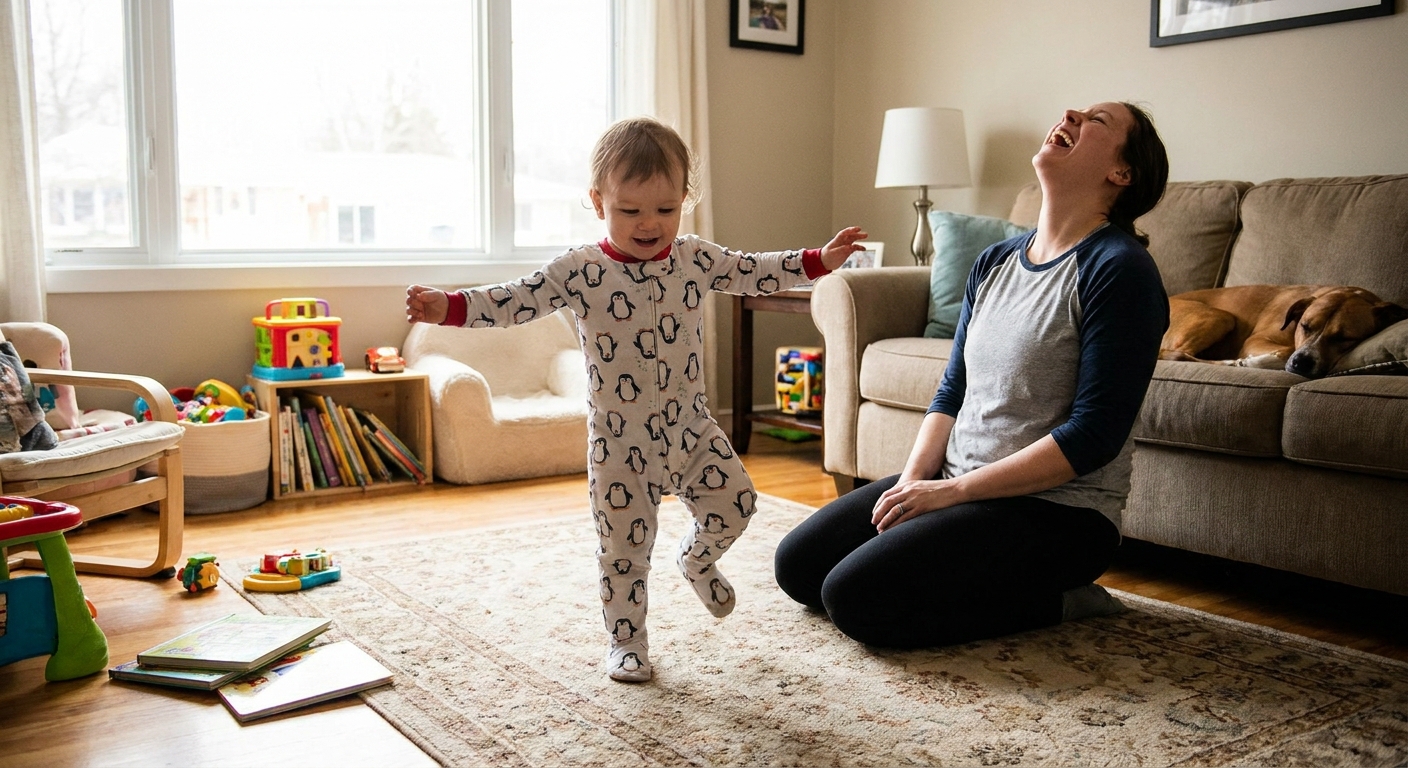
Animal moves with mini lessons (ready-to-call list)
If you want something you can use immediately, try this set. Call the move, dance for 20 to 40 seconds, then freeze and do the mini lesson.
- Owl: flap slowly, then freeze and turn your head side to side. Mini lesson: “Many owls are awake at night. That is called nocturnal.”
- Crab: side steps. Mini lesson: “Show me left. Show me right.”
- Frog: squat and hop. Mini lesson: “Frogs start life as tadpoles.”
- Elephant: heavy steps with a pretend trunk. Mini lesson: “Big or small steps? Which is bigger?”
- Bee: tiny quick steps, hands buzzing. Mini lesson: “Bees help plants by moving pollen.”
- Snake: wiggle arms and body. Mini lesson: “Snakes are reptiles. Reptiles have scales or scutes.”
- Horse: trot. Mini lesson: “Make a pattern: trot, trot, stomp. Repeat.”
- Jellyfish: float and sway. Mini lesson: “Ocean animal. Can you name another ocean animal?”
If your family loves animal-themed music, you can pair this with ideas from 10 Animal Nursery Rhymes for Early Speech.
Make it work for different ages
Toddlers (ages 1 to 3)
- Short rounds. 15 to 30 seconds of dancing is plenty.
- Use just two animal moves at first. Bunny and turtle is a great fast and slow pair.
- Freeze option: “Hands on head and stop” is easier than a full-body statue.
- Let them hold a scarf for sensory comfort.
Preschoolers (ages 3 to 5)
- Add simple patterns: ABAB, then ABC.
- Try “Freeze and count to 5 quietly.”
- Give them the caller role for one song. Kids love being the one to yell “FREEZE!”
Early elementary (ages 6 to 8)
- Add challenges: “Freeze on one foot,” “Freeze in a triangle shape,” “Freeze as a group statue.”
- Introduce vocabulary: tempo, rhythm, pause, loud, soft.
- Let them invent a new animal move and teach it to everyone.
Mobility and sensory variations
- Seated version: Do the whole game in a chair or on the couch with arms, shoulders, and facial expressions. Freezing still counts.
- Quieter version: Lower volume, skip stomps, and use a predictable pattern (dance for 20 seconds, freeze for 5) if sudden stops feel stressful.
- Choice helps: Offer two moves and let your child pick, especially if they are easily overwhelmed.
Mixed ages (my everyday reality)
- Use “levels”: little kids do the basic move, big kids add a twist. Example: everyone waddles like penguins, big kids waddle backward.
- Pair siblings: one calls, one dances, then switch.
- Keep the win condition simple: nobody is “out.” We are all just practicing freezing.
Party themes that add learning
Zoo to ocean
Start with land animals, then switch to sea creatures and flying animals. On each freeze, ask “Where does it live?”
Fast and slow safari
Alternate cheetah and turtle, rabbit and sloth, hummingbird and elephant. Your whole party becomes a tempo lesson.
Story dance
This one is my favorite when kids want a plot. You narrate as they dance.
- “We are explorers walking through tall grass.”
- Freeze. “We spot a lion.”
- “Now we sneak past like mice.”
- Freeze. “A river. Become fish.”
If storytelling is your family’s love language, you might enjoy making props ahead of time with Make a Paper Song Scene.
Safety and sanity tips
- Establish one rule: “Feet stay on the floor.” It prevents furniture leaps.
- Use a freeze signal: Music off is great, but also add a hand in the air so kids across the room can see it.
- Hydration break: After two or three songs, pause for water.
- Keep it cooperative: If someone forgets to freeze, just say, “Great dancing. Try the next freeze.”
- Gentle on joints: Swap jumping for marching if anyone is getting wild or tired.
- Floor check: If you are on hardwood, consider bare feet or grippy socks, and do any “melt” moves on a rug or mat.
FAQ
How long should a freeze dance party be?
For most families, 30 to 60 minutes is the sweet spot. If you have toddlers, you might do 15 minutes, take a snack break, then come back for another 10.
Do I need special kid music?
Nope. Any songs your family enjoys can work. What matters is that you can pause and restart easily, and you have a mix of fast and slow tracks.
What if my child melts down when the music stops?
Make the freeze softer: “Hands on belly, take one breath.” Or let them be the one to press pause for a round so they feel in control.
Can this work in a small apartment?
Yes. Shrink the movements: finger dance, shoulder shimmies, tiptoes, and seated freezes on a couch cushion. The learning part still happens.
A sweet way to end
When you are ready to wrap up, do one final “family statue.” Everyone freezes in a group pose, then you count down together: 5…4…3…2…1… and flop onto the rug laughing.
That is my favorite kind of learning. The kind that looks like play, sounds like giggles, and leaves a little more connection on the floor than mess.
If you want another low-prep family activity for a wiggly day, our Indoor Obstacle Course From Classic Kids Books is a wonderful next stop.