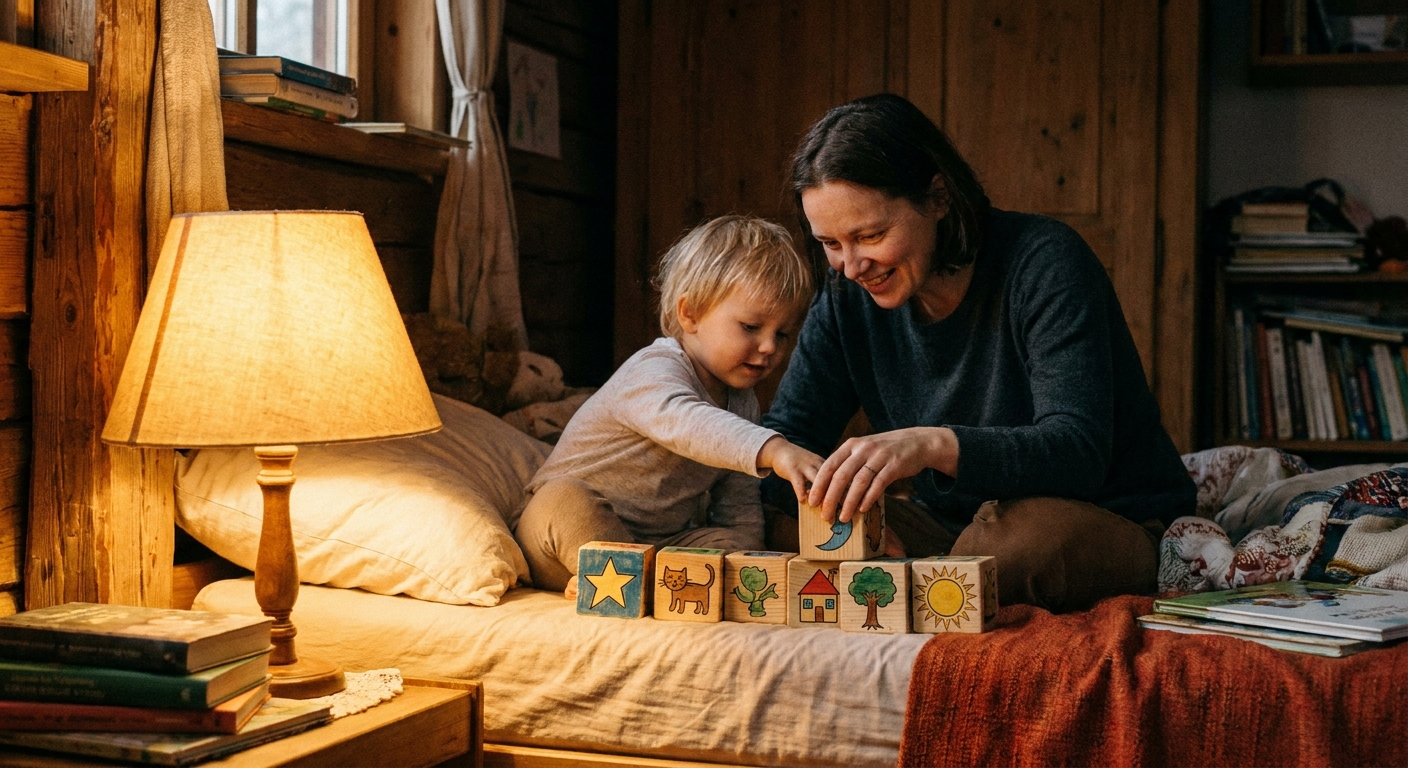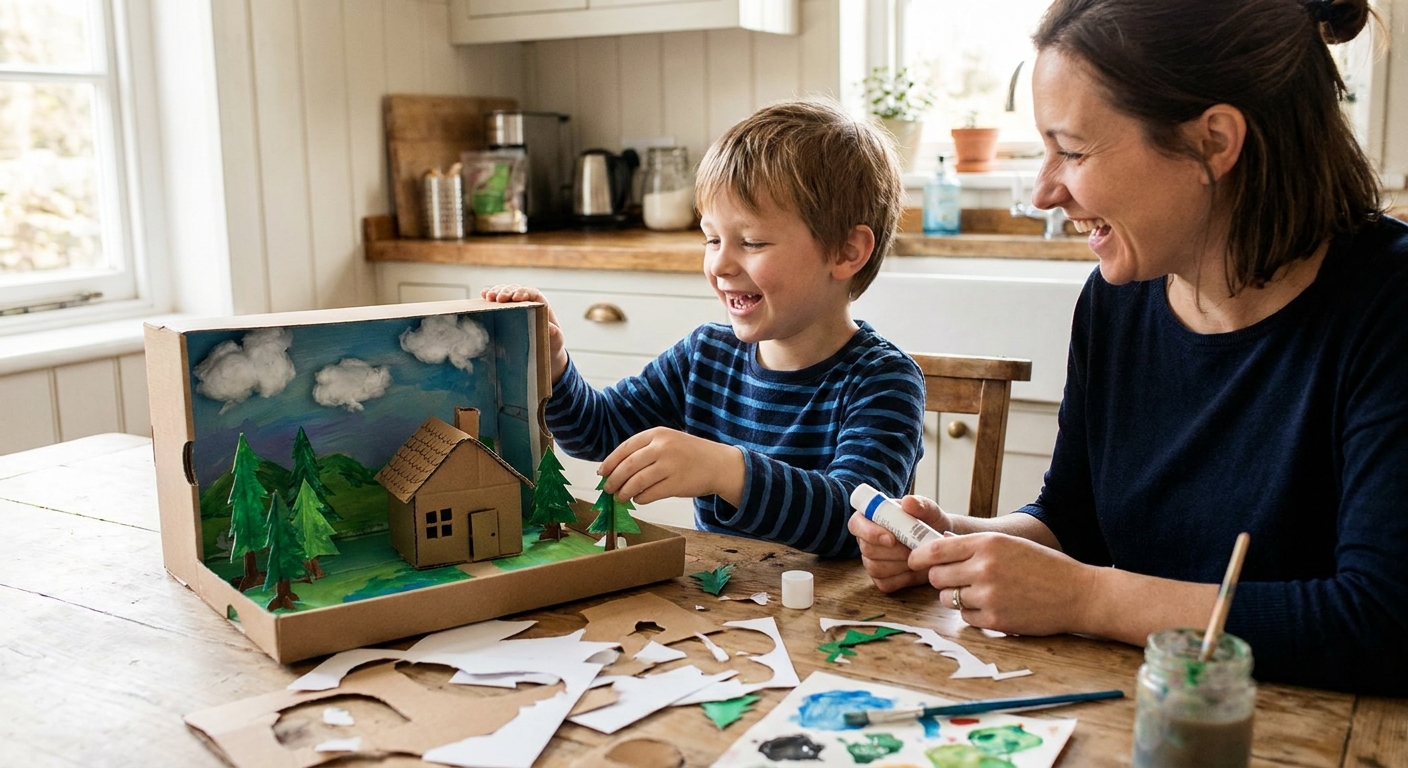

There is a particular look kids get at bedtime when they are ready for a story and you are running on fumes. I have met that look with big confidence and absolutely no plot. More times than I care to admit, my “Once upon a time…” has been followed by a long pause and a desperate mental rummage through yesterday’s grocery list.
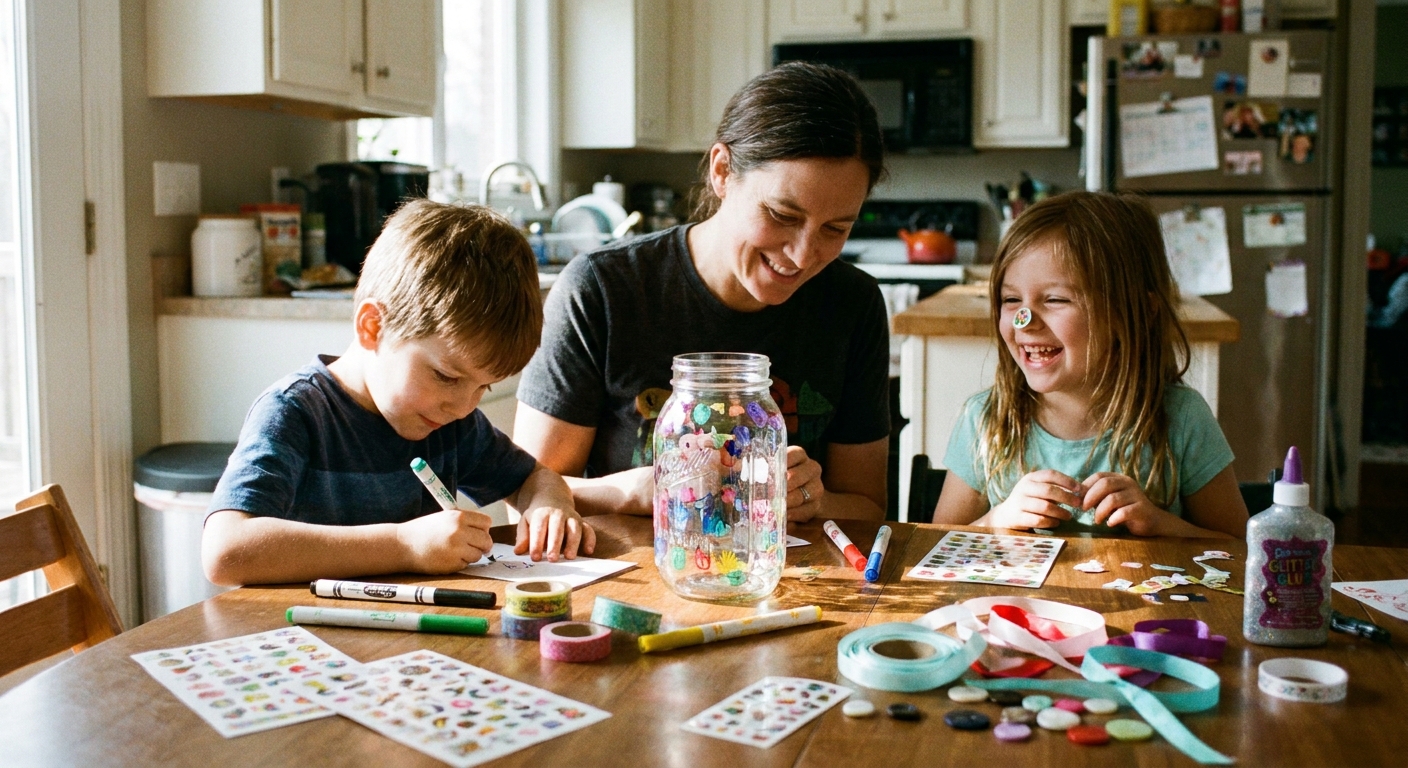
So let me introduce you to one of my favorite kitchen-table fixes: a family story prompt jar. It is part craft, part game, and part bedtime magic trick. You decorate a jar, fill it with color-coded prompt sticks, and when the brain fog rolls in, you simply pull a few sticks and let the story build itself.
What a story prompt jar does (and why it works)
When kids ask for a story, they usually want three things: someone to care about, a place to go, and a problem to solve. A prompt jar quietly hands you all three.
- It removes pressure. You are not inventing from scratch. You are combining ingredients.
- It gives kids ownership. They help create the prompts, so the stories feel like “ours,” not “mine.”
- It keeps bedtime gentle. You can make the prompts as silly or as soothing as your household needs.
Supplies
You can make this with what you already have. Here is my tried-and-true list.
- 1 mason jar or any wide-mouth jar with a lid (pasta sauce jars work beautifully)
- Craft sticks (popsicle sticks) or sturdy paper strips
- Markers (permanent markers write nicely on sticks, but regular markers work too)
- Washi tape, stickers, or paint (optional for decorating)
- Small bowl or cup for sorting sticks while you play
- Clear tape or Mod Podge (optional, for sealing decorations)
Little safety note: If you have toddlers who still mouth everything, use larger sticks, keep the jar on a high shelf, and let the prompt picking be a big-kid job.
Pick your color code
The color coding is the secret sauce, because it turns “pull random sticks” into “pull a complete story starter.” Here is the simplest system:
- Blue: Character
- Green: Setting
- Red: Conflict or problem
- Purple: Helper or magical item (optional, but kids love it)
- Yellow: Twist ending (optional for older kids)
If you only want to make three colors, do Character, Setting, Problem. That is plenty for years of stories.
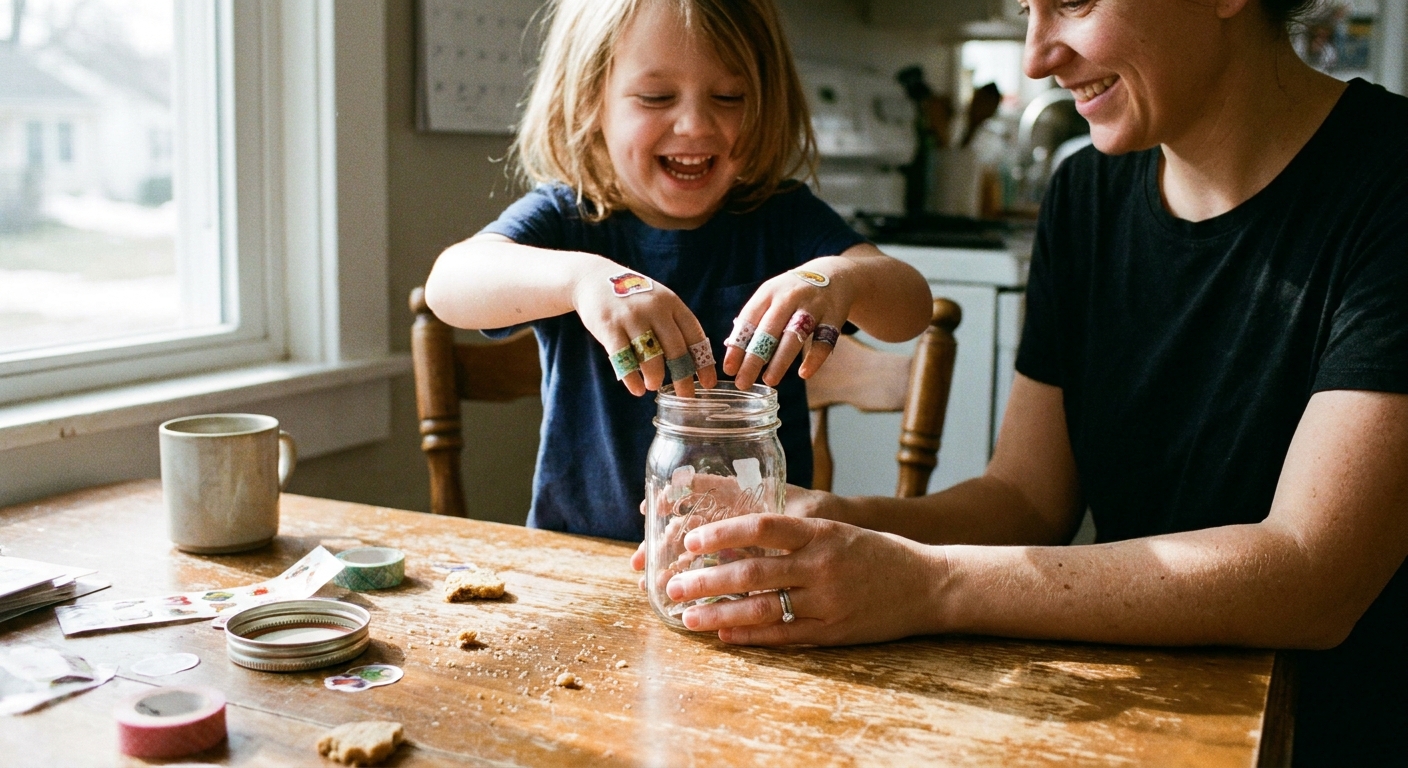
Decorate the jar together
I like to do the jar decorating in the afternoon, when nobody is rushed. Then at bedtime, you get the fun part with zero mess.
Easy decorating ideas
- Washi tape bands: Wrap tape around the jar like little borders.
- Sticker story theme: Animals, space, princesses, trucks, ocean creatures, whatever your kids are obsessed with this week.
- Paint dots: Fingerprint dots look cheerful and hide smudges.
- “Story Jar” label: Write directly on the jar with a paint marker or permanent marker.
If you want it to last through many bedtime seasons, seal the outside decorations with a thin layer of Mod Podge once everything is dry and keep it out of the dishwasher.
Make the prompt sticks
This is the part where you build your family’s little story library. I like to set out piles of sticks by color and let kids brainstorm while I write. For kids who can write, you can make it a team effort.
How many sticks do you need?
Start small so it does not feel like homework. A great “first jar” is:
- 10 character sticks
- 10 setting sticks
- 10 problem sticks
- 5 helper sticks (optional)
That already gives you hundreds of combinations.
Prompt-writing tips from my real life
- Keep prompts short. “A sleepy dragon” is better than a paragraph.
- Use your child’s comfort level. Some kids love “a spooky cave.” Others need “a cozy cave with friendly bats.”
- Include familiar places. “Grandma’s kitchen” and “the library” are instant story anchors.
- Build in kindness. If bedtime tends to run anxious, choose problems that can be solved gently.
Ready-to-copy prompts (by color)
If you want to jumpstart your jar tonight, here are options you can copy straight onto sticks. Mix and match based on your child’s age and sensitivity.
Blue: Characters
- A tiny knight with squeaky boots
- A shy dinosaur
- A curious kitten detective
- A baker who sings everything
- A brave librarian
- A cloud who wants to be a balloon
- A panda who hates naps
- A robot who loves hugs
- A bunny with a backpack
- A pirate with perfect manners
Green: Settings
- A treehouse in the rain
- The grocery store after closing
- A beach at night
- A snowy hill with a hidden tunnel
- A castle kitchen
- A spaceship playroom
- A meadow full of giant flowers
- The town library
- A pond with talking frogs
- A train station at sunrise
Red: Conflicts
- Something important is missing
- Everyone is stuck in a silly rule
- A map has a smudged spot
- A friend feels left out
- The lights will not turn on
- It is too quiet and that feels strange
- A storm is coming and they need a plan
- A promise was forgotten
- A door will not open without a riddle
- The wrong gift got delivered
Purple: Helpers or magical items (optional)
- A pocket flashlight that tells jokes
- A spoon that stirs up courage
- A blanket that becomes a cape
- A talking pebble with good advice
- A tiny drum that calls friendly animals
Yellow: Twist endings (optional)
- It was all a practice run for tomorrow
- The “villain” was trying to help
- The treasure was a friendship note
- They solved it by sharing
- Everyone was looking in the wrong place
How to use the jar at bedtime
This is my favorite part because it turns bedtime into a cozy little ritual.
The 3-stick bedtime story method
- Pick one stick from each color: character, setting, problem.
- Ask two quick kid questions: “What is the character good at?” and “What do they want right now?”
- Tell a simple three-part story: start (meet them), middle (the problem), end (a kind solution).
If your child wants more control, let them pick the character and setting, and you pick the problem. That keeps the surprises fun, not stressful.
A tiny bedtime script you can borrow
Start: “Once upon a time, there was…”
Middle: “But then…”
Ending: “So they tried…” and “At last…”
I keep it gentle, especially right before sleep. You can save the big chase scenes for daytime storytelling.
Make it work for different ages
Toddlers (2 to 3)
- Use fewer sticks: just Character and Setting.
- Make problems super soft: “needs a hug,” “lost a teddy,” “cannot find the moon.”
- Keep stories under 2 minutes and repeat favorite ones.
Preschoolers (4 to 5)
- Add the Problem sticks and one Helper stick.
- Let them act out the story with stuffed animals.
- Invite them to name the story at the end.
Early elementary (6 to 8)
- Add Twist endings and “rules”: whisper the whole story, or tell it like a news report.
- Let them write one new stick each week.
- Try continuing stories across multiple nights using the same character stick.
When the story still will not come
Even with prompts, some nights are just… mushy. Here are my go-to rescues.
- Turn it into a question story: After every sentence, ask your child what happens next.
- Use a familiar story skeleton: “We have a problem, we try three things, the third one works.”
- Borrow a song rhythm: Tell the story in a sing-song pattern like a nursery rhyme. It is strangely freeing.
If you want a gentle bedtime music boost on those extra-wiggly nights, I keep a few favorites in The Science of Lullabies. And for story building that is more hands-on, my kids love DIY storytelling blocks for bedtime tales.
Keep the jar fresh (without making more work)
The jar becomes a keepsake when you let it evolve. My rule is: tiny updates, often.
- The one-stick rule: Add one new stick every Friday, or whenever you remember.
- Seasonal swaps: In winter, tuck in snowy settings. In summer, add beach and camping problems.
- Retire and revisit: If certain prompts get overused, put them in a small envelope for later and rotate them back in.
For more low-prep togetherness ideas that fit into regular family life, you might enjoy our Family Activities guide.
One last cozy trick: the “goodnight button” ending
If bedtime tends to stretch and stretch, create a family tradition: every story ends with the character pressing a “goodnight button” that dims the lights, quiets the world, and makes everyone feel safe.
It is a simple ending that signals, kindly and consistently, that the story is complete and it is time to rest. And the best part is that you can use it no matter what three sticks you pulled.
May your jar be full, your plots be silly, and your “Once upon a time…” come with a little less pressure tonight.