
There is a very particular kind of quiet that happens when a house is winding down. Toys have mostly found the floor again, pajamas are on, and you can feel everyone getting a little softer around the edges. This is when I love a rainstick. Not the loud kind, not the “let’s start a parade” kind. The slow, hush-hush sound that feels like someone turned the volume of the day down a notch.
This paper towel tube version is one of my favorite table crafts because it is simple, forgiving, and surprisingly calming. You can make it with what you already have, then use it during story time, breathing breaks, or while you sing a lullaby.
Why a rainstick feels calming
A rainstick works because it stretches one small action into a long, gentle sound. As the filler slides past bumps inside the tube, it makes a soft, steady cascade. Some kids find that predictable whoosh helps their bodies slow down, especially when the room is already headed toward quiet.
- It invites slower movement. To get the best sound, you naturally tip it gradually.
- It is sensory without being chaotic. One instrument, one sound, one job.
- It pairs beautifully with bedtime music. If you love using songs to settle the room, take a peek at The Science of Lullabies: 7 Calming Bedtime Songs to Help Babies Sleep.
Materials (with kid-friendly options)
Here is what you need. I am giving a few choices because this is real life and sometimes you are out of rice but have a lonely bag of lentils in the pantry.
- 1 sturdy paper towel tube (or 1 wrapping paper tube cut to about 11 inches)
- Aluminum foil (2 sheets, each about 9 to 12 inches long)
- Tape (packing tape or strong masking tape works best)
- 2 circles of cardboard cut to fit the tube end (cereal box cardboard is perfect)
- Filler: 1/3 cup uncooked rice (or small pasta, lentils, or dried beans for a louder version)
- Optional decorating supplies: paper, stickers, washi tape, markers, ribbon
- Optional spill helper: a baking tray or shallow box lid to work over
Calmest sound tip: Rice often gives the softest “rain,” but it depends on your tube, how many bumps you build inside, and how much filler you use. Lentils are usually a little stronger. Beans and larger pasta tend to get clacky fast.
Before you start: safety notes
- Supervision matters if you have toddlers who might mouth the filler. Consider using the rainstick only as a together activity and sealing it very well.
- This is a choking hazard if it breaks. Once it is finished, keep it out of reach for kids who still mouth objects. If an end cap loosens, tape peels, or the tube cracks, repair it right away or toss it.
- Check tape edges so there are no scratchy corners.
- If you use beans or beads, remember the sound will be louder and the tube will take more wear.
Step-by-step rainstick
1) Make the “rainy” inside
Tear off two sheets of foil. Crumple each sheet loosely into a long snake, then gently open it back up a bit. You want it bumpy, not packed tight.
Slide the first foil snake into the tube. Use a chopstick, pencil, or the handle end of a wooden spoon to nudge it down the tube.
Add the second foil snake and push it in too, so the inside of the tube has lots of foil bumps for the rice to tumble past.
If your tube is wide: Add a third foil snake. Wider tubes sometimes need more “steps” to slow the fall.
2) Seal one end
Take one cardboard circle and place it over one end of the tube like a cap. Tape all the way around the seam with overlapping strips. I usually go around the rim twice for a good seal.
Extra-sturdy trick: After taping the edge, add one strip across the circle like a belt, then another strip perpendicular, making a taped plus sign on the end.
3) Measure and add the filler
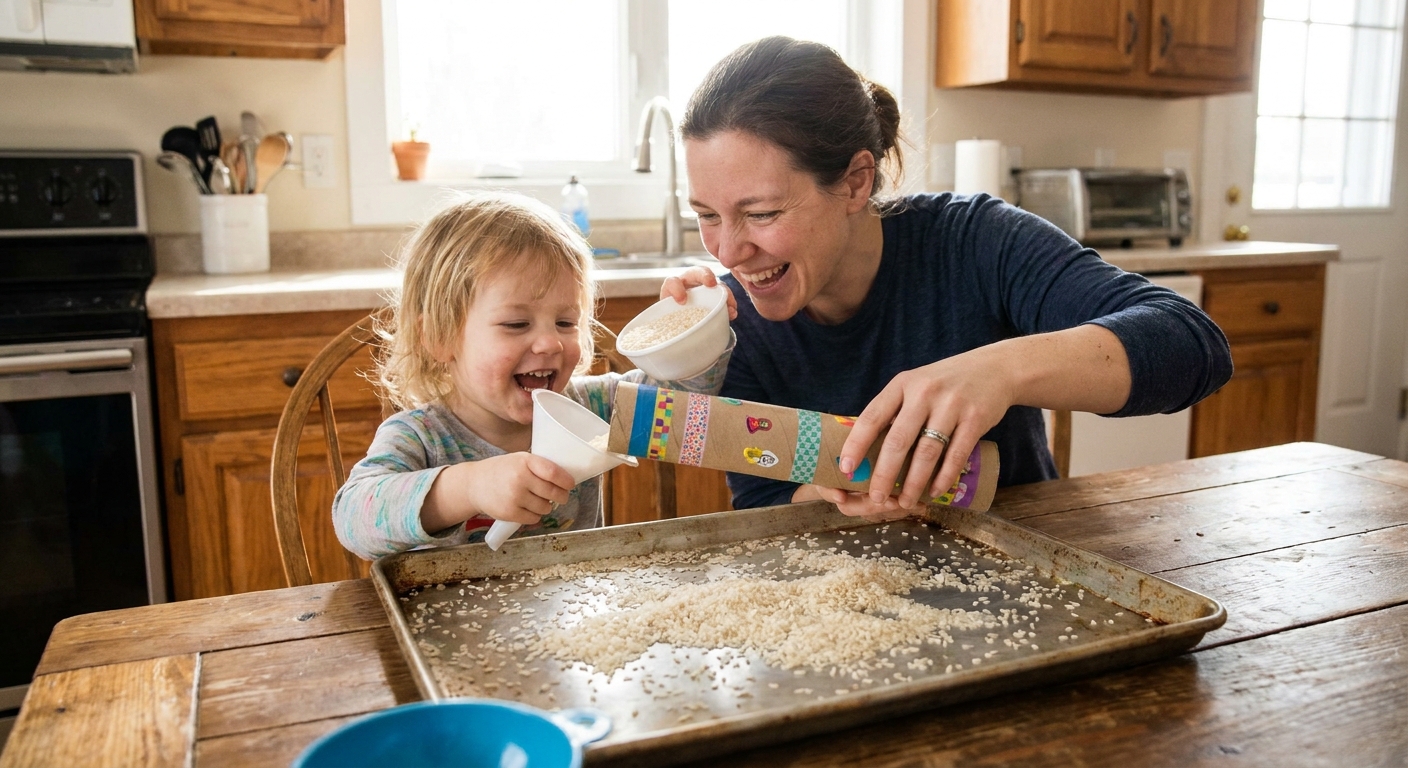
Stand the tube upright over a tray. Pour in 1/3 cup rice. If you want a fuller, more continuous sound, try 1/2 cup. If you want it very slow and whispery, start with 1/4 cup.
Give the tube a gentle shake. You should hear a soft, rolling slide. If it barely moves, your foil may be too tight. If it rushes straight down, add a bit more crumpled foil to create more “steps.”
4) Seal the second end
Cap the open end with the second cardboard circle and tape it just as securely as the first. This is the end kids will be tempted to “test,” so do not be shy with the tape.
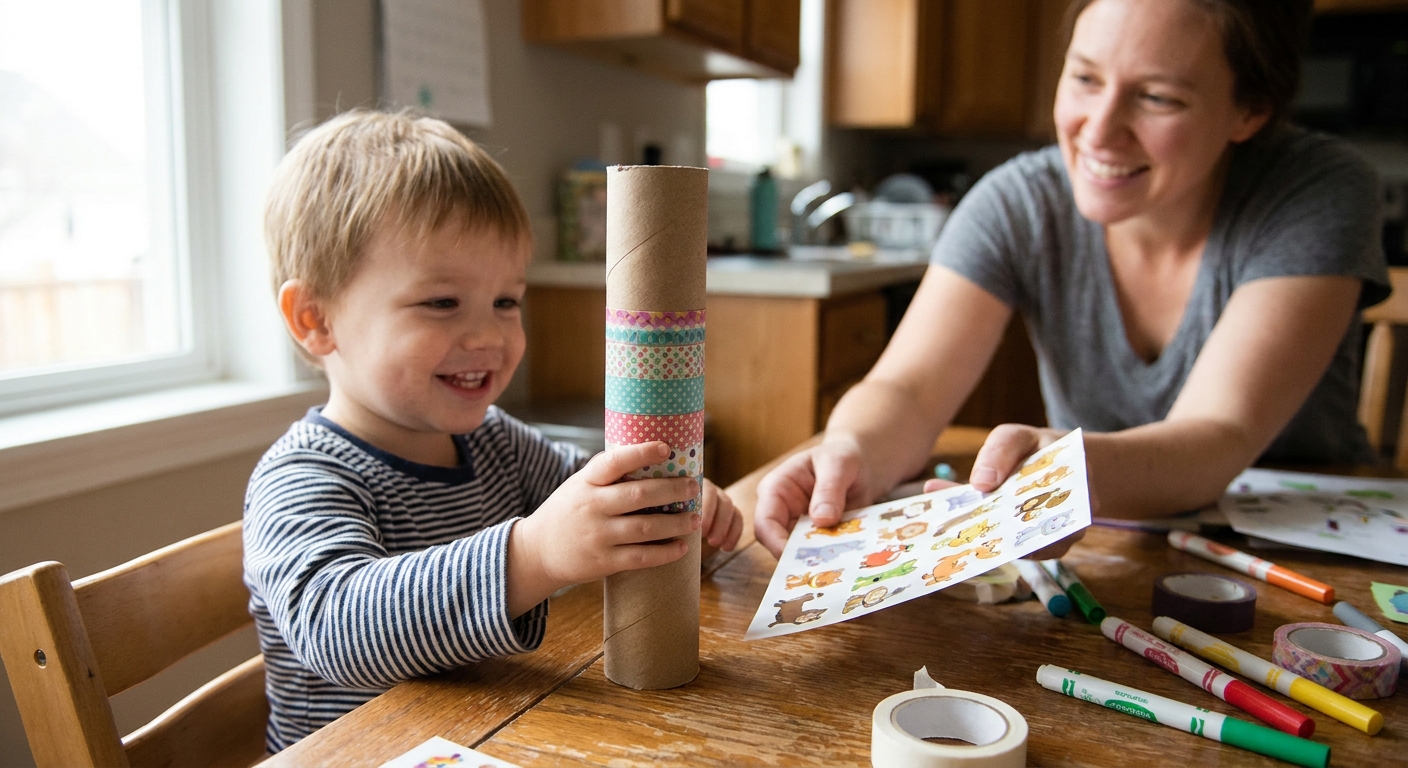
5) Decorate (without muffling the sound)
Wrap the outside with paper and tape it like a smooth sleeve, or cover it with washi tape stripes. Markers and stickers are perfect. If you add ribbon, keep it short so it does not become a swinging distraction.
No-foil option
If you would rather skip foil, you can make a simple paper baffle instead. It is not quite as crisp as foil, but it can still create that gentle, slowed-down sprinkle.
- Cut a long strip of scrap paper.
- Loosely twist it into a soft spiral, then slide it into the tube.
- Add a second paper spiral if the sound is still dropping too fast.
Note: Some rainstick tutorials use toothpicks poked through the tube as baffles. It works, but it also introduces sharp points, so I skip it for little kids.
How to use it for quiet time
This is where the magic shows up. Here are a few gentle ways to bring it into your routine.
Pair it with a lullaby
Tip the rainstick slowly for a full count of four, then slowly back for a full count of four. I like to do it during the spaces between lines, almost like the rainstick is “breathing” with the song.
If you are building a bedtime playlist, you might enjoy Sing to Your Baby (Even If You Hate Your Voice). It is the pep talk I wish every tired parent had on the hard nights.
Try a one-minute “rain reset”
- Sit together.
- Say: “Let’s listen until the rain stops.”
- Turn the rainstick over once, very slowly.
- When it finishes, take one deep breath together.
Use it as a transition signal
Instead of yelling from the kitchen, let the rainstick be your gentle cue for cleanup or pajamas. If transition songs are more your style, 8 Transition Songs for Tidy-Up Time is full of simple singable ideas.
Tuning the sound
| What to change | What you will notice | My go-to for calm |
|---|---|---|
| Use less filler (1/4 cup) | Slower, gentler “sprinkle” sound | Best for nap and bedtime |
| Use more filler (1/2 cup) | Fuller sound, sometimes a bit louder | Nice for classrooms or groups |
| Swap rice for lentils | More texture, usually slightly louder | Good for older kids |
| Add more foil or paper bumps | Sound slows down and becomes more “rainy” | Almost always worth doing |
| Use beans or pony beads | Much louder, more percussion-like | Not my bedtime pick |
Troubleshooting
“My rice just falls straight through.”
You need more obstacles. Add another loosely crumpled foil snake, or another paper spiral if you are doing the no-foil version. You can also twist the foil a little tighter so it holds bumpy shapes.
“It barely makes noise.”
Try adding 1 tablespoon more rice at a time until you like the sound. Also check that the foil inside is not packed so tight the rice cannot move.
“The ends feel wobbly.”
Use a second layer of cardboard circles, then tape again. Another option is to tape around the rim, then wrap one long strip lengthwise down the tube and back up, like a strap.
“Decorations keep sliding off.”
If you are wrapping with paper, tape the seam in three places: top, middle, and bottom. Washi tape looks cute, but it sometimes lifts on cardboard. A single clear tape layer over the washi can lock it in.
A cozy add-on
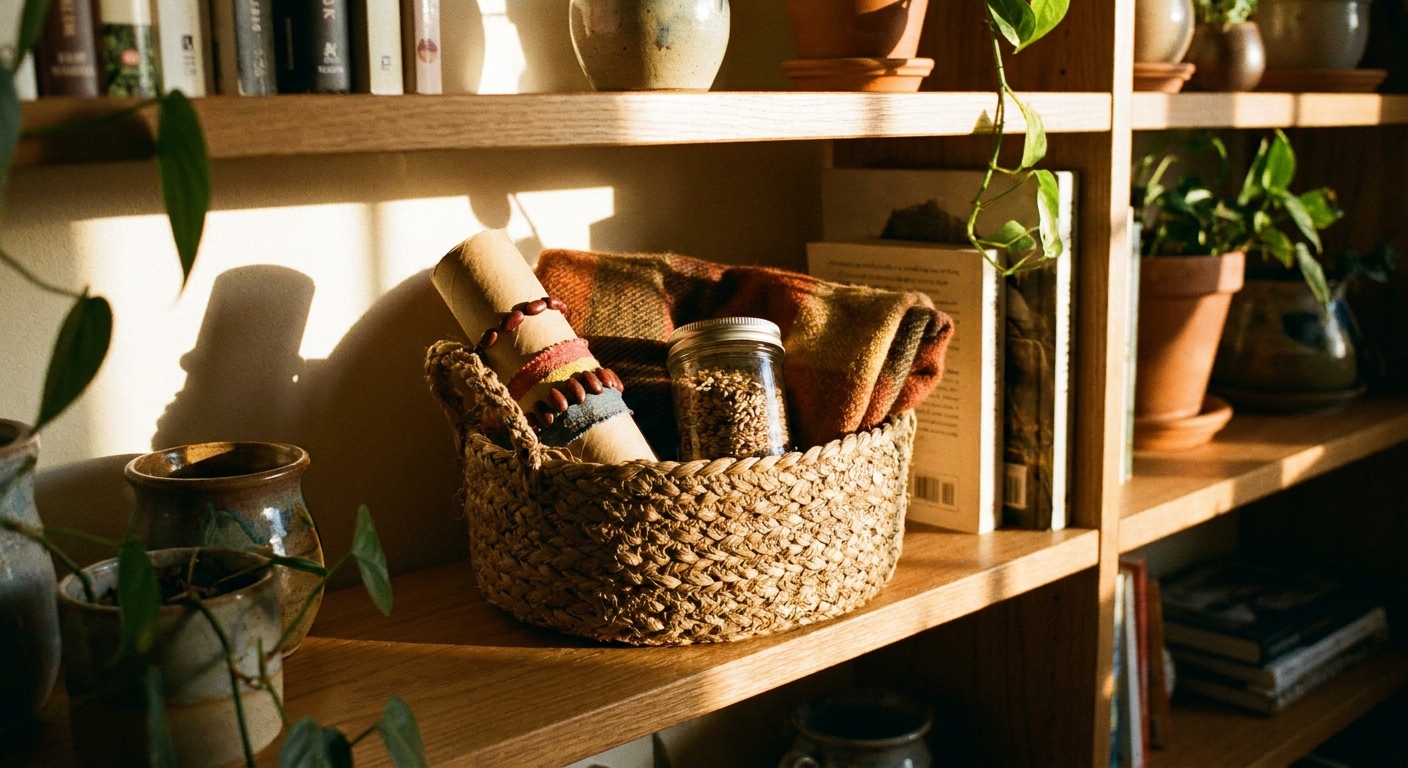
If your kids love instruments, I like keeping a small “quiet sound basket” on a shelf: the rainstick, a soft scarf for peekaboo songs, and a simple shaker.
If you want another easy instrument craft, this pairs nicely with DIY Shakers and Rhythm Sticks for Family Sing-Alongs. The two together feel like a whole little bedtime band.
Quick FAQ
What age is this good for?
I love this craft most for ages 3 and up with help. Younger toddlers can enjoy listening and turning it with you, but I treat it like a supervised instrument because it contains small filler.
Can I use a toilet paper tube instead?
You can, but the sound is shorter and the tube is flimsier. If that is what you have, use 2 toilet paper tubes taped together and reinforce the outside with an extra paper wrap.
How long does it last?
With strong tape and gentle use, we have had rainsticks last for months. If it starts to soften, it is usually from moisture or enthusiastic drumming. A quick outer wrap with packing tape can extend its life.
Does it really work for calming down?
It can for some kids. Not as a magic switch, but as a tool. The slow sound gives kids something predictable to focus on, especially when paired with a calm voice, a story, or a familiar bedtime song.