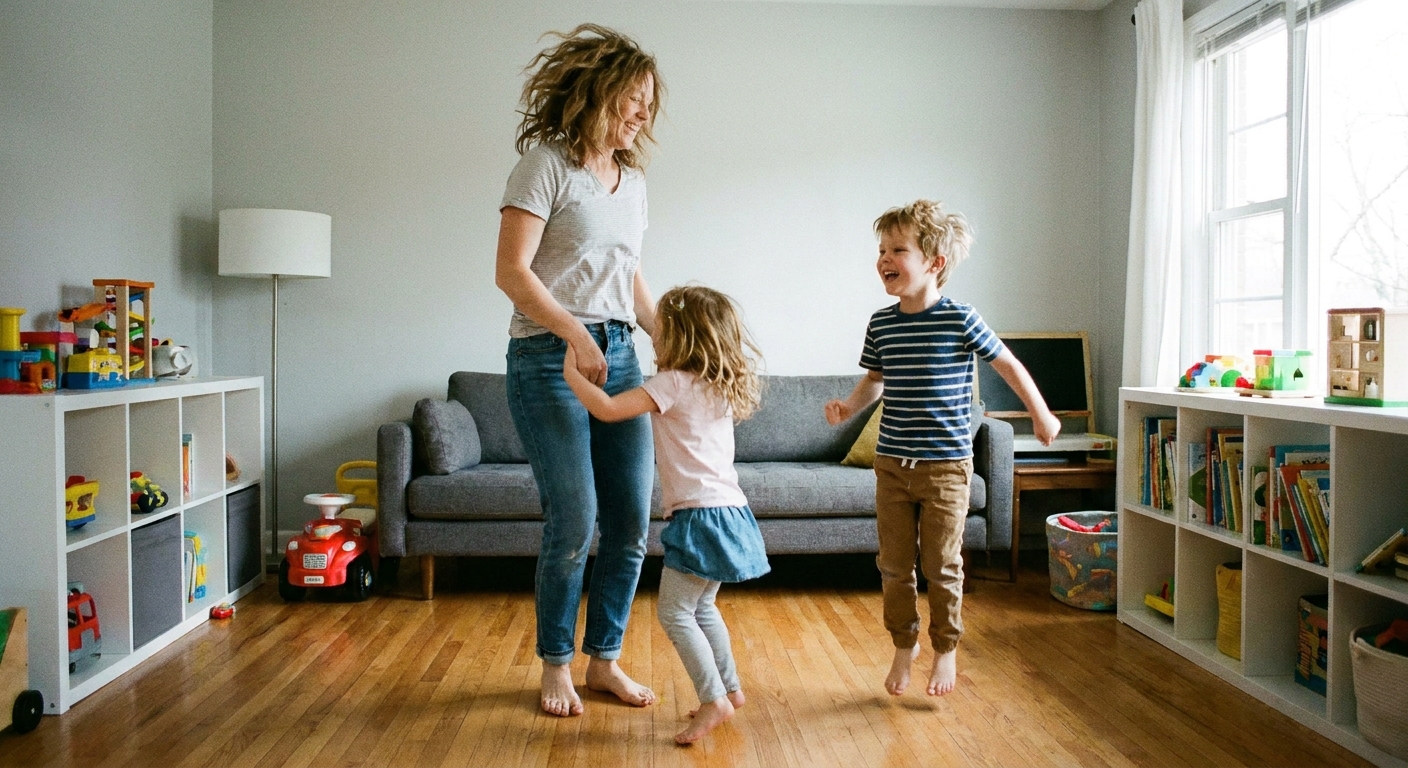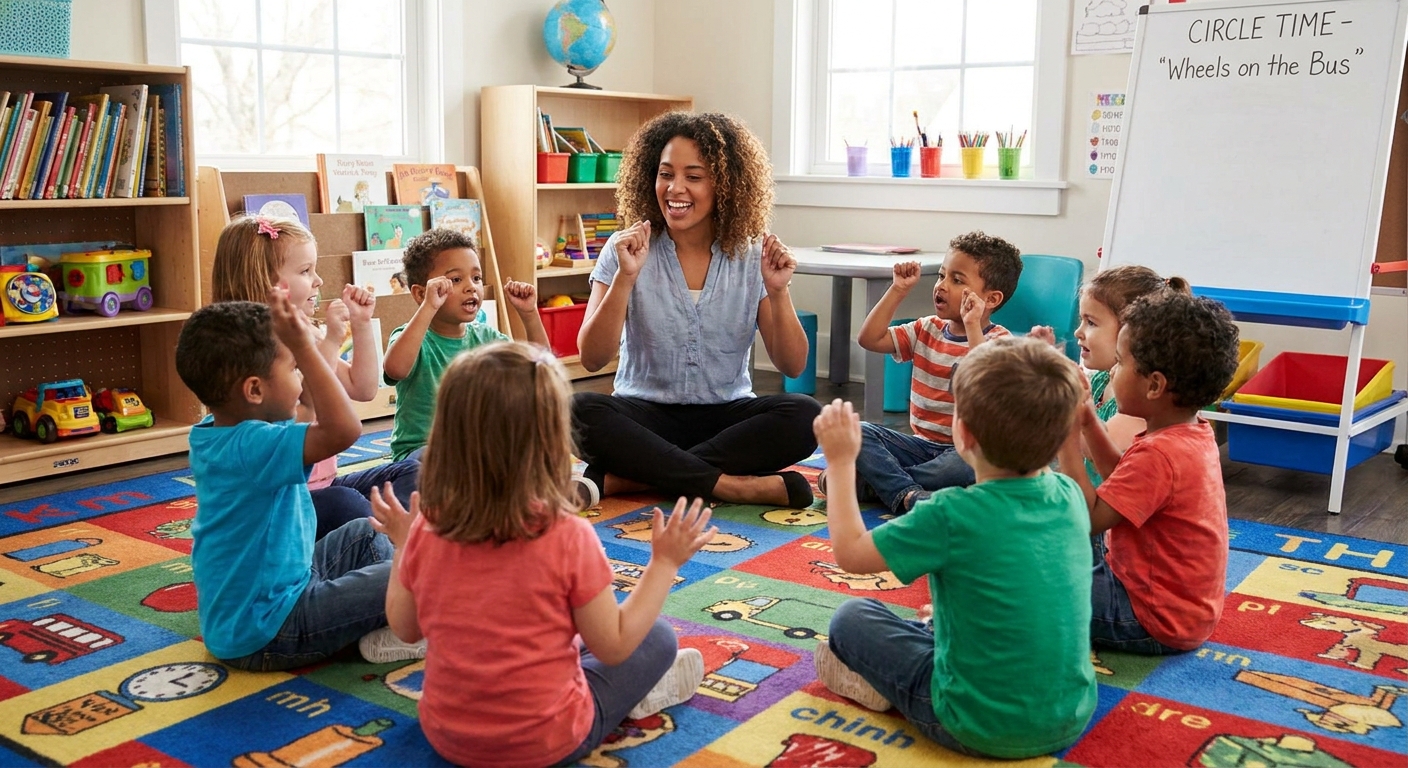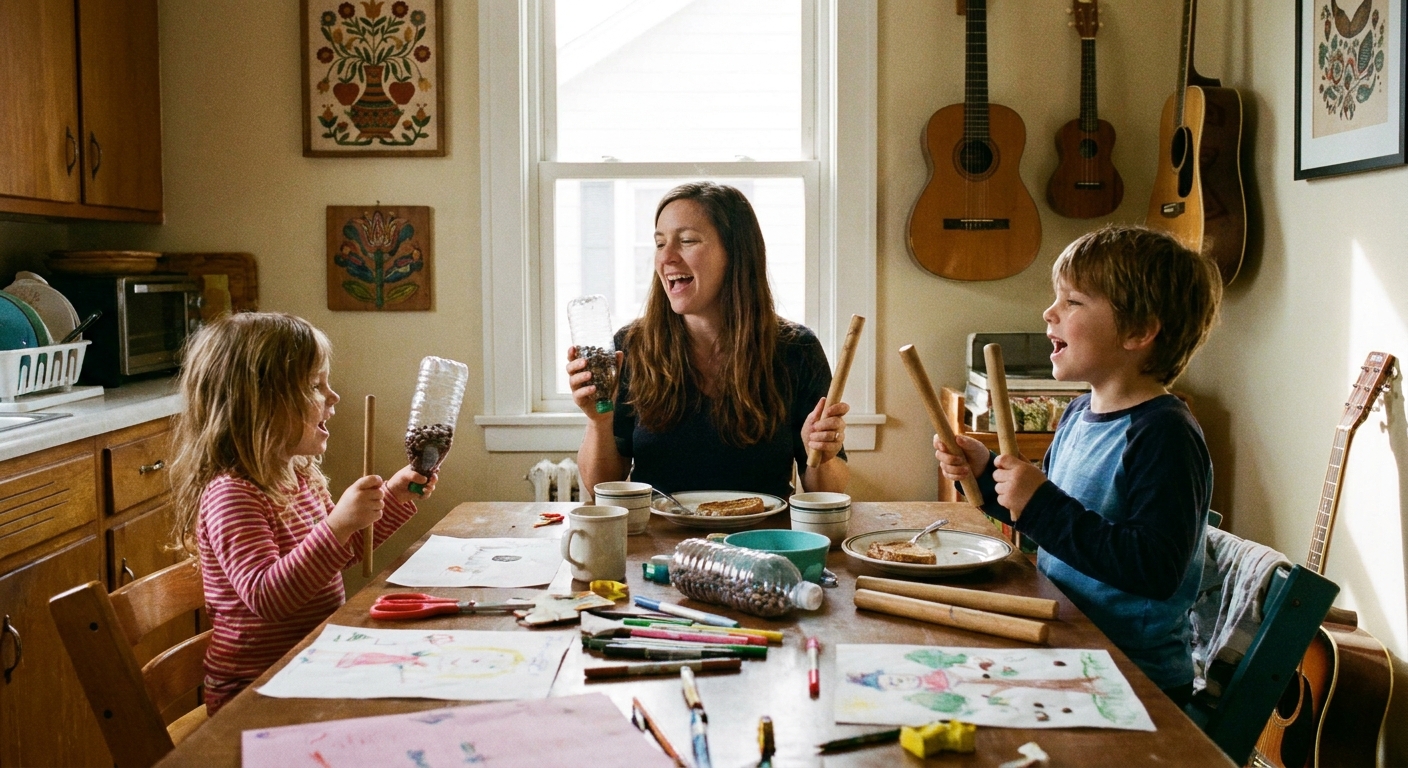

Whenever my kids start bouncing off the furniture (and my coffee is still warm, so I would like to keep it that way), I pull out one of my favorite “big feelings, big movement” crafts: sensory ribbon wands. They are bright, swooshy, wonderfully simple, and they practically beg little bodies to twirl, tiptoe, stomp, and swirl.
When I say “sensory” here, I mostly mean texture plus movement, not messy bins or mystery goo.
These are not baton-style wands with sticks attached. For toddlers and preschoolers, I prefer a ribbon ring you can grip like a bracelet. It is easier for small hands, harder to bonk a sibling with, and just as magical when the music starts.
Quick age and supervision note: These are best for toddlers and preschoolers with close supervision. Keep ribbon play away from cribs and beds, and pause the game if your child starts wrapping ribbons around bodies or whipping them near faces.
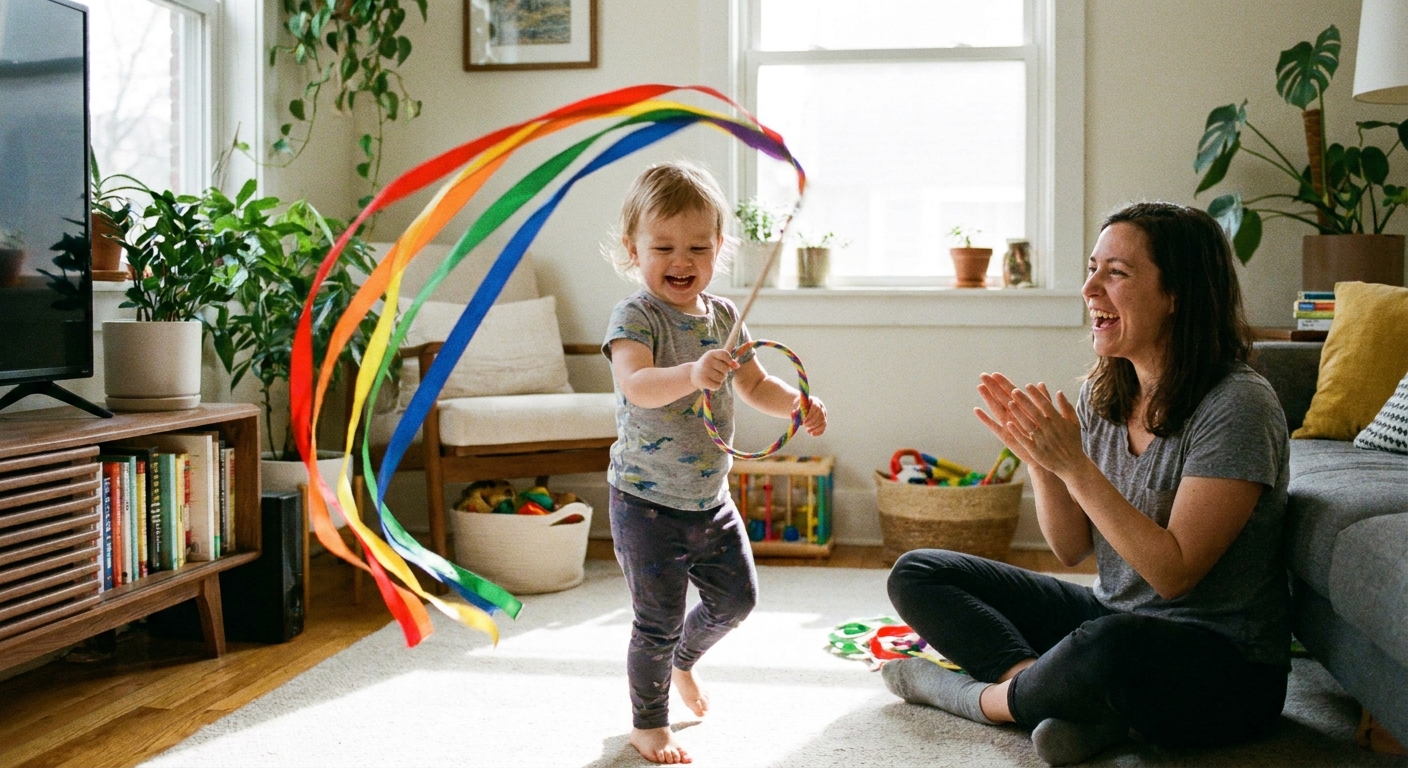
Why ribbon wands help
Ribbon wands look like pure play (they are), but they can also support skills that are gold for this age:
- Body awareness: ribbons give kids a “trail” to watch and feel as their arms move through space.
- Crossing the midline: figure eights and big side-to-side sweeps often encourage coordination across the body.
- Grip strength and hand control: holding the ring and managing ribbon drag can be real work for little hands.
- Emotional expression: “Show me angry ribbons” or “gentle ribbons” gives kids a safe way to act out feelings.
- Listening and self-regulation: freeze games and slow-fast dances can practice start-and-stop control.
If your house already runs on sing-alongs, these pair beautifully with simple rhythm instruments too. We love homemade shakers when we dance, and this tutorial on DIY shakers and rhythm sticks is a fun companion craft.
Materials
You can make one wand in about 10 minutes, or a whole set for a playgroup in one snack-and-chat session.
What you need
- 1 sturdy ring (about 2 to 3 inches across in diameter): unfinished wooden ring, large key ring, curtain ring, or a thick plastic craft ring
- Ribbons or fabric strips: 1/2 inch to 1 inch wide works well
- Scissors
- Optional: fabric glue, or a lighter to carefully heat-seal ribbon ends (adult-only)
My favorite ribbon choices
- Grosgrain ribbon (holds up well, less slippery)
- Satin ribbon (very swooshy, more slippery, still fine)
- Tulle strips (extra floaty, but can snag)
- Soft fabric strips cut from an old T-shirt (super toddler-friendly and washable)
Quick ring note: If you use a metal key ring, choose one that feels smooth and solid. Avoid anything with sharp seams or rough weld points.
How to make ribbon wands
Step 1: Cut your ribbons
For toddlers and preschoolers, I like ribbons that are 18 to 30 inches long. Shorter is easier indoors. Longer is more dramatic outside.
- Toddlers (1 to 3): 18 to 24 inches
- Preschoolers (3 to 5): 24 to 30 inches
Cut 6 to 10 ribbons per wand. Fewer ribbons make a lighter wand. More ribbons make a fuller, swishier “comet tail.”
How full is “full”? I aim for enough ribbons to look lush, but not so many that the knots create a thick, hard-to-grip lump. If your child has smaller hands, start with 6 to 8 strands and add more later.
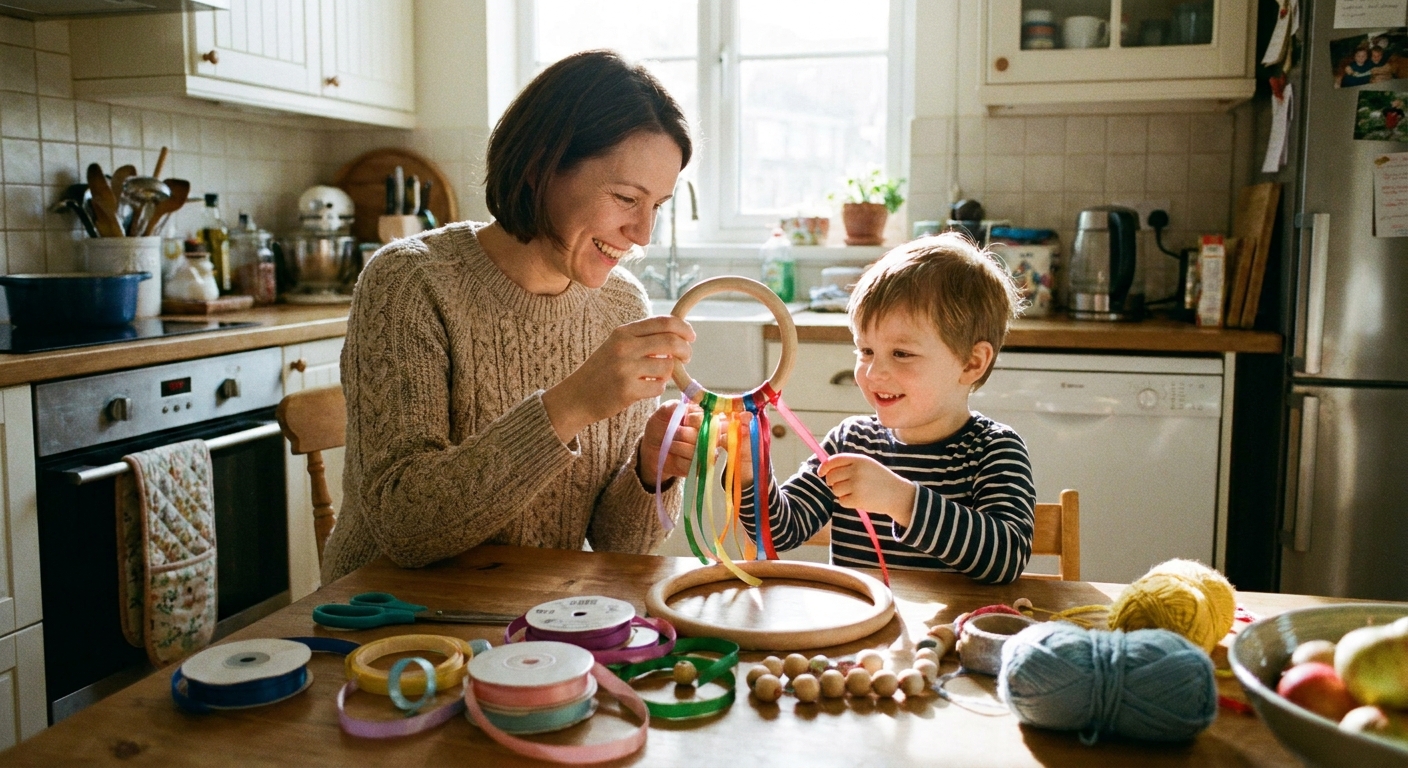
Step 2: Attach ribbons with a lark’s head knot
Fold one ribbon in half. Push the folded middle through the ring to make a loop. Pull the two loose ends through that loop and snug it up. Pull it tight so it grips the ring. Repeat until the ring looks delightfully full.
If you are crafting with a group of kids, you can pre-cut the ribbons and let them do the looping. It feels like “real” crafting, but it is very manageable.
Step 3: Tidy the ends
To reduce fraying:
- Fabric strips: no need to seal
- Grosgrain: usually behaves fine, but you can trim cleanly
- Satin: if fraying drives you nuts, an adult can briefly heat-seal just the edge with a lighter (away from kids, in a clear area)
I usually skip fancy finishing and just plan to do a quick “fresh trim” after a week of enthusiastic use.
Step 4: Safety check
- Give each ribbon a gentle tug. Nothing should slip loose.
- Consider keeping ribbons 30 inches or shorter for this age, and supervise closely. Long ribbons can pose a wrapping or strangulation risk.
- Skip beads, bells, or small add-ons for kids who still mouth toys.
- Supervise use, especially with siblings, because ribbons have a way of finding eyeballs.
Make them sensory
“Sensory” does not have to mean messy. With ribbon wands, sensory is mostly about texture and movement. Here are my easy upgrades:
- Texture mix: combine grosgrain, satin, and soft fabric strips so kids feel the difference as they grip and swish.
- Color cue sets: make one wand all cool colors for “calm dance” and one wand bright warm colors for “energy dance.”
- Sound-free sparkle: use metallic or iridescent ribbon instead of noisy add-ons.
- Heavier feel (preschoolers only): use slightly thicker fabric strips so the ribbon trail gives more feedback in the air.
Dance prompts
Some kids naturally perform. Others freeze the second you say “dance.” If you give them a story to act out, the movement usually comes much more easily. Try these:
1) Weather dance
- Breeze: tiny wrist circles
- Wind: big arm sweeps
- Rain: ribbons tapping the floor gently
- Thunder: stomp-stomp, ribbons up high
2) Animal ribbon parade
Pick an animal and match the movement:
- Butterfly: soft floating circles
- Snake: side-to-side slithers
- Elephant: heavy steps, slow swings
- Hummingbird: quick tiny zigzags
If you want singing to lead the play, you might like our classic action songs. Action songs plus ribbon wands feels like instant party.
3) Feelings in motion
Try: “Show me excited ribbons,” “Show me tired ribbons,” “Show me grumpy ribbons,” then finish with “Show me proud ribbons.” There is no wrong answer. You are just giving a body-language vocabulary lesson in disguise.
4) Freeze and melt
Play music. Everyone dances. Pause the music and say “Freeze!” Then say “Melt” and everyone slowly sinks to the floor like an ice cream cone on the sidewalk. Toddlers find this hilarious.
5) Ribbon road trip (for groups)
Kids follow you around the room like you are driving an invisible bus: over bumpy roads, through tunnels, around corners, and into a car wash. If you love call-and-response games, this list of call-and-response songs can be adapted into movement cues too.
Where to use them
Great places to dance
- Living room “dance circle”: clear a small area and set a boundary with a rug
- Backyard: ribbons look amazing in sunlight
- Playroom: keep a bin labeled “Dance stuff” so it is easy to start and easy to put away
Storage that stays tidy
- Hang wands on a hook by the music speaker.
- Loop the ring onto a hanger.
- Tuck them into a tall container so ribbons do not knot themselves into a single mega-knot.
Cleaning
Fabric-strip wands can be hand-washed gently and air dried. Ribbon wands can be wiped down. If they get truly grimy, I usually re-ribbon the ring rather than fight sticky satin.
Troubleshooting
The ribbons tangle constantly
Shorten the ribbons by a few inches and reduce the number of strands. Tangles also happen when kids drag ribbons on carpet. Smooth floors help.
My child chews the ribbons
Use wide, soft fabric strips (T-shirt yarn style) and supervise closely. If chewing is intense, save ribbon wands for later and offer a safer sensory option in the moment. I also skip tape on ribbon ends for chewers, since peeling tape can become its own little hazard.
The ring is hard to hold
Wrap the ring with a strip of fabric to make it thicker and easier to grip, then knot or stitch the fabric closed. You can also choose a slightly larger ring.
Ribbons keep slipping off
Switch to grosgrain or fabric strips, and pull each lark’s head knot snug. If your ring is very slick plastic, a tiny dot of fabric glue on the knot can help (adult-only and let it fully dry).
5-minute routine
If you want a tiny routine you can repeat (kids love repetition), here is our go-to:
- Wake up ribbons: shake low, shake high (30 seconds)
- Big circles: slow, then faster (60 seconds)
- Figure eights: side-to-side swoops (60 seconds)
- Freeze game: 3 freezes (60 seconds)
- Cool down: gentle ribbons, deep breaths (30 to 60 seconds)
That is it. Five minutes later, bodies feel better, moods soften, and you did not have to deliver a single lecture about “calm down.”
If you are collecting simple projects like this, you can browse more ideas in our Kids Crafts guide.