
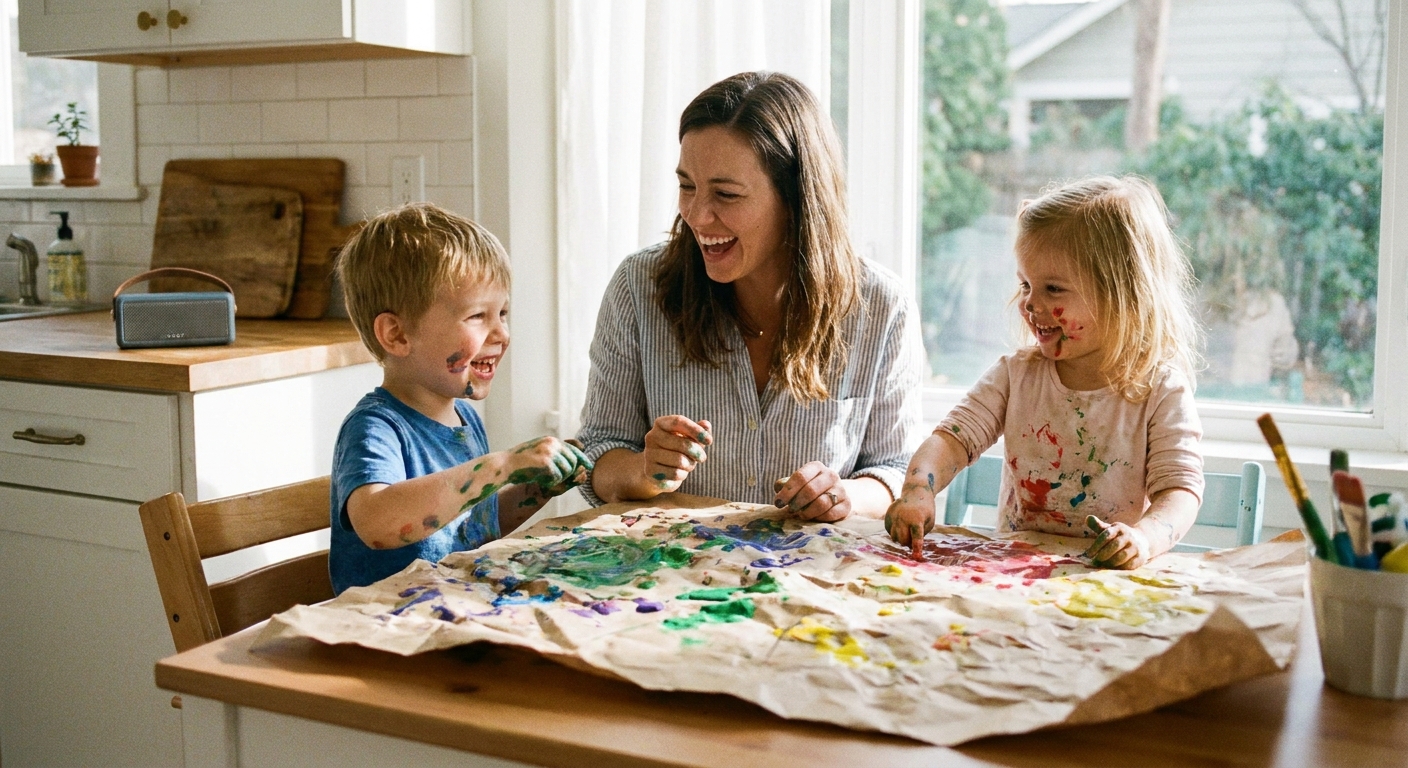
The first time I tried “paint to the beat” at our kitchen table, I thought it would be a sweet little art moment. What I got was a giggly experiment in listening. One kid painted tiny careful dots to a slow song. Another made giant swooshes the second the drums kicked in. And all three of them, without me teaching a single “lesson,” started noticing tempo, volume, and mood like tiny music detectives.
This is one of my favorite family activities because it feels like play, but it quietly builds big skills: attention, self-expression, and the ability to match what you hear with what your hands do. No fancy art training required. If you can press “play” and pass a paintbrush, you are qualified.
Why painting to music works
When kids paint while listening, they can practice auditory discrimination, noticing differences in:
- Tempo: fast vs. slow
- Dynamics: loud vs. quiet
- Articulation: smooth sounds (legato) vs. choppy, bouncy sounds (staccato)
- Mood: calm, silly, stormy, brave
It can also support self-regulation. A slow track often helps a wound-up child settle into long, steady brushstrokes. A lively song can give an outlet for big movement, especially if you set the painting up so it is safe to get a little wild.
What you need (keep it simple)
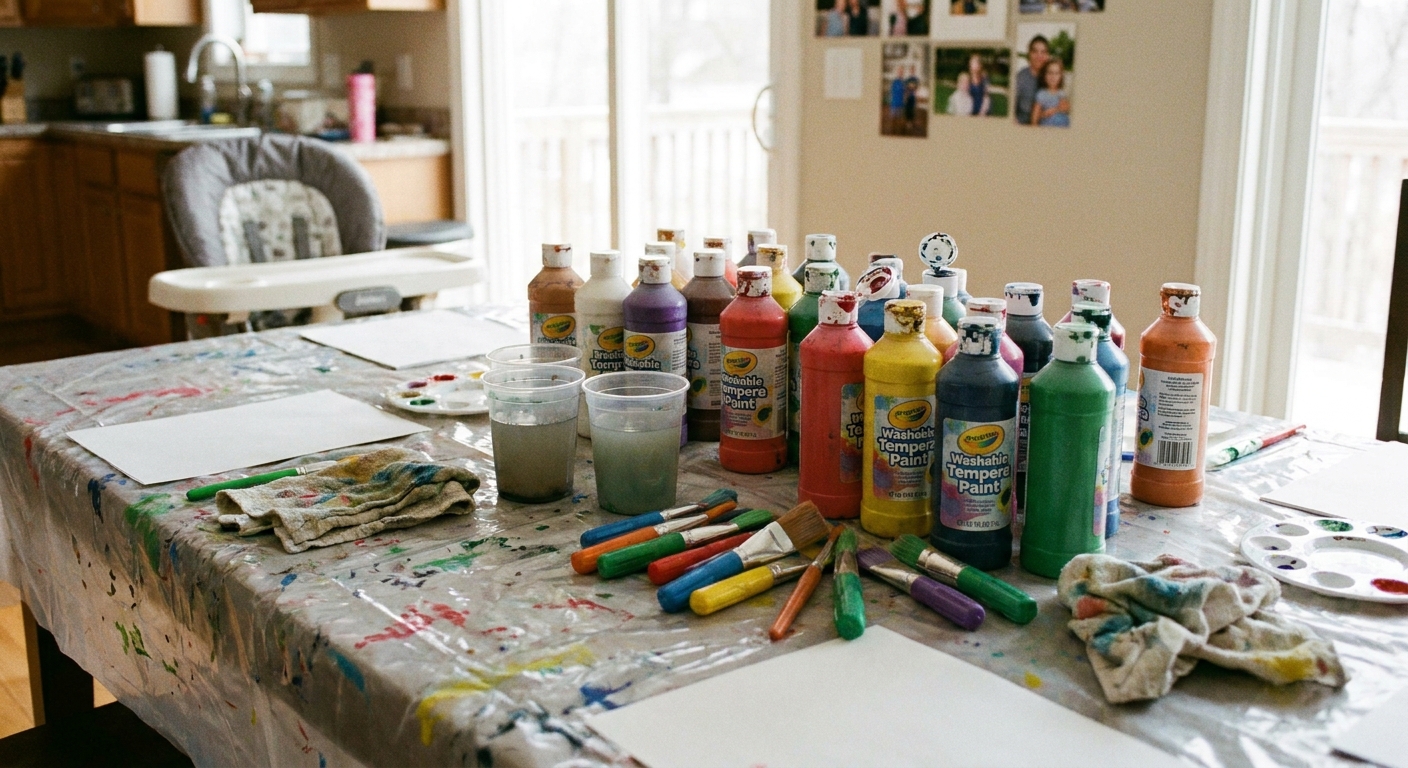
You can do this with almost anything you already have. My simple setup looks like this:
- Music: a phone or speaker, plus a short playlist
- Paper: large paper is easiest for expressive movement (roll paper, butcher paper, or taped-together printer paper)
- Paint: washable tempera or watercolor. For toddlers, washable paint is less stressful.
- Tools: paintbrushes, sponge brushes, cotton swabs, or even old dish sponges cut into chunks
- Water cup and a rag or paper towels
- Table protection: kraft paper, newspaper, or an old shower curtain liner
- Aprons or old shirts
Quick safety note: For little ones, stick with non-toxic washable supplies, keep small items (like cotton swabs) supervised, and use a shallow water cup to avoid big spills and big sips.
No paint today? Markers, crayons, or even a pencil work just fine for “draw to the beat.” You can always upgrade to paint next time.
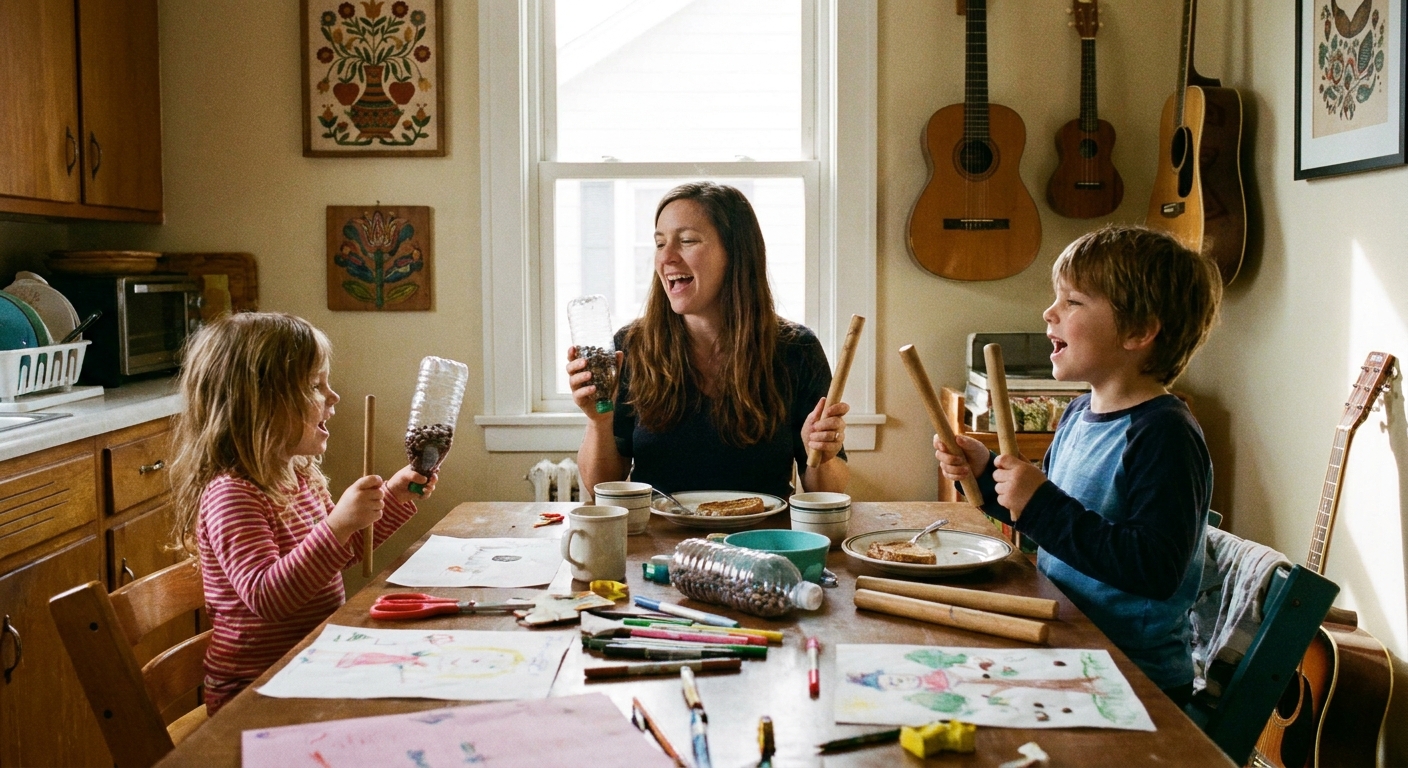
If your crew loves adding sound to sound, pair this with homemade instruments. Our go-to is this easy project: DIY shakers and rhythm sticks for family sing-alongs.
Set up fast
Cover the surface. Tape down paper so it does not slide when the music gets exciting.
Create a paint station. Put paint in shallow plates or palettes. Fewer colors can actually help kids focus on the music instead of decision fatigue.
Choose movement space. If you have room, tape paper to the floor for big arm motions. This is wonderful for energetic kids.
Set one easy rule. Mine is: “Paint stays on the paper.” Everything else can be flexible.
Pick 3 to 6 short tracks. About two minutes each is often plenty, especially for younger kids. You can always replay favorites.
Build a kid-friendly playlist
You do not need a perfect playlist. You just want contrast. Try choosing music that clearly shifts in speed and mood. A simple mix might include:
- One slow, gentle track (think lullaby, soft piano, or calm acoustic)
- One steady, mid-tempo track (a happy groove that is not too fast)
- One fast, bouncy track (drums or clapping rhythms work well)
- One dramatic track with obvious “quiet then loud” changes
If you want a family-friendly way to practice call-and-response listening before you paint, I love using short echo songs in the warm-up. Here are ideas that work in the car and at the table: 20 call-and-response songs for road trips.
How to run it
I like a three-part flow: warm-up, paint rounds, then a tiny “gallery walk.” Total time can be 20 minutes or an hour, depending on attention spans.
1) Warm-up: draw the beat
Before paint comes out, play a short clip and have everyone tap the beat on the table. Then try “air painting” with an invisible brush. This helps kids connect listening to movement without worrying about making something “good.”
2) Paint rounds: one song, one rule
Each song gets a playful prompt. You can say it like a game:
- Slow song: “Can your brush move like a turtle?”
- Fast song: “Can your brush move like popcorn?”
- Quiet parts: “Paint tiny.”
- Loud parts: “Paint big.”
3) Gallery walk: notice, not judge
When the music stops, set brushes down and do a one-minute walk-around. Ask:
- “Where do you see the fast part?”
- “Show me a quiet corner.”
- “What color did the drums feel like?”
This is where the listening skill-building sneaks in. They start pointing out musical changes, but they are talking about paint.
Beat-to-brush prompts
Here are my favorite prompts, especially when siblings are different ages and skill levels. Everyone can participate, because there is no “right picture.”
Tempo prompts
- Fast: zigzags, dots, lightning bolts, quick stamps
- Medium: loops, waves, steady stripes
- Slow: long roads, big spirals, gentle gradients with watercolors
Sound-shape prompts
- Drums: circles, stomps, stamped sponge marks
- Strings: long lines, swirls
- Claps: handprint “bursts” (washable paint only)
- High notes: tiny marks near the top of the page
- Low notes: heavy strokes along the bottom
Mood prompts
- Calm: two colors only
- Silly: paint with the “wrong” tool (cotton swab, fork, sponge)
- Brave: use your least-favorite color on purpose, then add a friend color
Age-by-age tweaks
Toddlers (1 to 3)
- Use thicker paper and washable paint.
- Offer two colors at a time.
- Try painting to short clips, even 30 to 60 seconds.
- Let them paint standing up at a low table or on the floor for whole-body movement.
Preschoolers (3 to 5)
- Add simple listening games: “Freeze when the music stops.”
- Introduce vocabulary lightly: “That part was fast. That part was quiet.”
- Try a second sheet of paper for “Round Two” so they can compare tempos.
Big kids (6+)
- Challenge them with “instrument hunting”: “Paint triangles when you hear the bells.”
- Try limited palettes, like only cool colors for one song, warm colors for another.
- Invite them to choose one track and explain why it needs “spiky” or “smooth” brushwork.
Optional add-ons
Turn it into a story
Pick one painting and ask: “If this song were a character, who is it?” Then dictate a few sentences while your child talks. If your family enjoys story-building with hands-on props, you might like: DIY storytelling wooden blocks for bedtime tales.
Add movement breaks
Between songs, do a 20-second “shake out” or march around the table. If your child is a natural mover, action songs can be a perfect bridge into painting: 15 classic action songs for preschool fine motor skills.
Try a sensory-friendly quiet version
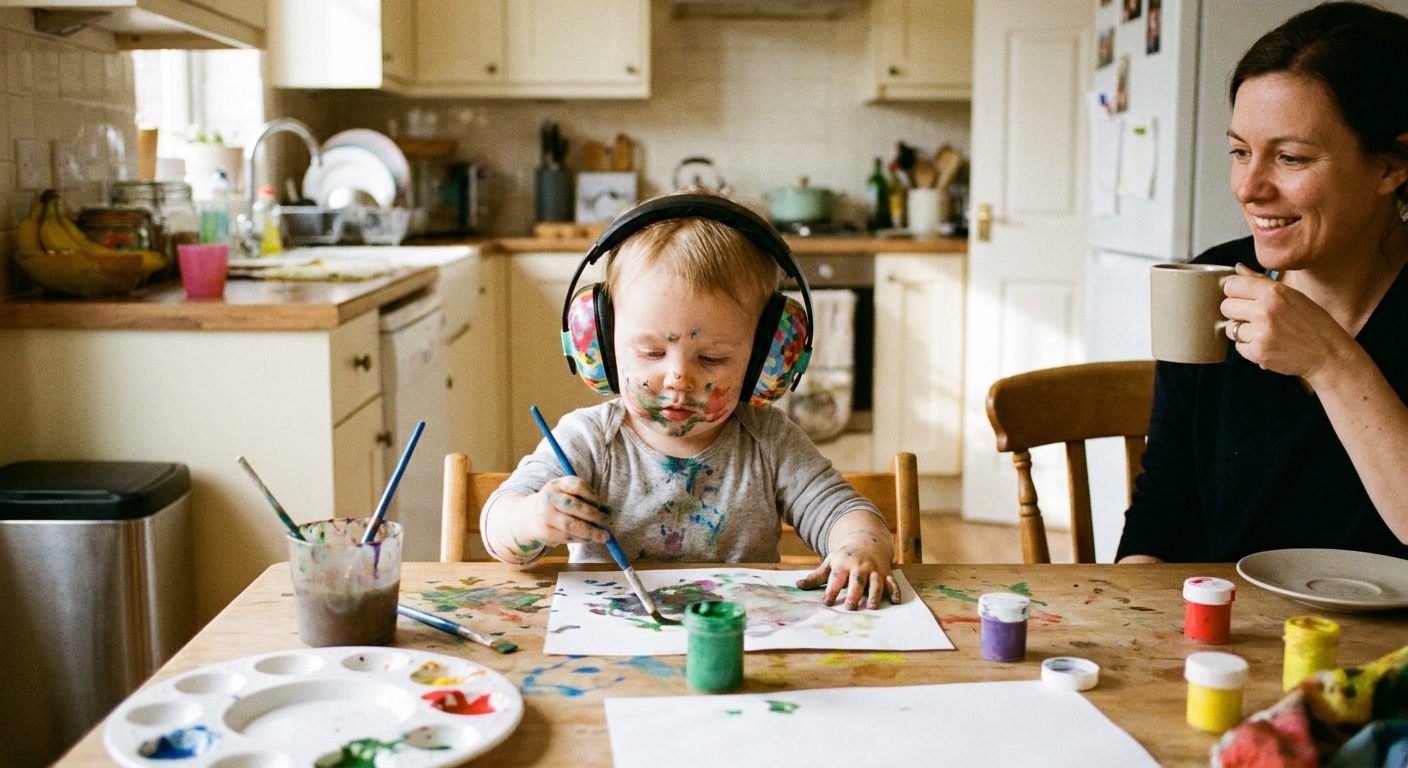
If loud music is too much, keep volume low and choose gentle tracks. You can also offer noise-reducing headphones and let the child feel the beat by tapping a drum or the table. For a calming craft that pairs well with music time, this is a cozy one: Calming sensory rainstick from a paper towel tube.
Clean-up without a crash
My favorite clean-up trick is to keep the music going, but switch to a “tidy-up song” vibe. Give each person one job: cups, brushes, or paper pickup. If you want musical ideas for that transition, these are handy: 8 transition songs for tidy-up time.
- Brush wash: swirl in water, wipe on rag, repeat
- Table reset: fold the paper inward to trap paint, then toss
- Artwork drying: lay flat on the floor or counter, out of traffic
Common snags
“My child just scribbles.”
Scribbling is the point. It builds confidence, works those pre-writing hand movements, and it gives kids an easy way to show what they hear. If you want to extend it, offer one prompt: “Can you make your scribble slow for this part?”
“They copy each other and argue.”
Give each child their own paper, or give one shared paper with “zones,” like left side and right side. You can also assign different tools. One gets sponge, one gets brush. Same song, different approach.
“They get overstimulated with fast music.”
Try a shorter fast track and immediately follow it with a slow one. You can also anchor the fast round with a rule like “brush stays on the paper,” which adds structure without shutting down the fun.
“I am not musical.”
You do not have to be. Your job is simply to notice out loud: “That got louder,” “That slowed down,” “That sounded jumpy.” Kids learn listening by hearing you name what you hear.
A tiny challenge
If you want an easy first attempt, do three songs and three sheets of paper:
- Slow song: paint only with long lines.
- Medium song: paint only with loops and waves.
- Fast song: paint only with dots and dashes.
Put the three paintings side by side when you are done. Ask, “Which one sounds like it is running? Which one sounds like it is resting?” That little conversation is the whole magic.
And if your table ends up speckled with paint and your child ends up beaming, congratulations. You just hosted a family art session that strengthened creativity and listening in the most kid-like way possible: by playing.