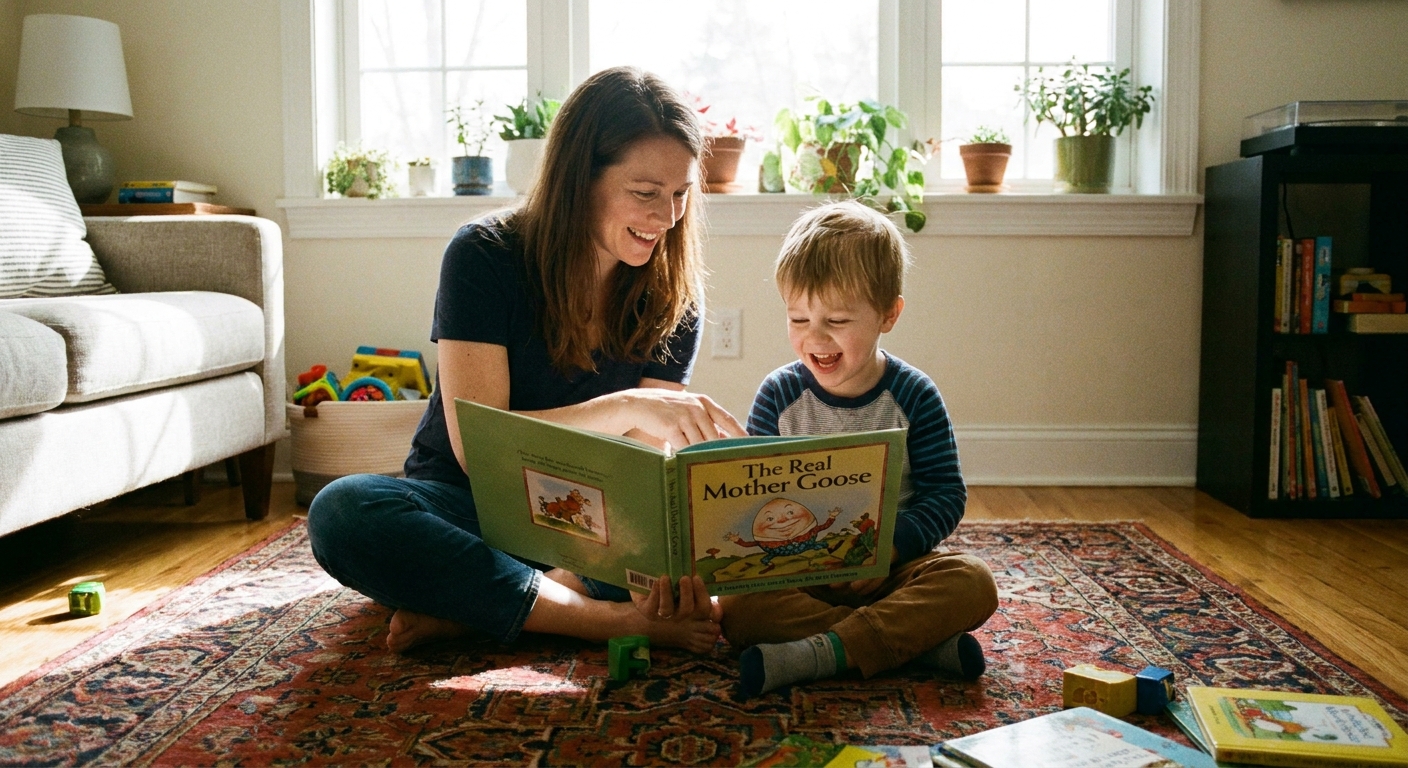

One of my favorite kitchen-table tricks for widening a child’s world is also the simplest: we sing our way there. When my kids were little, we’d pick one rhyme, learn two new words, and suddenly breakfast felt like it had a passport.
Below are eight beloved nursery rhymes and children’s songs from different places around the globe, shared with easy English translations and gentle pronunciation helps. You do not need to sound perfect. The goal is curiosity, connection, and a little musical bravery.
Quick note: many of these have family and regional variations. That is normal, and honestly, that is part of why they last.
How to use this list
- Start tiny: Choose one rhyme and learn just the chorus or first two lines.
- Keep the original language visible: Kids love repeating sounds, even before they understand meanings.
- Add one culture breadcrumb: a map glance, a food name, an animal, or a holiday connection.
- Invite movement: clapping patterns make unfamiliar words feel easier in the mouth.
If you want more “sing it with your whole body” ideas, you might like 15 Classic Action Songs for Preschool Fine Motor Skills and DIY Shakers and Rhythm Sticks for Family Sing-Alongs.
1) “Frère Jacques” (France)
Language: French
Why kids love it: It is a round. Even toddlers feel like musical geniuses when you split the family into two groups.
Original (common version):
Frère Jacques, Frère Jacques,
Dormez-vous? Dormez-vous?
Sonnez les matines! Sonnez les matines!
Ding, dang, dong. Ding, dang, dong.
Simple English: Brother John, are you sleeping? Ring the morning bells. Ding dang dong.
Say it like: FREH-ruh ZHAHK (Frère Jacques), dor-MAY voo (Dormez-vous)
Try this at home: Tap “ding dang dong” on the table like tiny bells. Then let your child choose who “wakes up” first.
2) “Los Pollitos Dicen” (Latin America)
Language: Spanish
Why it’s a keeper: Sweet, tender story about baby chicks asking for food and warmth. Perfect for gentle voices and snuggly moments.
Original (common version):
Los pollitos dicen: pío, pío, pío,
cuando tienen hambre, cuando tienen frío.
La gallina busca el maíz y el trigo,
les da la comida y les presta abrigo.
Simple English: The little chicks say “peep peep peep” when they are hungry, when they are cold. The hen looks for corn and wheat, gives them food, and gives them warmth.
Say it like: lohs poh-YEE-tohs DEE-sehn, PEE-oh PEE-oh PEE-oh
Try this at home: Make “chick hands” with your fingers and have them “peep” when you sing hambre (hunger) and “shiver” on frío (cold).

3) “Donguri Korokoro” (Japan)
Language: Japanese
Theme: A little acorn rolling along and ending up surprised by where it lands. Kids adore the rolling sound-play.
Original (short excerpt):
どんぐりころころ どんぶりこ
おいけにはまって さあたいへん
Romanization:
Donguri korokoro donburiko
Oike ni hamatte saa taihen
Simple English: The acorn goes roll roll, plop. It falls into the pond, oh no!
Say it like: DOHN-goo-ree koh-ROH-koh-roh
Try this at home: Roll a pom-pom “acorn” across the table while you sing. When it “falls in the pond,” drop it into a bowl.
4) A Hindi oil rhyme (India)
Language: Hindi (family and regional variations)
What it is: In many homes, there are little sing-song chants used during baby play, oiling, or pretend massage. They are not always “one official nursery rhyme” you can point to in a book, but they are real, lived-in songs.
Common lines (one family-style version):
तेली तेली, तेल लगाओ
बच्चे को अच्छा सा बनाओ
Romanization:
Teli teli, tel lagao
Bachche ko achchha sa banao
Simple English: Oil seller, oil seller, apply some oil, make the child feel nice.
Say it like: TEH-lee TEH-lee, tehl lah-GAA-oh
Try this at home: Turn it into a gentle “pretend lotion” game. Trace little circles on arms and legs over pajamas. If you enjoy pairing rhymes with gestures, Baby Sign Language With Nursery Rhymes has more ideas for hands-on singing.
Note: If you grew up with a different oil-rhyme chant, use yours. The best version is the one your child hears in your voice.
5) “Suo Gân” (Wales)
Language: Welsh
Why it’s special: A lullaby with the gentlest melody. Even if you only hum it, it wraps a room in calm.
Welsh title meaning: “Lullaby”
Simple English (theme): A parent comforts a little one to sleep, promising warmth and safety.
Say it like: SOH gahn (approximate, like “so” + “gahn”)
Try this at home: Use it as your reset song after a busy day. If bedtime songs are your jam, tuck this in alongside The Science of Lullabies: 7 Calming Bedtime Songs to Help Babies Sleep.

6) “Alouette” (Canada)
Language: French
Why kids cackle: It is delightfully dramatic and repetitive, with lots of body-part vocabulary.
Original (common refrain):
Alouette, gentille alouette,
Alouette, je te plumerai.
Simple English: Lark, sweet lark, lark, I will pluck your feathers.
Say it like: ah-loo-WEHT, zhuh tuh ploo-muh-RAY
Try this at home: Make it silly instead of scary: when you get to “head,” “beak,” or “wings,” gently point on a stuffed bird toy or draw a goofy lark together. (And if you ever bump into rhymes that feel too grim, I keep a friendly guide here: How to Gently Rewrite Scary or Outdated Nursery Rhymes.)
7) “Bä, bä, vita lamm” (Sweden)
Language: Swedish
Familiar cousin: It sits in the same family as “Baa Baa Black Sheep.” It is a cozy way to notice how songs travel and change.
Original (common version):
Bä bä vita lamm, har du någon ull?
Ja, ja kära barn, jag har ull nog.
Simple English: Baa baa little white lamb, do you have any wool? Yes dear child, I have plenty of wool.
Say it like: beh beh VEE-tah lahm
Try this at home: Pull out cotton balls and “count” them into three piles. If your child loves number songs, you can layer this with ideas from Counting and Alphabet Songs Beyond the ABCs.
8) “Che Che Kule” (Ghana)
Language: Often shared as a children’s call-and-response song from Ghana (commonly taught with movement)
Why it works so well at home: You do not need perfect pronunciation to enjoy it. The point is echoing, copying motions, and taking turns leading.
Common call-and-response (as often taught):
Leader: Che che kule
Group: Che che kule
Leader: Che che kofisa
Group: Che che kofisa
Leader: Kofisa langa
Group: Kofisa langa
Leader: Kule kule kofi sa
Group: Kule kule kofi sa
What it means: This song is frequently taught as a phonetic call-and-response (the sounds matter more than a direct word-for-word translation in many classroom versions). If you learned a version with specific meanings, keep that tradition.
Say it like: chay chay KOO-lay
Try this at home: Make up four simple moves (clap, tap knees, touch head, spin). Each line gets one move. Let your child be the leader and change the moves whenever the giggles start.
For more echo-style fun, borrow structure from 20 Call and Response Songs for Road Trips and plug in greetings from languages you are learning.
A 10-minute routine
- Pick one rhyme from the list.
- Find it on a map or globe. One finger point is enough.
- Learn two words from the original language. Repeat them like a game.
- Add a prop from your house: a bowl for a pond, a scarf for a lullaby, a toy bird for “Alouette.”
- Close with a familiar favorite so everyone leaves feeling confident.

FAQ
Do I need perfect pronunciation?
No. Aim for “close enough to be recognizable,” and model a great life skill: trying. You can say, “Let’s practice that sound together,” and keep it light.
What age is best for international rhymes?
All ages, truly. Babies love rhythm and repetition, toddlers love animal sounds and motions, and preschoolers start noticing that the same idea can have different words.
Is it okay to translate a rhyme into English?
Yes, especially for understanding. I like to do both: one line in the original language, then one line in English. It keeps meaning and music together.
What if a rhyme has a darker verse?
You can skip it, soften it, or rewrite it so it fits your family’s values and your child’s sensitivity. Here is my go-to approach: How to Gently Rewrite Scary or Outdated Nursery Rhymes.
Keep the world on your table
If you try even one of these, you are doing something big in a very small way: you are teaching your child that unfamiliar sounds are not scary. They are interesting. They are singable. And they belong in your everyday life right alongside peanut butter toast and mismatched socks.
If you want to stay in the nursery-rhyme lane a little longer, hop over to our Nursery Rhymes guide for more cozy classics and playful variations.