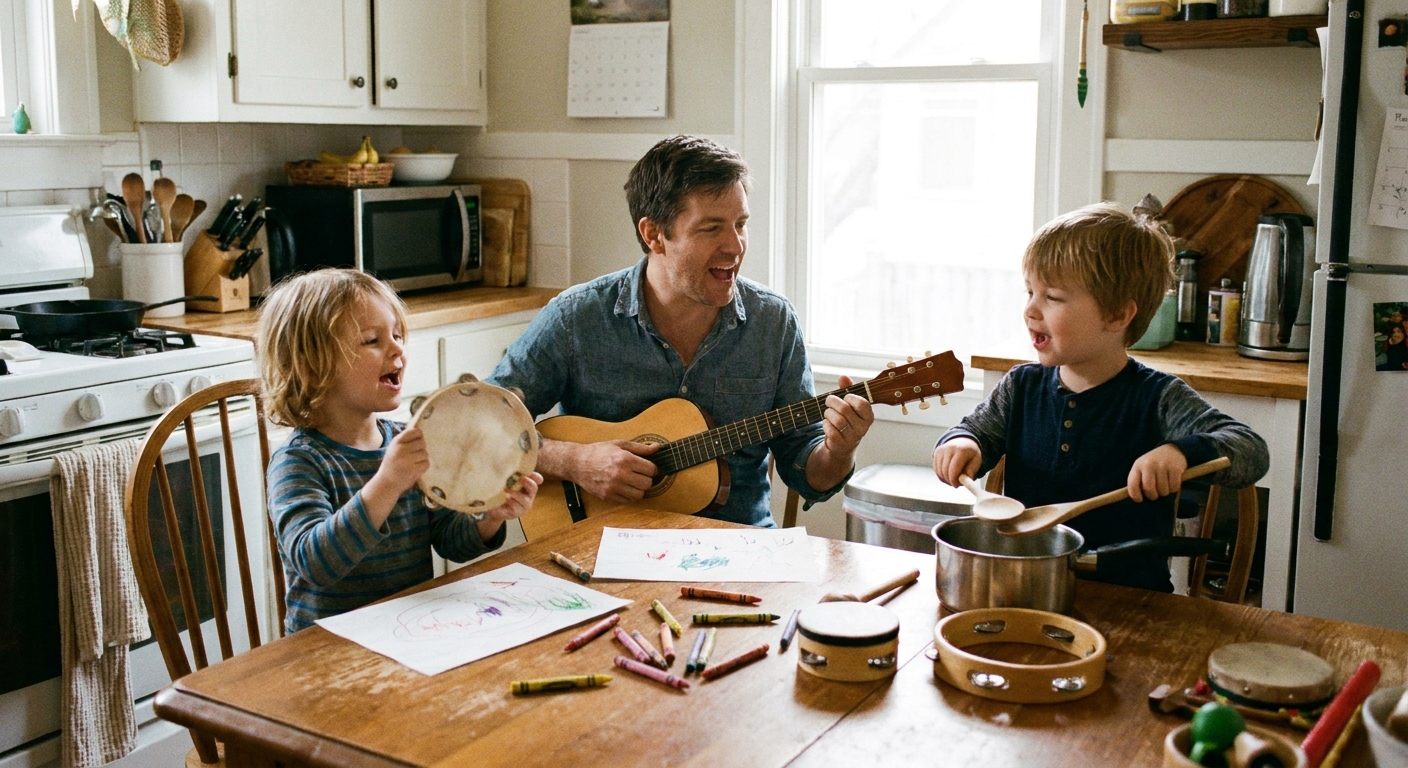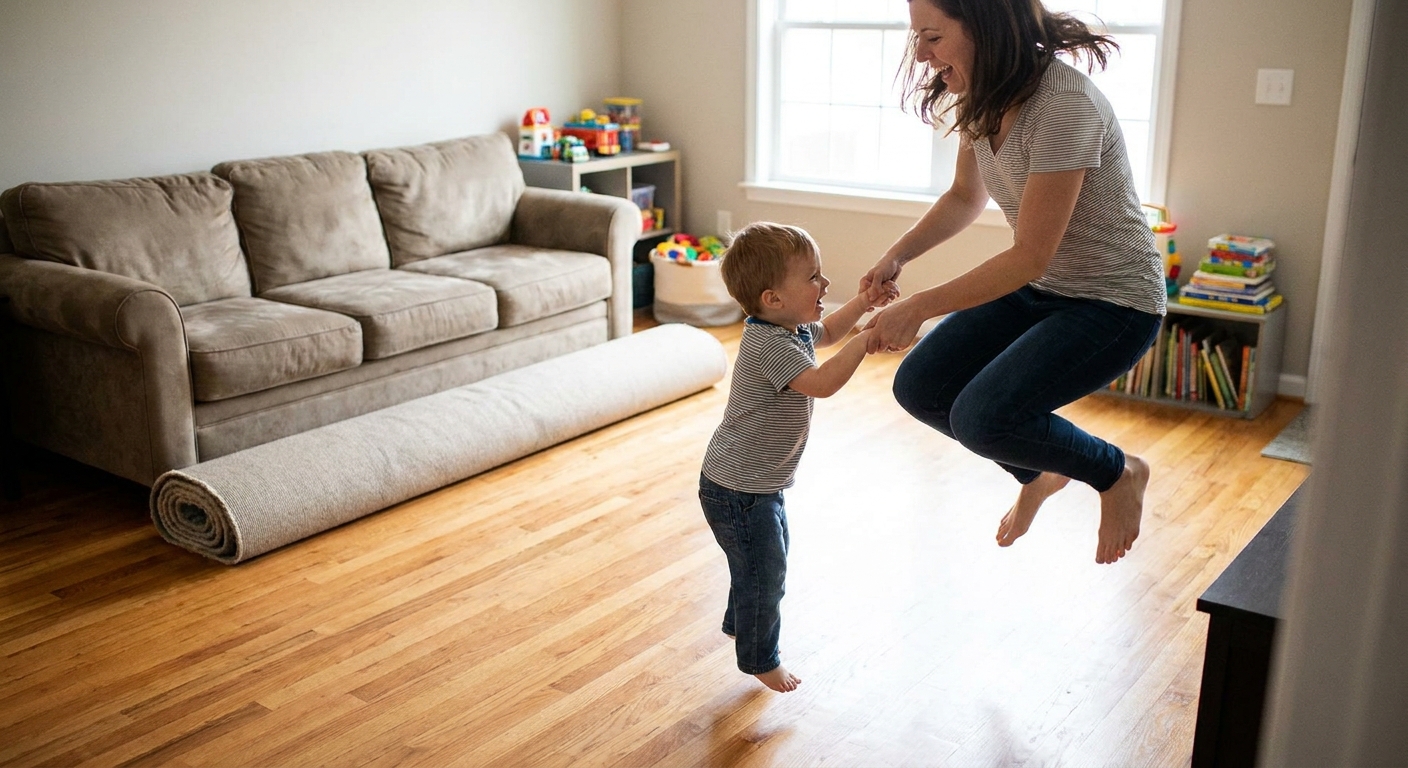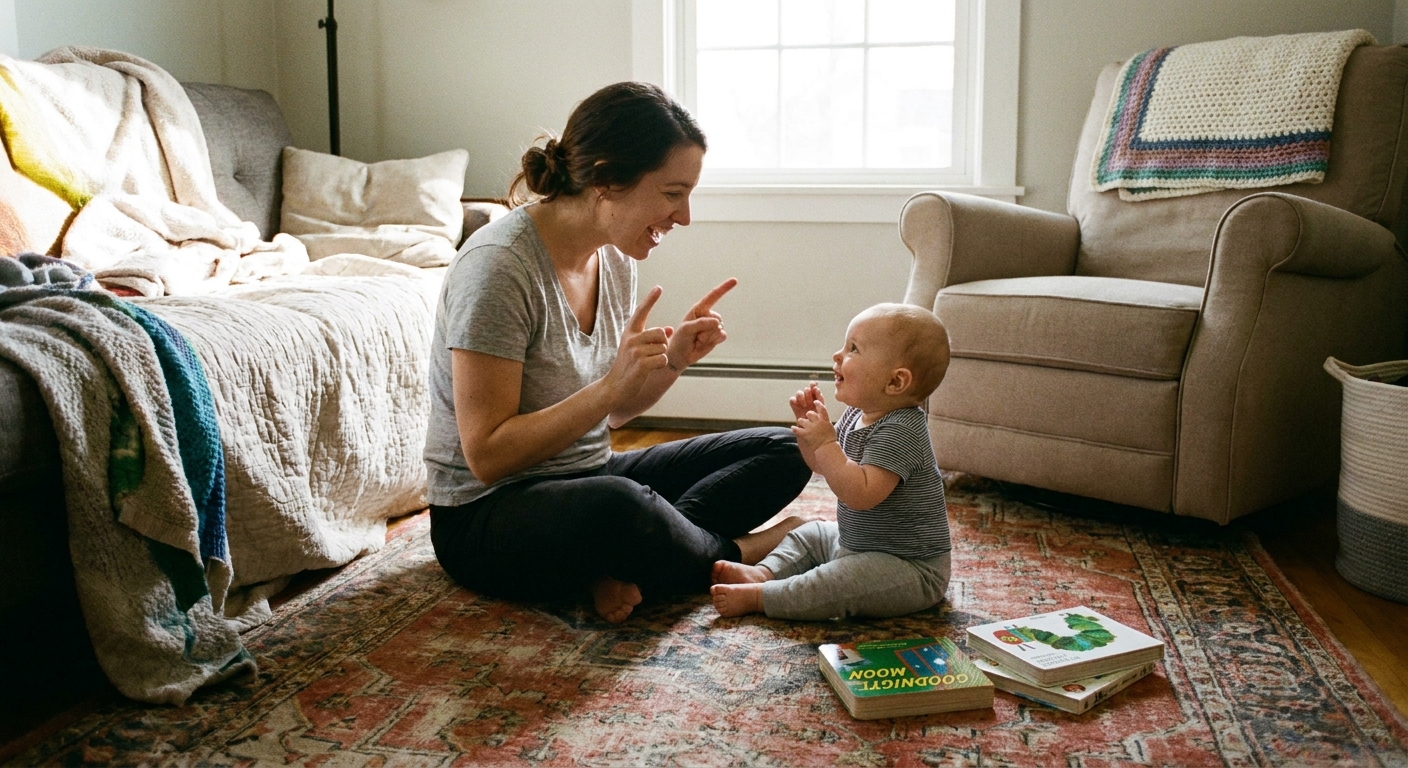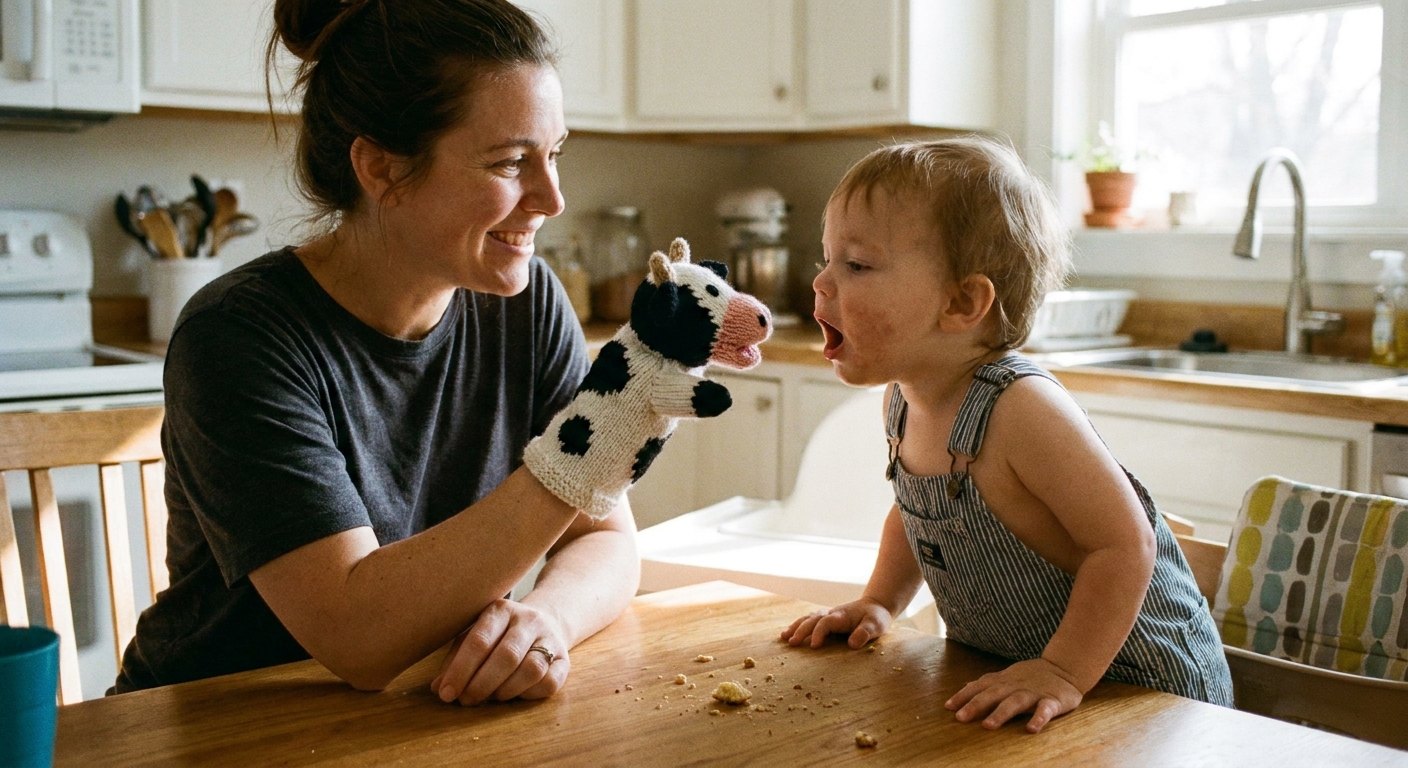

At my house, nursery rhymes are the background music of everything. Shoes get tied to “This Little Piggy,” spills get cleaned up to a made-up “Uh oh, wipe it up” chant, and bedtime still has at least one round of “Twinkle, Twinkle.”
What surprised me (back when my oldest was a preschooler and I was feeling very unsure about the whole reading thing) is that rhymes are already phonics-friendly. They are packed with sound patterns. When you start pointing those patterns out in tiny, playful ways, you are not “switching” from singing to learning. You are simply turning the volume up on what your child’s brain is already doing.
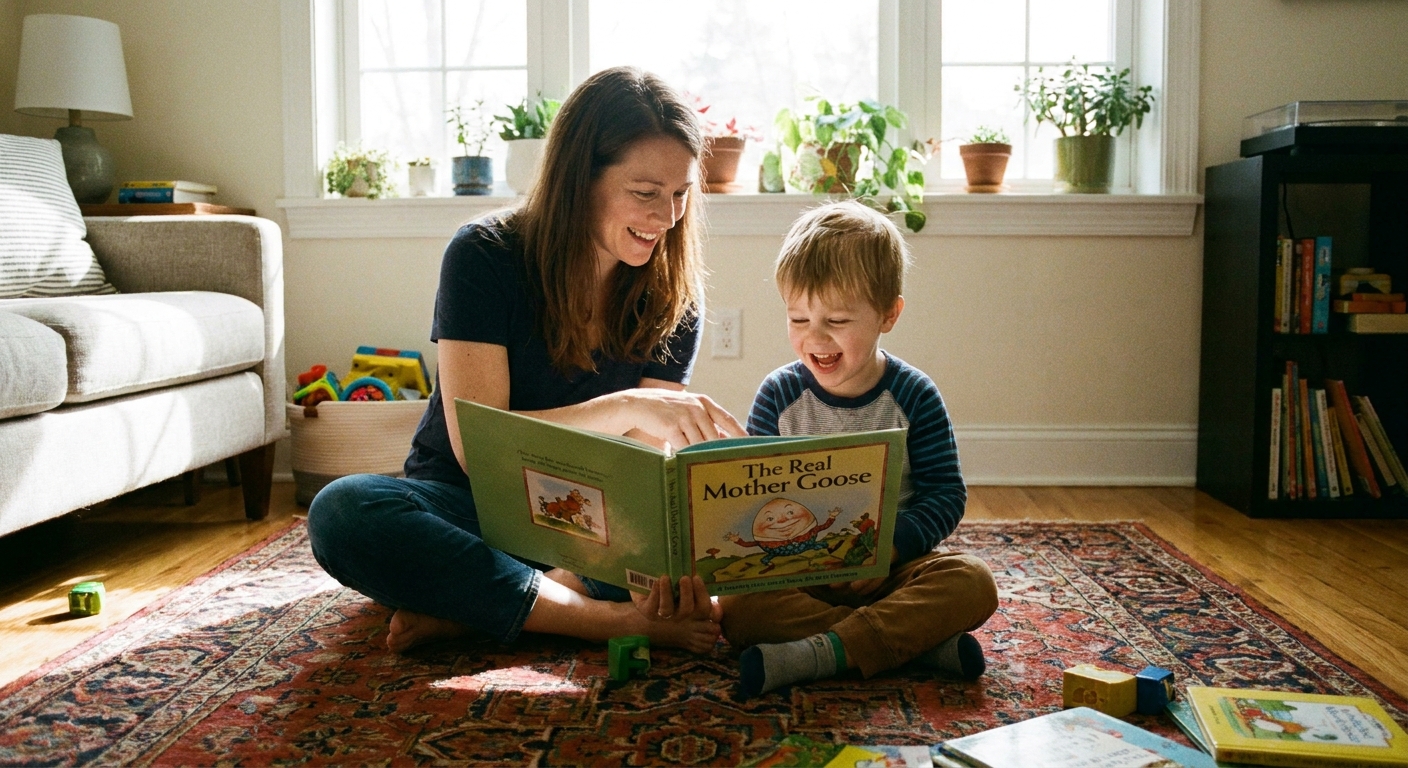
Why rhymes bridge to phonics
Before kids can connect letters to sounds smoothly, they often learn to hear sounds clearly inside words. That skill is called phonological awareness, and it includes:
- Rhyming (cat, hat, bat)
- Alliteration (Peter Piper picked)
- Syllables (spi-der has two)
- Beginning and ending sounds (mmm in mouse, t in hat)
- Sound blending (m…a…p becomes map)
Nursery rhymes practice these in a way that feels like play. Once those listening muscles get strong, adding letters can feel much smoother. (And for some kids, letters and sounds develop in parallel, which is completely fine too.)
If you want more rhyme ideas to rotate in, I keep a few favorites collected here: Nursery Rhymes Guide.
The 3-step transition
When families ask me how to move from singing to early phonics without turning the kitchen into a classroom, I suggest this simple progression. You can use it with any rhyme.
Step 1: Sing it
First, just sing. Repeat the rhyme across the week in little pockets of time: car rides, bath, waiting for toast.
Need fresh ideas for places to sing? Bath time rhymes are a sweet gateway for wiggly kids: Splash-Friendly Nursery Rhymes for Bath Time.
Step 2: Spot it
Pick one thing to notice. Not five. One. Examples:
- “Did you hear how star and are rhyme?”
- “Listen: Humpty and Dumpty. They are like sound cousins.”
- “Let’s clap the beats in Hickory Dickory Dock.”
Step 3: Symbol it
Finally, bring in letters in a way that feels like a tiny magic trick: “That sound you keep making, mmm, is the letter M.”
If you want an easy way to picture this, try it mid-rhyme: write a big M on a sticky note, then sing “Mary had a little lamb…” and tap the letter when you sing the /m/ sound.
This step can be as small as writing one letter on a sticky note and sticking it to the fridge for the day.
Age guide
If you are wondering what is “enough” for your child’s age, this is the loose guide I use:
- Toddlers: Mostly Step 1, plus tiny bits of Step 2 (rhyming and clapping). Keep it to seconds, not minutes.
- Younger preschoolers: Step 2 gets really fun here. Start noticing rhymes, syllables, and first sounds.
- Older preschoolers: Add Step 3 more often, especially with letters in their name, or letters they ask about.
No matter the age, stop while it is still fun.
5 easy phonics games
None of these require worksheets, special apps, or long attention spans. Think: one minute here, three minutes there.
1) The Rhyme Detective
What you do: Sing a familiar rhyme and pause right before a rhyming word. Let your child “solve” it.
- “Twinkle, twinkle little…” (pause)
- If they say “star,” you respond: “Yes. Star. What else rhymes with star? Car? Jar?”
Make it easier: Offer two choices. “Star or spoon?”
Make it harder: Ask for a silly rhyme. “Star… blar?” Kids love nonsense, and it still counts as rhyme practice.
2) Clap the Beats
What you do: Clap or tap the syllables in names and key words from the rhyme.
- Humpty = 2 claps; Dumpty = 2 claps
- spi-der = 2 claps
- wa-ter spout = 3 claps
Kitchen-table version: Tap with spoons on the table, or drum on an upside-down pot.
If your family likes instruments, making simple DIY shakers can turn this into a whole rhythm moment: DIY Shakers and Rhythm Sticks.
3) First Sound Hunt
What you do: Pick one “sound of the day” from a rhyme and hunt for objects that start with that sound.
Example with “Mary Had a Little Lamb”:
- “Mary starts with mmmm. Let’s find three things that start with mmmm.”
- Possible finds: marker, mug, mitten.
Tip from my own trial and error: Kids match by sound, not spelling. “Phone” starts with /f/. And in many accents, “unicorn” begins with a little /y/ sound (/you-nicorn/), even though it starts with the letter U. If they guess “milk” for /m/, celebrate it.
4) Sound Stretching
What you do: Choose one short word from a rhyme and stretch it like taffy.
- From “Baa, Baa, Black Sheep”: baa is tricky, but bag or hat works great if you swap words in for play.
- From “Jack and Jill”: stretch hill (h…i…ll).
Then blend it back together: “h…i…ll… hill!”
Keep it silly: If stretching makes them laugh, you are doing it right.
5) A tiny high-frequency word spotlight
Many nursery rhymes repeat high-frequency words like a, the, to, in, and, it. You do not need flashcards to begin noticing them, and this is optional. If your child is not interested yet, stick with sounds.
What you do: Pick one short word and “spot it” in print once a day.
- Write the on a sticky note and place it on the table.
- When you read a rhyme book, say: “There’s our word the. Can you tap it?”
Important: Only spotlight one word at a time. Two if your child begs for more.
Add letters without stress
I am firmly in the “keep it light” camp. Letters should feel like props, not pressure. Here are a few ways to do that.
Write one letter
Choose a letter that matches a sound you are already playing with. Write it big on a paper scrap. That is it.
- “M says /m/ like Mary.”
- “S says /s/ like star.”
Use magnetic or bath letters
While you sing, hold up one letter and let your child “catch” it, stick it to the fridge, or float it in the tub. The body movement can help the learning stick, especially for kids who need to wiggle to focus.
Make a rhyme-to-letter mini book
Staple 4 to 6 pages together. Each page gets one letter and one quick drawing.
- M: draw a simple “Mary” stick figure
- S: draw a star
- H: draw a hill
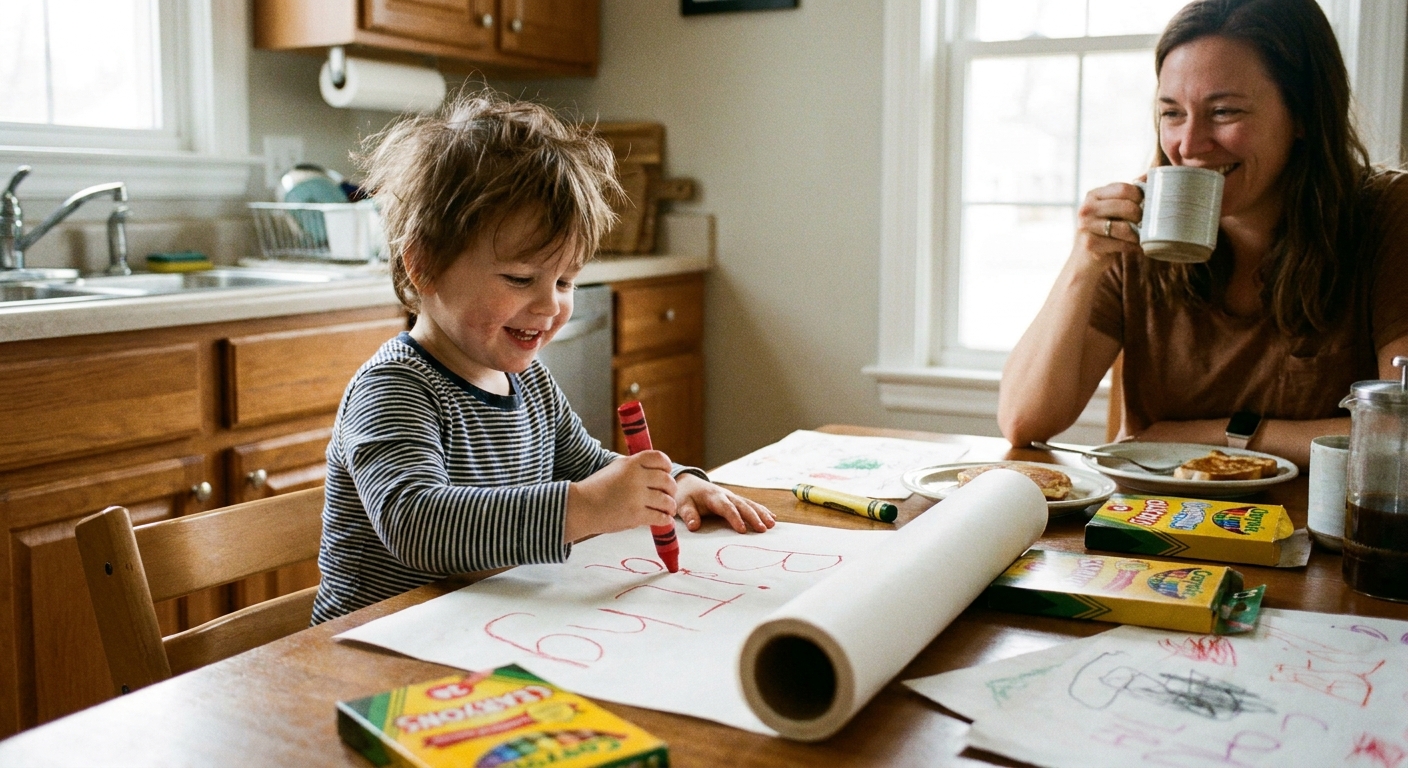
Your child does not need to draw beautifully. They just need to own the marks on the page.
Readiness signs
Kids do not need to “master” nursery rhymes first. But these are good signs the bridge will feel natural:
- They notice or enjoy rhymes (“Cat and hat!”)
- They can clap syllables with help
- They like repeating phrases from songs
- They ask what letters are, or point them out
If none of those are true yet, keep singing. Add motion songs too, because movement can support attention and listening. I have a roundup of favorites here: Classic Action Songs for Preschool Fine Motor Skills.
A simple 10-minute routine
If you like a plan that still feels flexible, here is one I used when my kids were preschool age.
- Minute 1 to 2: Sing one nursery rhyme together.
- Minute 3 to 4: Play “Rhyme Detective” with one rhyming pair.
- Minute 5 to 7: Clap syllables in 3 words from the rhyme.
- Minute 8 to 9: Pick one beginning sound and hunt for two objects.
- Minute 10: Write one letter that matches your sound and let your child decorate it with dots or stickers.
Stop while it is still fun. Leaving them wanting more is a parenting superpower.
Common bumps
“My child only wants to sing.”
Perfect. Start with one playful pause: “What word comes next?” That is phonics-friendly without feeling like a lesson.
“They guess letters randomly.”
That is normal. Keep the focus on sounds first. Letters usually come along more smoothly once listening skills are strong.
“They get frustrated if they cannot find a rhyme.”
Switch to two choices or offer a silly rhyme. You are building confidence and sound awareness, not testing them.
“I am not a great singer.”
You do not need a performance voice. Kids learn best from a familiar voice. If this is a tender spot for you, I wrote a whole pep talk here: Sing to Your Baby Even If You Hate Your Voice.
Try this tonight
- At dinner: Pick a “sound of the day” and listen for it in food words (mmm in mac and cheese).
- In the bath: Make bubbles every time you hear the rhyming word.
- At bedtime: Whisper the first sound of three words from the rhyme and let your child guess the word.
The big goal is not racing ahead to reading. The big goal is helping your child feel, in their bones, that words are made of sounds and sounds can be played with. That is the heart of early phonics, and nursery rhymes are already holding the door open.