
I grew up in a house where we sang through everything: sock-matching, pancake-flipping, even sweeping the kitchen floor. When my own kids came along, I dusted off all the old nursery rhymes I remembered and realized something awkward mid-verse. Some of our “sweet little classics” are a tiny bit… yikes.
The good news is you do not have to throw beloved rhymes out. You can gently rewrite them so the rhythm stays familiar, the play stays intact, and the words fit the values and sensitivities of modern families.
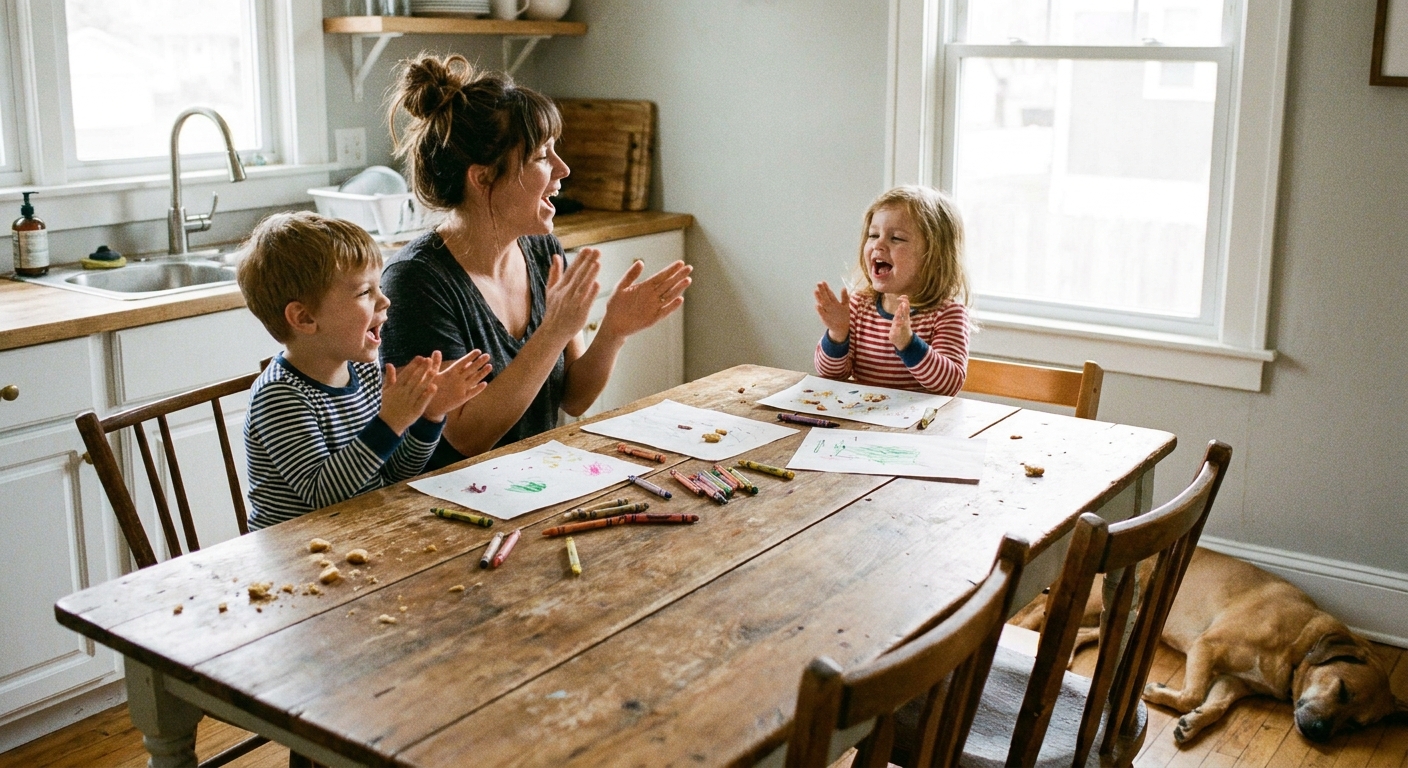
Why rewriting works
Nursery rhymes have always changed. They have traveled by word of mouth, hopped from one country to another, and picked up new verses like stickers on a water bottle. Even well-known classics show up in multiple versions depending on region and era. If a line feels scary, cruel, or outdated, you are allowed to adapt it for the children right in front of you.
In my experience, kids mostly want three things:
- A steady beat they can clap to
- Predictable rhyme that lets them anticipate the next word
- A satisfying ending that feels safe, funny, or brave
If you keep the rhythm and rhyme, children accept the new words quickly, especially when you invite them to help.
The gentle rewrite checklist
1) Keep the syllables
Most nursery rhymes are tiny musical machines. If a line has a steady number of beats or syllables, aim for something close in your replacement. You do not need perfection. You just want it to feel singable.
2) Keep the rhyme word if you can
Kids love the click of a rhyme landing where they expect it. If the original ends with “down,” consider keeping “down” and changing the earlier part of the line.
3) Swap the threat for a surprise
Many older rhymes use danger as the punchline. For preschoolers, danger can become:
- a wobble
- a tumble into something soft
- a silly mistake
- a rescue
- a do-over
4) Update roles and values
If a rhyme leans on outdated gender roles or punishment, aim for a small adjustment that keeps the playfulness. I like switching to teamwork, kindness, and curiosity.
5) Leave a little edge
Not every child needs the same softening. In my experience, some kindergarteners love a “spooky but safe” version. You can offer two endings, a cozy ending and a spooky ending, and let your child choose.
Lyric swaps
Here are practical swap ideas you can apply to many traditional verses.
Instead of injury, use a safe landing
- Old vibe: “broke,” “cracked,” “hurt”
- Gentle swap: “bounced,” “wobbled,” “plopped,” “landed safe”
Instead of punishment, use repair
- Old vibe: spanking, shaming, calling someone “bad”
- Gentle swap: making it right, saying sorry, trying again
Instead of fear, use bravery with support
- Old vibe: alone in the dark, being taken, being chased
- Gentle swap: a grown-up nearby, a friend joining in, a flashlight, a “we can do it together” line
Instead of stereotypes, use choice
- Old vibe: “good girls,” “tough boys,” only one kind of grown-up does the work
- Gentle swap: “we,” “friends,” “grown-ups,” “everyone,” or a child who chooses what they like
Rewrite examples
I am going to use short, well-known snippets here and show the move rather than trying to be definitive. Feel free to adjust for your own family.
Example 1: A hard fall
Original (common version):
Jack fell down and broke his crown,
And Jill came tumbling after.
Gentle rewrite:
Jack fell down and popped back up,
And Jill came laughing after.
What stayed the same is the tumble and the rhyme landing. What changed is the outcome.
Example 2: Punishment turns into problem-solving
Original (common version):
Old Mother Hubbard went to the cupboard,
To give the poor dog a bone…
Gentle rewrite (two lines you can drop in):
She looked in the cupboard, it was empty inside,
So they made a small snack and shared it with pride.
This keeps the silly surprise of “nothing there,” but lands on teamwork instead of a harsh sting.
Example 3: Scary consequence becomes a chase game
Original vibe: someone is coming to “get” you.
Gentle rewrite (easy swap lines):
“Somebody is coming,” so tiptoe light as can be,
It is a tickle-tag game, and they cannot catch me!
Same tension, different meaning. The body stays relaxed instead of bracing.
Example 4: Stereotypes become “everyone”
Original vibe: only one kind of person does the work.
Gentle rewrite (plug-in lines):
Grown-ups in the kitchen, kids can help too,
We stir and we taste and we say, “Thank you!”
This works as a drop-in verse anywhere a rhyme starts feeling like a rule instead of a game.
If you enjoy digging into where some of these darker lines came from, our gentle history peek is here: The surprising origins behind popular nursery rhymes. Knowing the background can make it feel even more natural to adjust the words for today.
Age guide
Toddlers
Keep endings cozy and quick. A single “everybody is okay” line is often enough.
Preschoolers
They love silly sound effects and do-over endings. This is the sweet spot for swapping threats for surprises.
Kindergarten and early elementary
Many kids this age enjoy “spooky but safe.” Keep the suspense, then add support, bravery, or a funny reveal.
The 3-step Kindness Remix
Step 1: Circle the ouch words
As you read or sing, notice the parts that make you wince: injury, abandonment, cruelty, humiliation, or any “the joke is mean” moment.
Step 2: Choose your replacement flavor
- Cozy: safe, sleepy, snuggly
- Silly: messy, bouncy, unexpected
- Brave: a little spooky, but supported and capable
Step 3: Keep one original hook
Keep a familiar phrase, name, or rhyme landing so it still feels like the rhyme your child recognizes.
Let kids help
This is my favorite part, because it turns “Mom changed the words” into “We made our own song.” Try:
- Two-choice swaps: “Did he fall down or slide down?”
- Sound swaps: Replace scary words with funny sound effects: “plop,” “boing,” “whoops!”
- Character swaps: Let your child pick the animal or person: “Little Bo-Peep” becomes “Little Bunny-Peep,” “Little Dino-Peep,” and suddenly it is theirs.
If your family likes a call-and-response style, you can borrow the rhythm from road-trip favorites and use it as a rewriting game. We have a bunch of those here: Call-and-response songs for road trips.
But that is not how it goes
Some kids are rhyme purists. They hear a version at school or from a grandparent and want it “right.” Here are a few gentle replies that have worked in my house and playgroups:
- “That is one version. This is our family version.”
- “Some old rhymes had scary parts. We keep the fun part and change the rest.”
- “Want the cozy ending or the spooky ending today?”
Giving a choice preserves the child’s sense of control, which is often what they are really reaching for.
When to pause a rhyme
Sometimes a rhyme is not just a little dark. Sometimes it hits a sensitive topic for your child or your family history. It is okay to set it aside.
A quick gut-check I use: if I find myself rushing through lines, mumbling words, or feeling tense, it is not the right rhyme for that moment. There are so many other options.
If you want a friendly starting place, our Nursery Rhymes guide is a cozy rabbit hole for finding classics that already feel gentle.
Mini FAQ
Is it okay to rewrite public-domain nursery rhymes?
Many well-known traditional nursery rhymes are old enough to be in the public domain, and families have been informally adapting lyrics for generations. One note, though: modern books, recordings, and special arrangements can still be copyrighted even when the underlying rhyme is old. If you are rewriting for your own home, classroom, or playgroup, you are doing what people have always done: passing along a living tradition.
Will rewriting make kids more sensitive?
In my experience, it actually helps kids feel safer exploring stories. You can still include a little suspense, then model how to resolve it with help, humor, or courage.
How do I keep the melody?
Hum the line first, then speak your new words on top of it like a chant. If you stumble, shorten your new line or keep the original rhyme word at the end.
Any tools to make rhyme time calmer at bedtime?
Yes. Swap fast, bouncy rhymes for slower lullaby rhythms, and choose gentle imagery. If you need a starting point, I keep a small rotation from: The science of lullabies and calming bedtime songs.
A tiny encouragement
You do not need to be a poet to do this well. If you can keep a beat while stirring spaghetti sauce, you can rewrite a rhyme line by line. Start small. Change one word. Add one “everybody’s okay” ending. And if your child giggles and asks you to sing it again, congratulations. You just made a new family tradition.