
When my kids were preschoolers, I could always tell when little hands needed extra practice. Buttons took forever, zippers fought back, and crayons snapped mid-masterpiece. That is when I leaned hardest on action songs. Not because I am trying to run a tiny music class, but because songs sneak in repetition, rhythm, and finger work without anyone noticing they are practicing.
Below are 15 classic action songs with simple, step-by-step motions. You can do them sitting at the kitchen table, in the school pickup line, or while dinner cooks.
Why action songs help fine motor skills
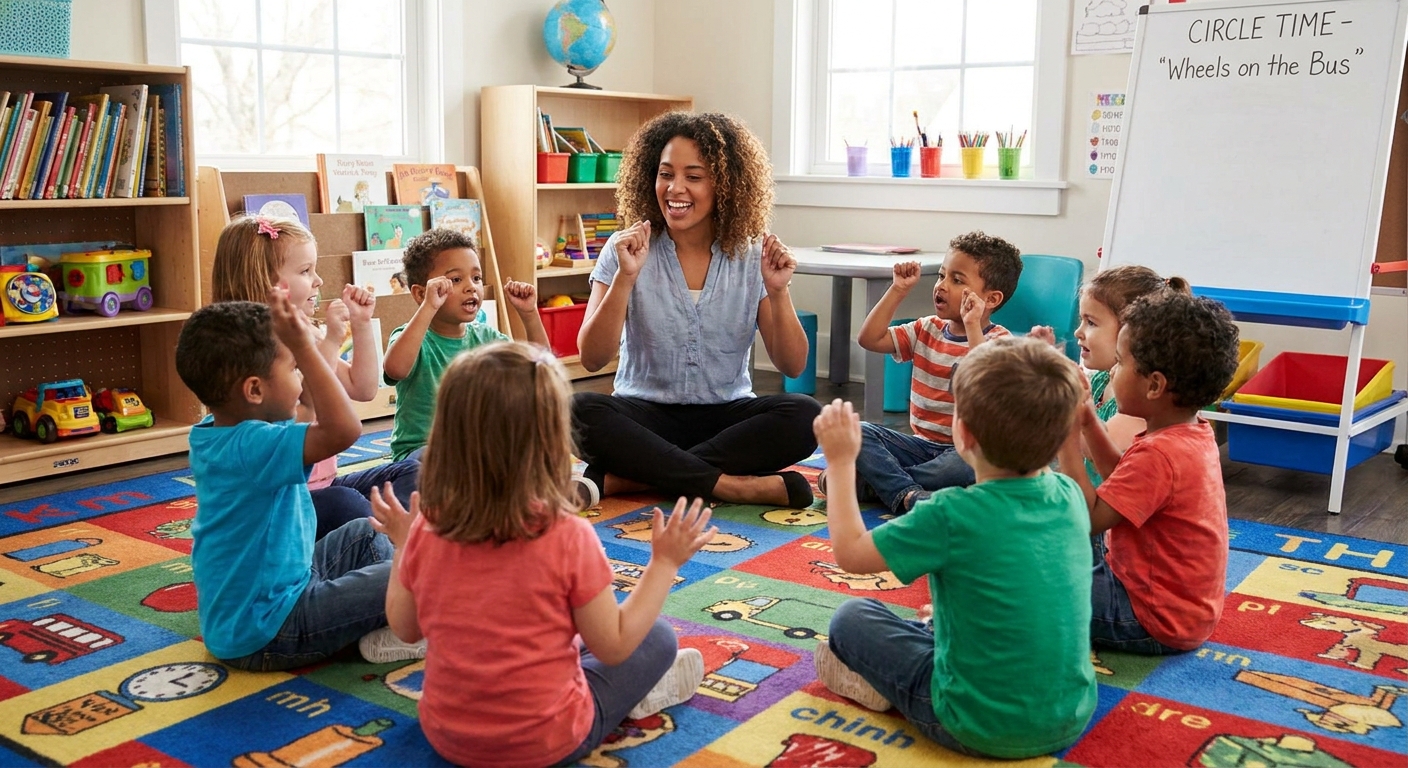
Fine motor skills are the small, precise movements that help kids do everyday things like hold a pencil, turn a page, zip a coat, and use utensils. Action songs can help support them because they often build:
- Finger isolation (moving one finger at a time, like the spider’s legs or counting down five little ducks)
- Bilateral coordination (both hands working together, like rolling hands or opening and closing palms)
- Hand strength and endurance (repeated pinching, squeezing, tapping, and holding shapes for a few seconds)
- Timing and motor planning (doing motions in sequence with the lyrics)
- Crossing midline (a hand moving across the body, like right hand reaching to left shoulder or left knee during a song)
If you want an even bigger list of sing-along ideas for different ages, our songs hub is here: /guide-kids-songs/.
How to use this list
- Aim for small movements with control. Big movements are fun, but tiny, careful motions are where the finger practice happens.
- Do one verse slowly first. Then sing it “normal.” Speed comes later.
- Model in front of your chest. Preschoolers can copy best when your hands are easy to see.
- Offer a “tiny version.” Some kids need smaller motions for control.
- Repeat the same song for a week. Repetition often helps the motions feel easier and smoother.
- Swap in props if it helps. A scarf for wipers, a paper circle for wheels, or a small stuffed spider for “Itsy Bitsy.”
Age note: Most of these work well for ages 2 to 5. Two year olds might watch more than copy at first, and that still counts. Imitation often shows up a little later, especially if a child is still figuring out how their hands work.
15 classic action songs
1) The Itsy Bitsy Spider
Skills: finger isolation, bilateral coordination, sequencing
Hand motions:
- Spider: Touch fingertips together and wiggle fingers like crawling legs.
- Up the waterspout: “Walk” your spider hands upward, alternating finger wiggles as you rise.
- Down came the rain: Wiggle fingers downward like raindrops falling.
- Washed the spider out: Sweep both hands outward, palms facing away.
- Out came the sun: Make a big circle overhead with both hands, then open fingers wide like sun rays.
- Dried up all the rain: Wipe the air with both palms like you are drying a table.
- Spider climbed up again: Repeat the climb, a little slower and steadier if needed.
2) The Wheels on the Bus
Skills: wrist rotation, forearm control, hand endurance
Hand motions:
- Wheels go round and round: Make two fists and roll them around each other in front of your chest.
- Wipers go swish swish swish: Hold hands flat and sweep side to side together.
- Doors go open and shut: Put palms together, then hinge them open and closed like a book.
- Horn goes beep beep beep: Press an “imaginary horn” with a pointer finger.
- Babies go wah wah wah: Make tiny fists and rub eyes gently, or cradle arms like rocking.
3) If You’re Happy and You Know It
Skills: clapping accuracy, motor planning, imitation
Hand motions:
- Clap your hands: Clap slowly with hands centered.
- Stomp your feet: Keep hands on knees and stomp, or stomp seated by tapping toes.
- Shout “Hooray”: Hands to mouth like a megaphone, then up high.
- Optional fine motor add-on: “Wiggle your fingers,” “tap your thumbs,” “pinch your fingers” (thumb to each fingertip).
4) Open, Shut Them
Skills: grasp and release, hand strength, rhythm
Hand motions:
- Open, shut them: Open hands wide, then make fists, repeat.
- Give a little clap: Small gentle claps.
- Put them in your lap: Hands rest on thighs (great “reset” for wiggly bodies).
- Creep them, creep them: Finger-walk hands forward on your lap or table.
- Right up to your chin: Finger-walk hands upward to chin.
- Open wide your little mouth: Make a big smile and open wide.
- But do not let them in: Pull hands back quickly and hide them behind your back.
5) Pat-a-Cake
Skills: palm control, crossing midline, turn-taking
Hand motions:
- Pat-a-cake: Clap your own hands.
- Baker’s man: Pat hands on knees.
- Roll it: Roll hands over each other like making dough.
- Pat it: Pat “dough” with one palm, then the other.
- Mark it with a B: Trace a big letter B in the air with index finger.
- Put it in the oven: Slide both hands forward as if putting a tray into an oven.
6) Twinkle, Twinkle, Little Star
Skills: finger extension, hand opening, visual tracking
Hand motions:
- Twinkle: Open and close fingers like tiny sparkles.
- Little star: Make a star shape by spreading fingers wide and holding still.
- Up above the world so high: Lift hands overhead, fingers wiggling.
- Like a diamond in the sky: Touch fingertips together to form a diamond shape.
- Repeat: Return to gentle finger twinkles.
7) Five Little Ducks
Skills: counting on fingers, finger isolation, coordination
Hand motions:
- Show “five”: Hold up one hand with fingers spread.
- Went out one day: Waddle two fingers (index and middle) forward like duck feet.
- Over the hills and far away: Wave hand in a gentle hill motion.
- Mama duck said “quack quack”: Make a talking beak with one hand (thumb meets fingers).
- And only four came back: Hold up four fingers. Continue down to zero, then bring them all back at the end.
8) Five Little Monkeys Jumping on the Bed
Skills: finger counting, controlled bouncing motions
Hand motions:
- Hold up five fingers.
- Jumping: Bounce your open hand up and down like it is on a trampoline.
- Fell off: Drop one finger down each verse (fold it into your palm).
- Call the doctor: Thumb and pinky out like a phone to your ear.
- No more monkeys: Shake index finger “no,” slowly for control.
9) The Hokey Pokey
Skills: crossing midline, body awareness, right-left practice
Hand motions:
- Put your right hand in: Reach right hand forward.
- Take your right hand out: Pull it back to your body.
- Shake it all about: Wiggle wrist and fingers (tiny shakes are best for fine motor).
- Do the Hokey Pokey: Clap a simple pattern or roll hands.
- Turn yourself around: Slow spin, or seated twist side to side.
10) Head, Shoulders, Knees, and Toes
Skills: speed control, coordination, pointing accuracy
Hand motions:
- Touch head with both hands.
- Tap shoulders.
- Tap knees.
- Touch toes (bend or point down if bending is hard).
- Add eyes, ears, mouth, nose with careful pointing using index fingers.
11) Row, Row, Row Your Boat
Skills: bilateral coordination, rhythm, gentle strength
Hand motions:
- Rowing: Make fists and pull elbows back in a rowing motion.
- Gently down the stream: Slow the motion down.
- Merrily: Add small shoulder bounces.
- Life is but a dream: Rest cheek on hands like a pillow.
12) The Muffin Man
Skills: pointing, clapping to a beat, social turn-taking
Hand motions:
- Do you know: Point outward gently (not jabbing), then point to yourself.
- The Muffin Man: Pretend to mix batter with one hand stirring into the other palm.
- Who lives on: Make a roof shape with fingertips together.
- Drury Lane: Walk fingers forward like traveling.
13) London Bridge Is Falling Down
Skills: hand arches, grip timing, cooperative play
Hand motions (two options):
- Solo version: Make an arch with both hands overhead by touching fingertips together. Lower and raise the arch to the beat.
- Partner version: Two grownups make an arch with joined hands while kids walk under. Gently “fall down” by lowering hands at the end of a verse. Keep it calm and predictable.
14) Here Is the Beehive
Skills: finger isolation, controlled finger extension, patience
Hand motions:
- Beehive: Make a fist.
- Bees inside: Wiggle fingers of the other hand around the fist like buzzing.
- Open it up: Slowly open the fist.
- Out fly the bees: Pop fingers out one by one (thumb, then each finger), wiggling as they “fly.”
- Bzzzz: Flutter fingers around the air, then tuck them back in.
15) I’m a Little Teapot
Skills: hand shaping, crossing midline, wrist tilt control
Hand motions:
- Spout and handle: One hand on hip (handle). Other arm bends out (spout) with hand shaped like pouring.
- Tip me over: Slowly lean to the spout side and tilt the spout hand like pouring tea.
- Pour me out: Wiggle fingers as “tea” trickles out.
Make it more fine motor focused
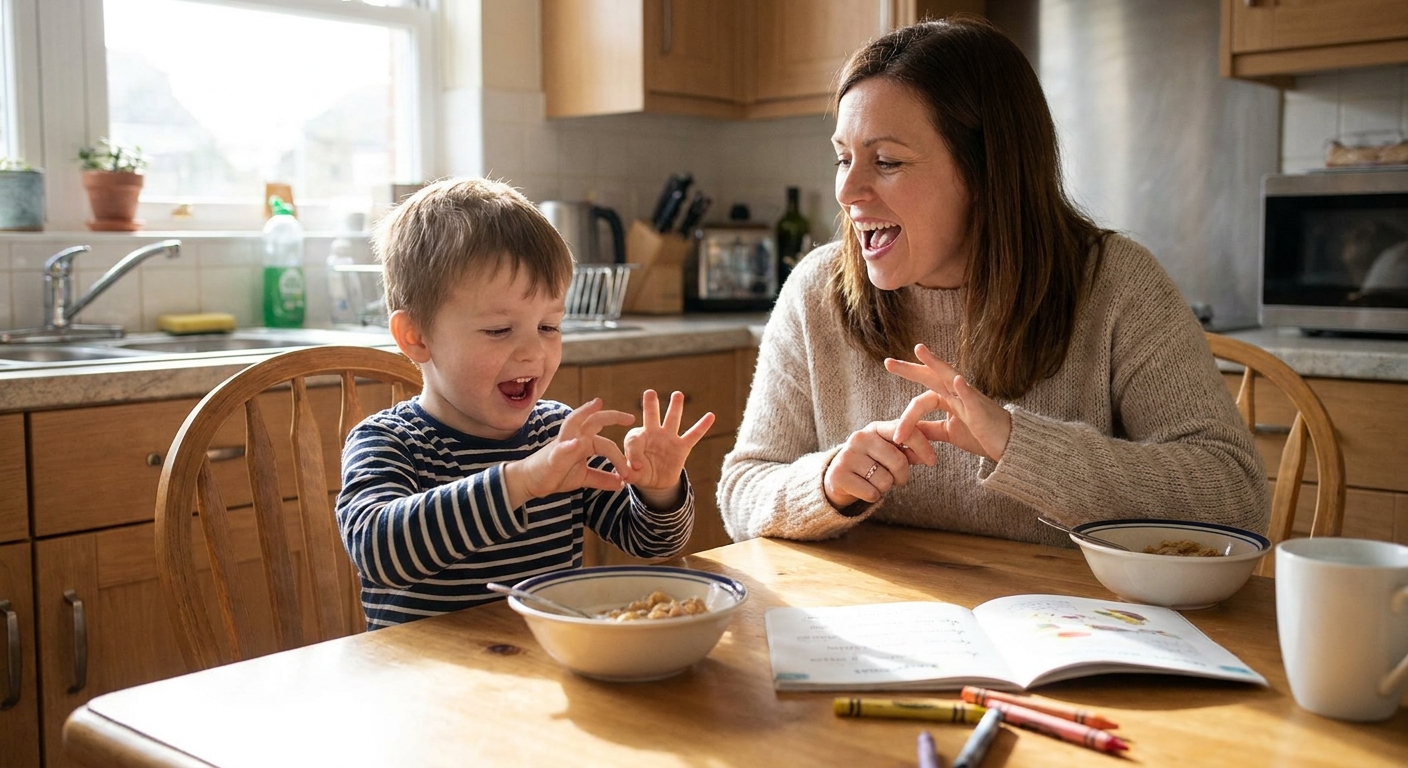
- Add finger taps: Between verses, tap thumb to each fingertip slowly: index, middle, ring, pinky.
- Try “quiet hands” starts: Hands in lap, then move only when the song begins.
- Use table-top versions: Do finger-walking, tapping, and “spider climbing” on the table for better control.
- Switch speeds on purpose: One verse slow-motion, one verse normal. Kids learn control when they can change gears.
Quick troubleshooting
If my child just flaps their arms
That is normal. Choose one small motion and celebrate it. For example, in “Wheels on the Bus,” only do the wheels for the whole song for a few days.
If they get frustrated with hard finger motions
Try a “helper hold.” Lightly guide their wrists, not their fingers. Then let go quickly so they can try again.
If the group gets too wild
Pick a song with a built-in calm reset like “Open, Shut Them” (hands in lap), or end with “Twinkle, Twinkle” and slow finger sparkles.
If I have mixed ages
Give toddlers the big motions and preschoolers the precision. Same song, two difficulty levels.
Gentle adaptations
If your child has motor delays, low muscle tone, or sensory sensitivities, action songs can still work. I keep it low-pressure and offer choices: a smaller motion, a seated version, or holding a prop instead of copying every finger shape. I also avoid forcing finger-by-finger hand-over-hand help, because it can feel overwhelming fast. I would rather do one successful motion together than wrestle through the whole verse.
Safety notes
- Skip rapid spinning if kids get dizzy easily. Seated twists work fine.
- Mind personal space during partner songs like “London Bridge.” Keep it gentle and predictable.
- Watch for fatigue in little hands. Two minutes of quality finger work beats ten minutes of sloppy motions.
More song-time ideas
If you want to turn a favorite song into a simple table activity, I love making little scenes with kids so the story sticks. Our paper-scene idea is here: /make-a-paper-song-scene/. And if you are gathering ideas for a whole afternoon of low-prep fun, start with /guide-family-activities/.
Most of all, remember this: preschool fine motor growth often comes from repetition wrapped in joy. If you sing one of these songs every day for a week, you might be amazed what those tiny hands can do by Friday.