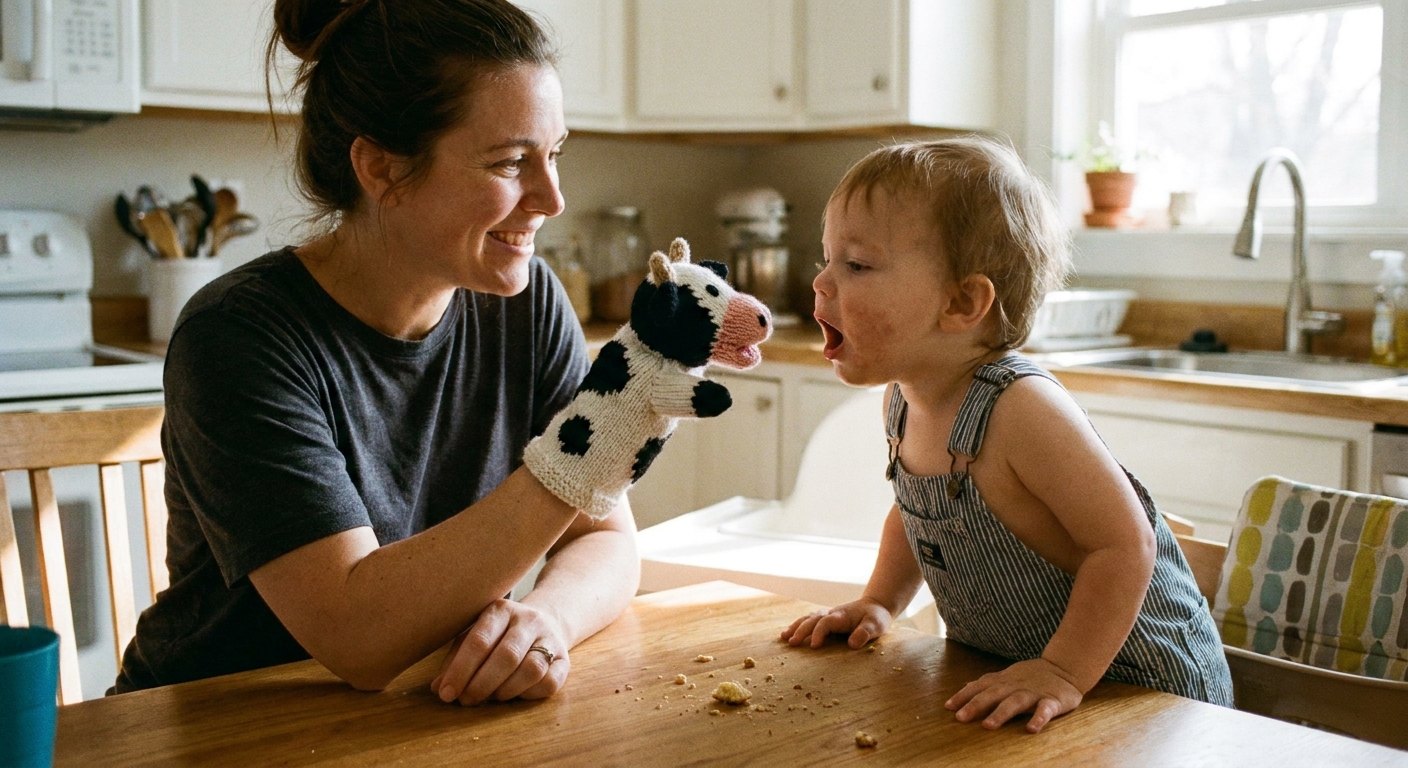

The first time I tried baby sign language at our kitchen table, I expected a big, movie-style moment. You know, the baby signs “milk,” everyone cheers, and the clouds part. What I got instead was a sticky-cheeked toddler who stared at my hands like they were doing card tricks, then went right back to banging a spoon on the highchair.
But a week later, in the middle of a nursery rhyme I have sung a thousand times, my little one pinched fingers together and looked at me like, “Yes, that. Again.” It was not perfect, and it was not polished, but it was communication. And once it clicks, nursery rhymes become one of the easiest, coziest places to practice.
What baby sign language is
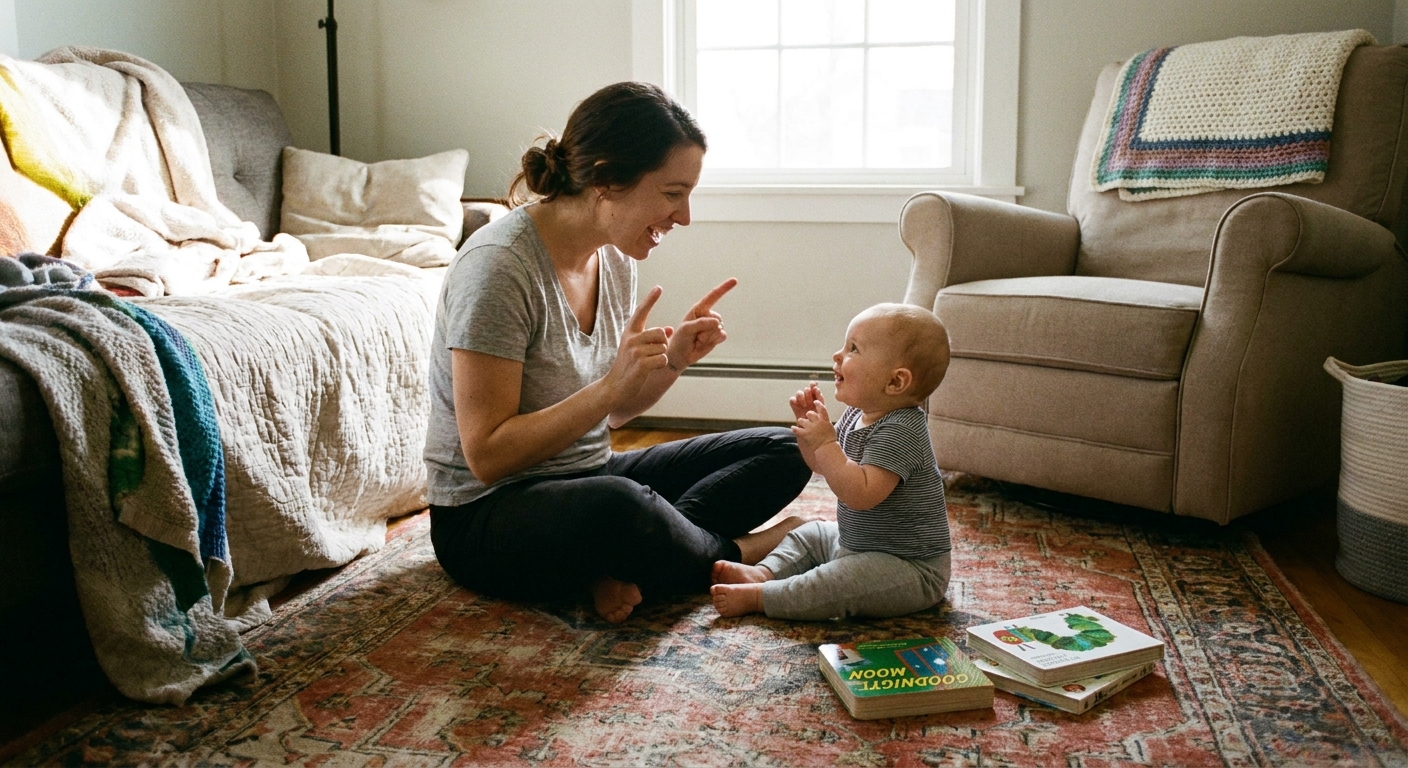
When families say “baby sign language,” they usually mean using a handful of simple signs, often borrowed from ASL, to support communication before spoken words arrive consistently.
- It is a way to support communication, reduce frustration, and add a playful routine to everyday moments.
- It is not a replacement for speech. Most children continue developing speech normally, and many use both together for a while.
- It is not about perfection. Your baby does not need crisp, exact handshapes to be understood.
Nursery rhymes help because they are repetitive, predictable, and full of juicy keywords you can sign again and again.
Before you start: 5 gentle rules
1) Pick 3 signs and live there for a bit
If you try to sign every word in a rhyme, it can feel like juggling. Start with three “high value” signs your baby will actually want to use.
2) Sign the keyword, not the whole sentence
In the line “Twinkle, twinkle, little star,” you can simply sign STAR each time it appears. That is enough.
3) Say the word while you sign it
Think: voice plus hands. Babies learn the connection between the spoken word and the gesture through repetition.
4) Pause like you are leaving space for an answer
This is my secret sauce. After you model the sign, pause and look at your child with a warm, expectant face. Even if they do not sign back, that tiny beat teaches turn-taking.
5) Celebrate attempts, not accuracy
A baby’s “MORE” might look like enthusiastic hand flapping. Count it. Respond to the message.
Starter signs for nursery rhymes
These are the signs I reach for most often because they match everyday needs and show up naturally in classic rhymes.
- MORE (again, repeat)
- ALL DONE (finished)
- EAT
- DRINK
- WATER
- MILK
- SLEEP
- MOM and DAD
- BABY
- STAR
- UP and DOWN
- GO (handy for action songs)
- LIGHT (optional, but a sweet match for “twinkle”)
A quick note on ALL DONE: it is widely used in baby sign routines, and you may see a few variations depending on what resource, teacher, or region you learn from. Pick one version, use it consistently, and keep your focus on the message.
If you would like to see standard ASL references for these, the ASL dictionaries at HandSpeak and Signing Savvy are helpful for a quick double-check.
Now, let’s tuck those signs into rhymes you already know by heart.
Rhymes and the best signs
Twinkle, Twinkle, Little Star
Best signs to pair: STAR, UP, LIGHT (optional), MORE
- Sign STAR on every “star.”
- On “Up above the world so high,” add UP.
- If you want to, add LIGHT on “twinkle.” Keep it simple and repeat the same sign each time.
- At the end, pause and ask, “More?” while signing MORE.
Itsy Bitsy Spider
Best signs to pair: UP, DOWN, WATER, MORE
- On “up the waterspout,” sign UP.
- On “washed the spider out,” sign WATER.
- On “down came the rain,” sign DOWN and WATER.
- When your baby asks for repeat performances, model MORE.
Row, Row, Row Your Boat
Best signs to pair: GO (optional), MORE, ALL DONE, SLEEP
- If your child loves motion, add GO at the start of each “row, row, row.”
- Keep it simple and sign MORE at the end of each verse if they want another round.
- If you do a calm, slow version at bedtime, add SLEEP as you soften your voice.
Pat-a-Cake
Best signs to pair: EAT, MORE, ALL DONE
- This one is perfect right before snack. After the rhyme, offer a bite and sign EAT.
- If your child reaches for more, you sign MORE back as you hand it over.
- When you are wrapping up, sign ALL DONE.
This Little Piggy
Best signs to pair: EAT, MORE, ALL DONE
- On “this little piggy ate roast beef,” sign EAT.
- When you get to the tickly ending, pause and ask “More?” with the MORE sign. It can be a lovely way to build a stop and go routine, but keep watching body cues too and stop if your child seems unsure, stiff, or overwhelmed.
- When you are finished, sign ALL DONE before you move on.
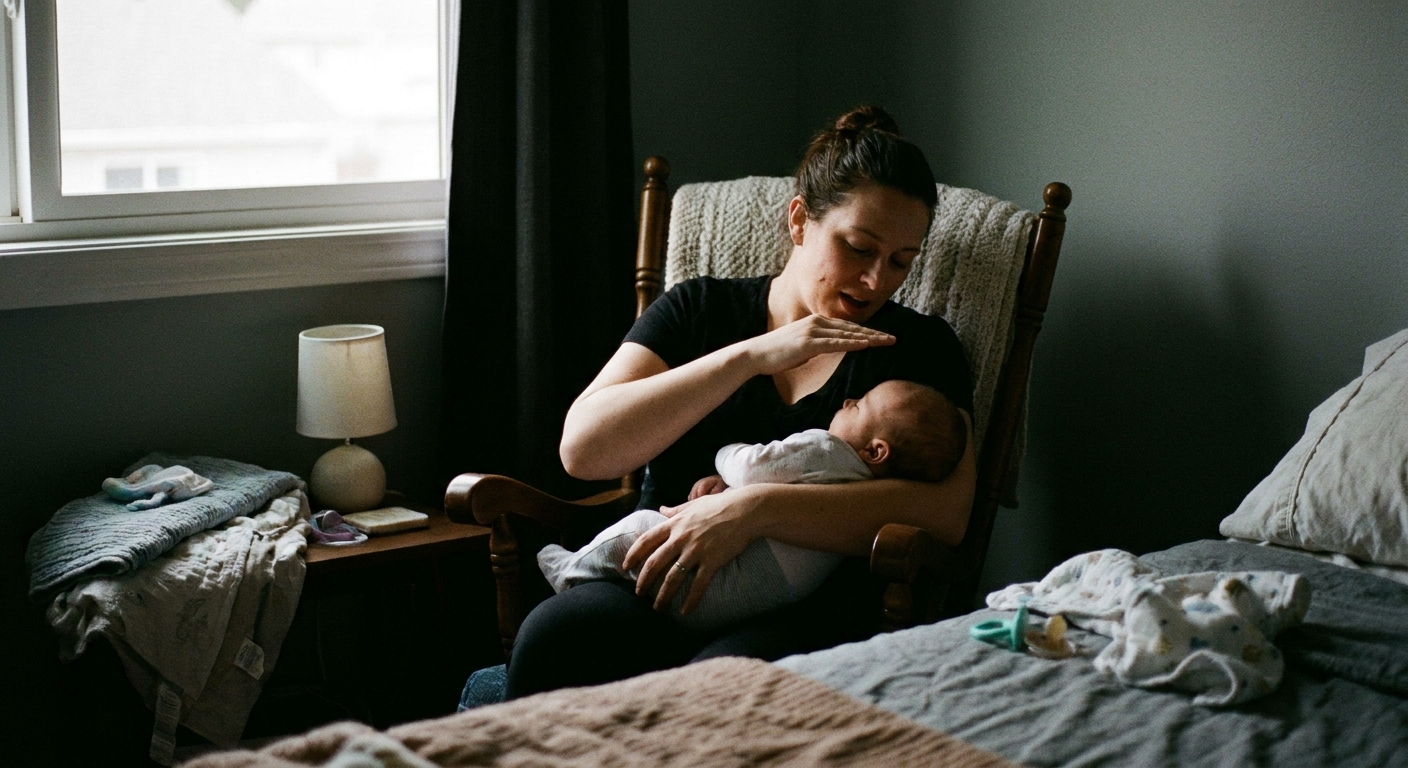
Rock-a-Bye Baby
Best signs to pair: BABY, SLEEP, MOM or DAD
- Sign BABY once at the start.
- Sign SLEEP slowly as you settle them.
- If your little one is very people-focused, add MOM or DAD when you sing it as a personalized version.
A 5 minute daily routine
If you want this to feel effortless, attach it to moments you already repeat every day.
Morning diaper or getting dressed
- Sing Twinkle, Twinkle and sign STAR and UP.
Before meals or snacks
- Do Pat-a-Cake, then sign EAT.
- Offer water and sign WATER or DRINK.
After bath or before bedtime
- Sing Itsy Bitsy Spider and sign WATER, UP, DOWN.
- End with one calming verse of Rock-a-Bye Baby and sign SLEEP.
That’s it. Same handful of signs, sprinkled into familiar songs, day after day.
If your baby does not sign back yet
This is normal. Many babies spend weeks, sometimes months, in the “watching” stage before they try a sign on purpose.
- Keep modeling during real moments (snack, water, bedtime) because the meaning is clear.
- Use fewer signs. Too many moving hands can be distracting.
- Get in their sightline so they can see your hands and your face.
- Wait. Give a pause after the keyword like you are leaving a conversational space.
And if your child starts signing something that looks different than what you learned, you can still respond and gently model the standard sign back. Communication first, polish later.
Safety and comfort
- Never force hands into a sign. Model on your own hands and let baby imitate when ready.
- Watch for frustration. If your baby melts down, drop the “lesson” and meet the need. Then bring the sign back later.
- Keep it joyful. Nursery rhymes work because they feel like play, not practice.
Common questions
Will signing delay speech?
Research generally suggests that using a few simple signs does not delay speech for most children, and it can help reduce frustration while spoken language is catching up. If you have broader concerns about your child’s hearing, speech, or overall language development, it is always worth checking in with your pediatrician or a speech-language pathologist for personalized guidance.
How many signs should we learn?
Start with 3 to 5. Add a new one only when the old ones feel truly “everyday.”
What age can we start?
You can start modeling signs whenever you want. Babies often begin signing back intentionally around 8 to 12 months, sometimes later, depending on attention, motor control, and how consistently you model the signs. Earlier than that, you are mostly building familiarity.
Do I have to use perfect ASL?
It is great to aim for standard signs, but your main job is consistency and warmth. If you are unsure, use a reputable ASL reference, then pick one version and stick with it. Try not to mix multiple versions for the same word, since that can make it harder for your baby to learn what “counts.”
End every rhyme the same way
When you finish a rhyme, try this tiny three-step ending:
- Smile and pause.
- Ask, “More?” while signing MORE.
- If they show excitement, repeat the rhyme. If not, sign ALL DONE and move on.
It turns your nursery rhyme time into a real conversation, even before the words arrive.
If you are building daily song routines at home, you might also like our Nursery Rhymes guide and, for sleepytime singing, The Science of Lullabies: 7 Calming Bedtime Songs to Help Babies Sleep.