
I used to think nursery rhymes were like dandelions: they just popped up wherever children were, cheerful and inevitable. Then I started digging through old rhyme collections at our local library, and I realized something a little thrilling. Many of the songs we sing while tying shoes or wiping noses are survivors. They traveled through centuries of oral storytelling, printing presses, parlor pianos, and playgrounds, picking up new words and dropping old ones along the way.
This is not a spooky conspiracy tour, I promise. It is more like lifting the corner of a quilt and seeing all the different fabrics stitched underneath. Here are five familiar rhymes, plus the surprising bits of history and older verses that shaped what we sing today.
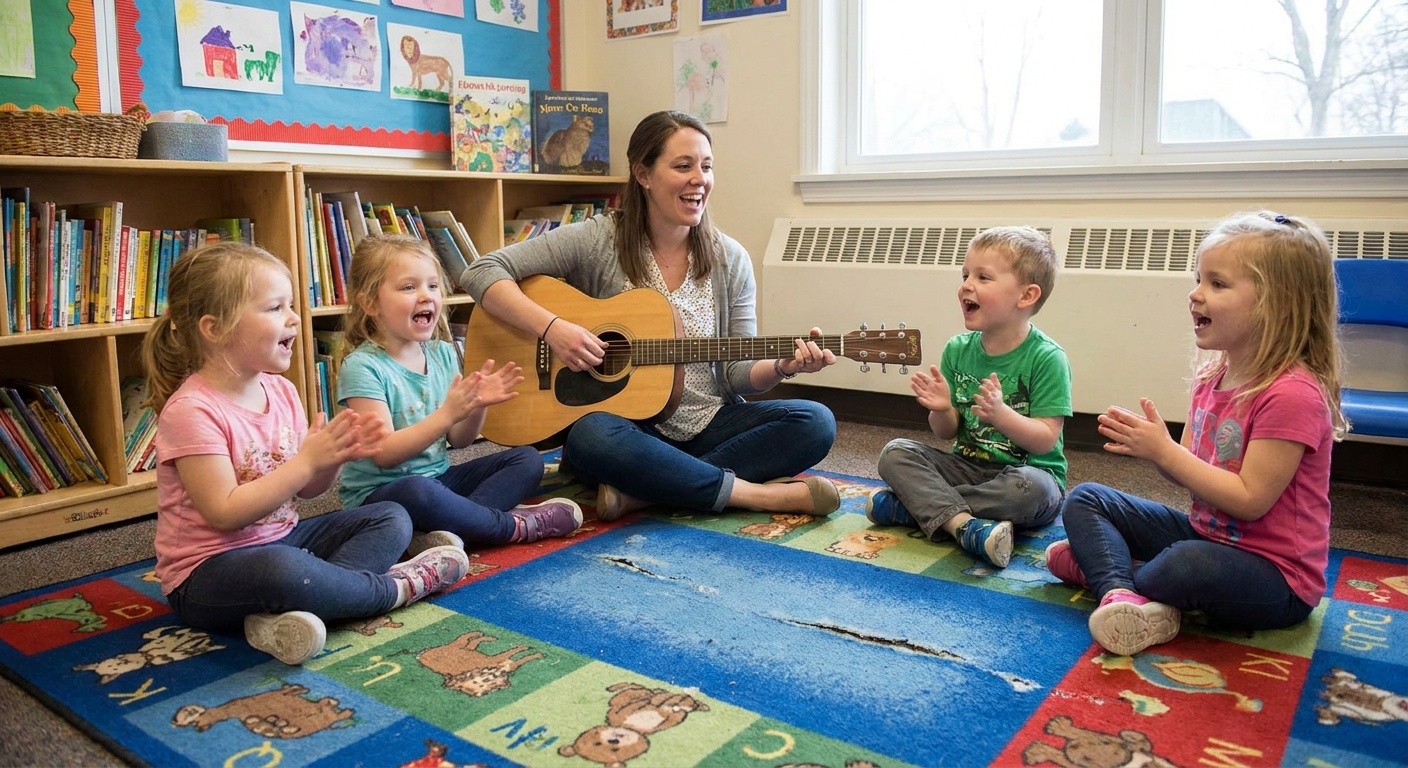
1) “Baa, Baa, Black Sheep”
What we sing today: a gentle little song about sharing wool.
Where it shows up in print: It is documented in English print sources by the 18th century, in the wave of small collections that helped standardize many children’s verses.
What might be behind it
“Baa, Baa, Black Sheep” is often explained as a rhyme that reflects the business of wool and how it was divided into shares. You will sometimes hear people connect it to medieval-era wool taxes, but that is best treated as interpretation, not documented author intent. What is much clearer is that wool was serious business for centuries, and catchy rhymes were a common way to make everyday life stick in the mind.
An older detail you may not notice
Early printed versions keep the lines most of us know, with small differences in spelling depending on the book. The heart of it stays consistent:
“One for the master, one for the dame,
And one for the little boy who lives down the lane.”
The bigger surprise with this one is not a missing verse. It is how a simple counting-and-sharing rhyme can carry echoes of real economic life, which makes it a fun opener for older kids who love “Why did people do it that way?” conversations.
Try this at the kitchen table
- Ask: “If you had three bags of something today, who would you share with and why?”
- Swap the last line for your own neighborhood: “who lives down the hall” or “who lives next door.”
2) “Mary Had a Little Lamb”
What we sing today: Mary’s lamb follows her to school, chaos follows naturally.
Where it comes from: Unlike many folk rhymes, this one has a fairly traceable literary origin. It was published in the 19th century in the United States and is commonly credited to Sarah Josepha Hale, though there has been long-running debate about authorship and inspiration.
What might be behind it
This rhyme is often linked to a real story about a girl named Mary who allegedly brought her pet lamb to school in New England. Whether the poem was inspired by that exact event or not, the “pet follows child to school” detail fits wonderfully with the time. Rural life and one-room schoolhouses meant the boundaries between farm, home, and classroom could get blurry.
A lesser-sung verse
Many of us sing only the first stanza or two, but longer versions keep going, turning the surprise visit into a little lesson about kindness.
“And so the teacher turned it out,
But still it lingered near,
And waited patiently about,
Till Mary did appear.”
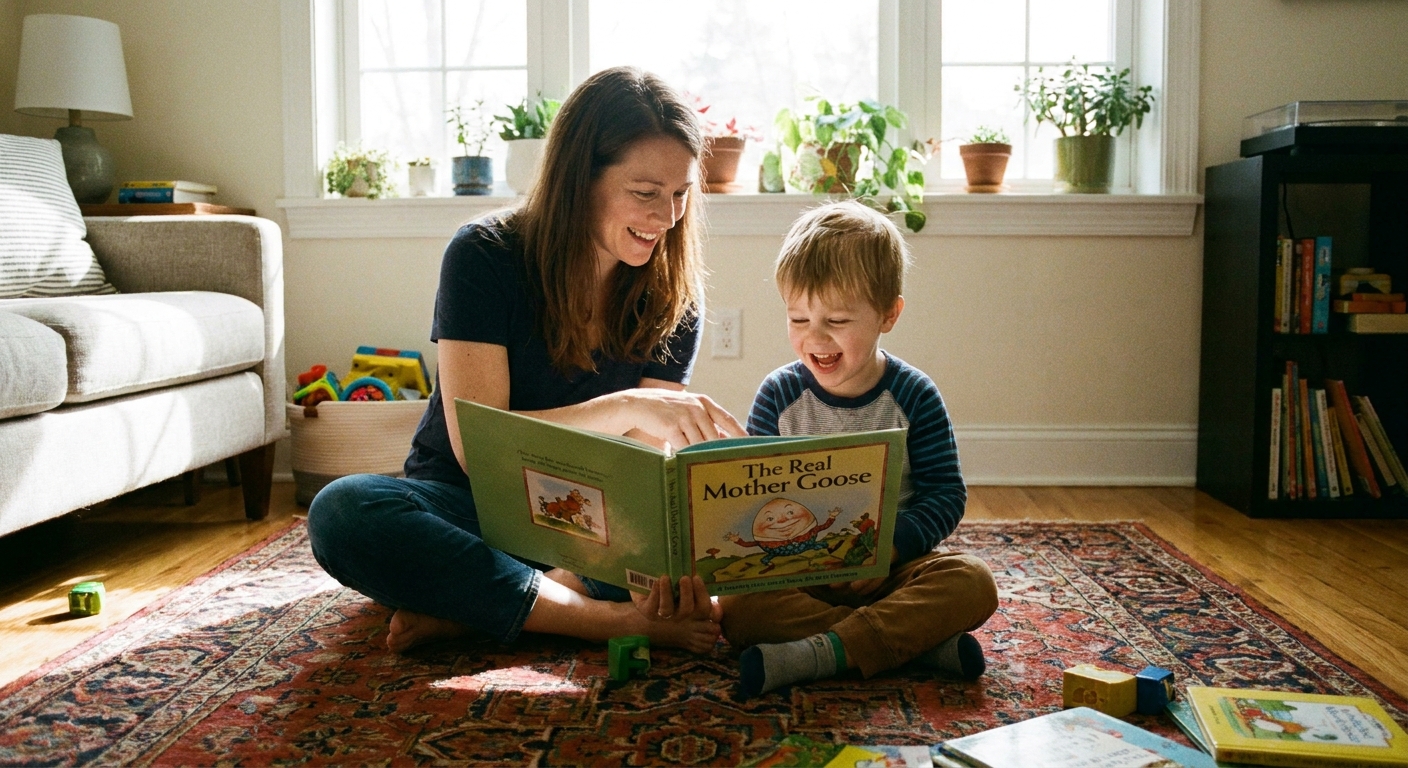
If your child loves a story arc, this is a great one to read as a whole poem from a reputable collection rather than treating it as a looping song.
Browse more nursery rhymes here when you want a few more “read it like a story” favorites.
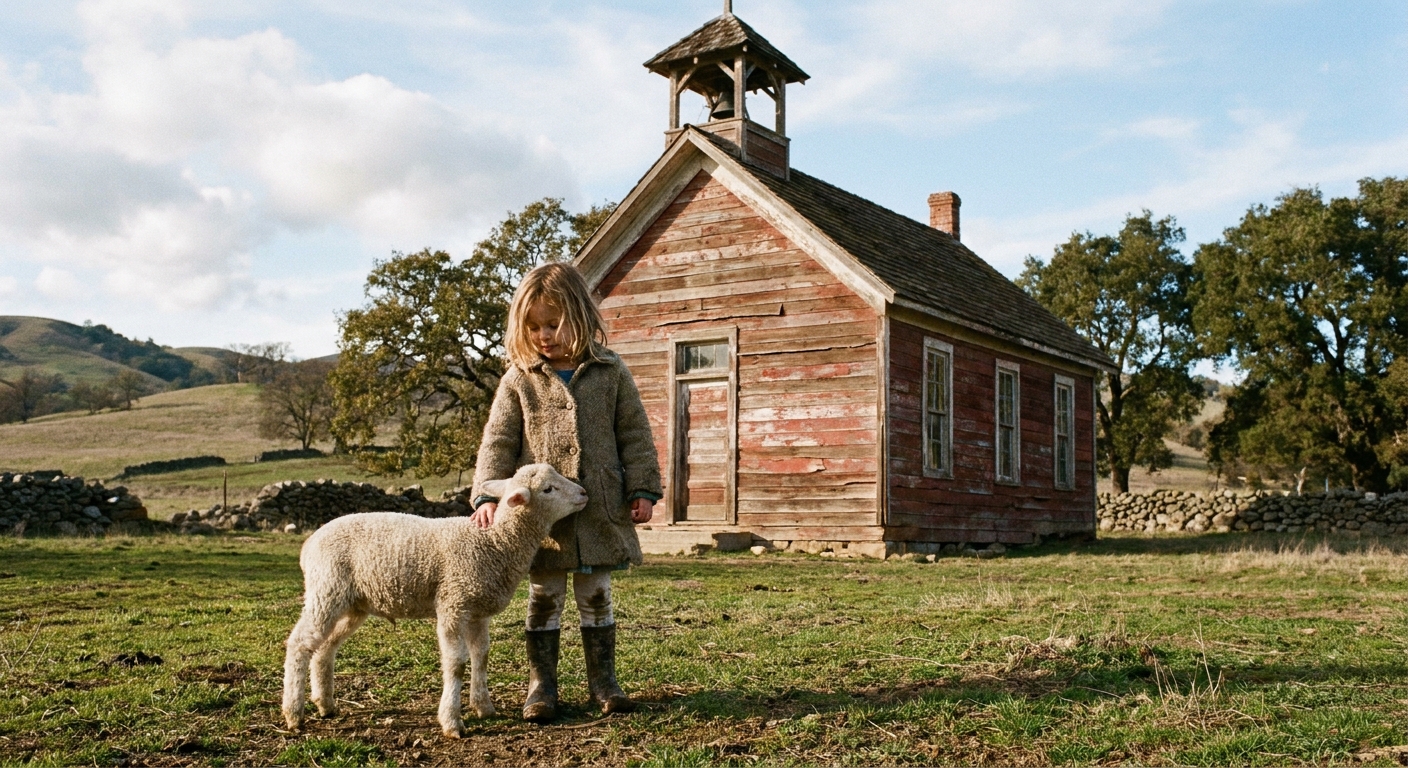
3) “Jack and Jill”
What we sing today: two kids go up a hill for water, tumble down, and somehow we keep singing cheerfully.
Where it shows up in print: Versions appear in English print sources by the 18th century, and it has traveled widely since then.
What might be behind it
This is one of those rhymes people love to decode. You may have heard theories tying Jack and Jill to political figures, royalty, or taxes. The truth is: there is no single proven “this is definitely what it means” explanation that all historians agree on. Many nursery rhymes were passed mouth to mouth for ages before being printed, which makes them perfect blank canvases for later speculation.
What feels most useful for families is this: “Jack and Jill” behaves like a tiny folktale. It has a mission, a mishap, and a consequence, all packed into a few lines. That is exactly why kids remember it.
A longer tag some versions keep
In some older collections, the tumble is not the end of the story. A common add-on is:
“Up Jack got, and home did trot,
As fast as he could caper,
To old Dame Dob, who patched his nob
With vinegar and brown paper.”
That little “patched his nob” moment (nob meaning head) is a good reminder that these rhymes were not written to be precious. They were written to be remembered.
Play it like a drama
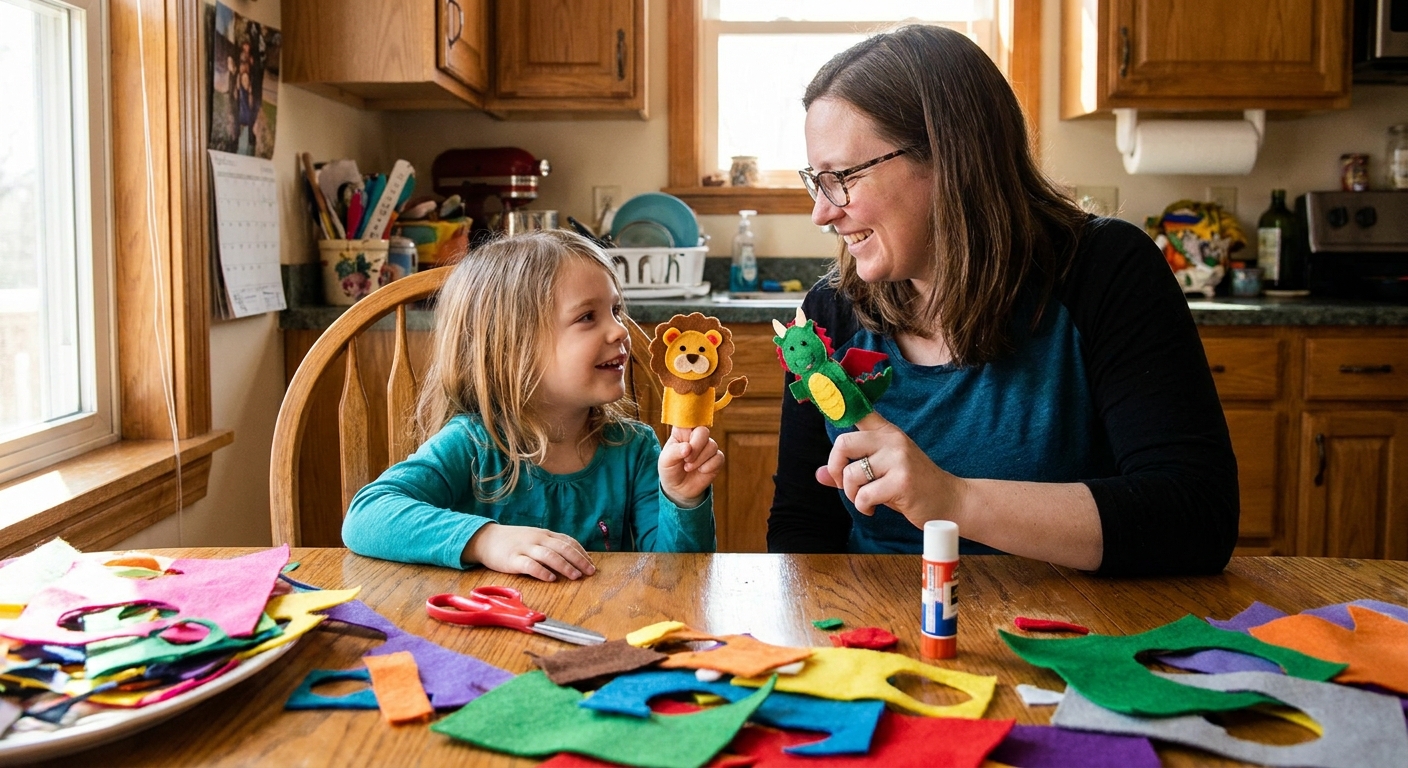
- Make two paper puppets and act it out with a soft pom pom “pail.”
- Let your child invent a new ending where Jack and Jill solve the problem safely.
If you want a simple craft that pairs beautifully with rhyme time, make a paper song scene and switch the backdrop from “hill” to “kitchen” to “moon” depending on what you are singing.
4) “Ring Around the Rosie”
What we sing today: we hold hands in a circle, sing about posies, and fall down.
Where it shows up in print: The strongest documented print evidence is later than many people assume, which is one reason folklore historians are cautious about confident claims tying it to much earlier events.
The myth worth clearing up
You have probably heard that this rhyme is “definitely about the plague.” That explanation is extremely popular, but historians of folklore often caution that the neat plague interpretation is not firmly proven by early evidence, and many details do not line up cleanly across versions. In other words: it is a tidy story we like to tell about a messy, shifting folk song.
What we can say with more confidence is that:
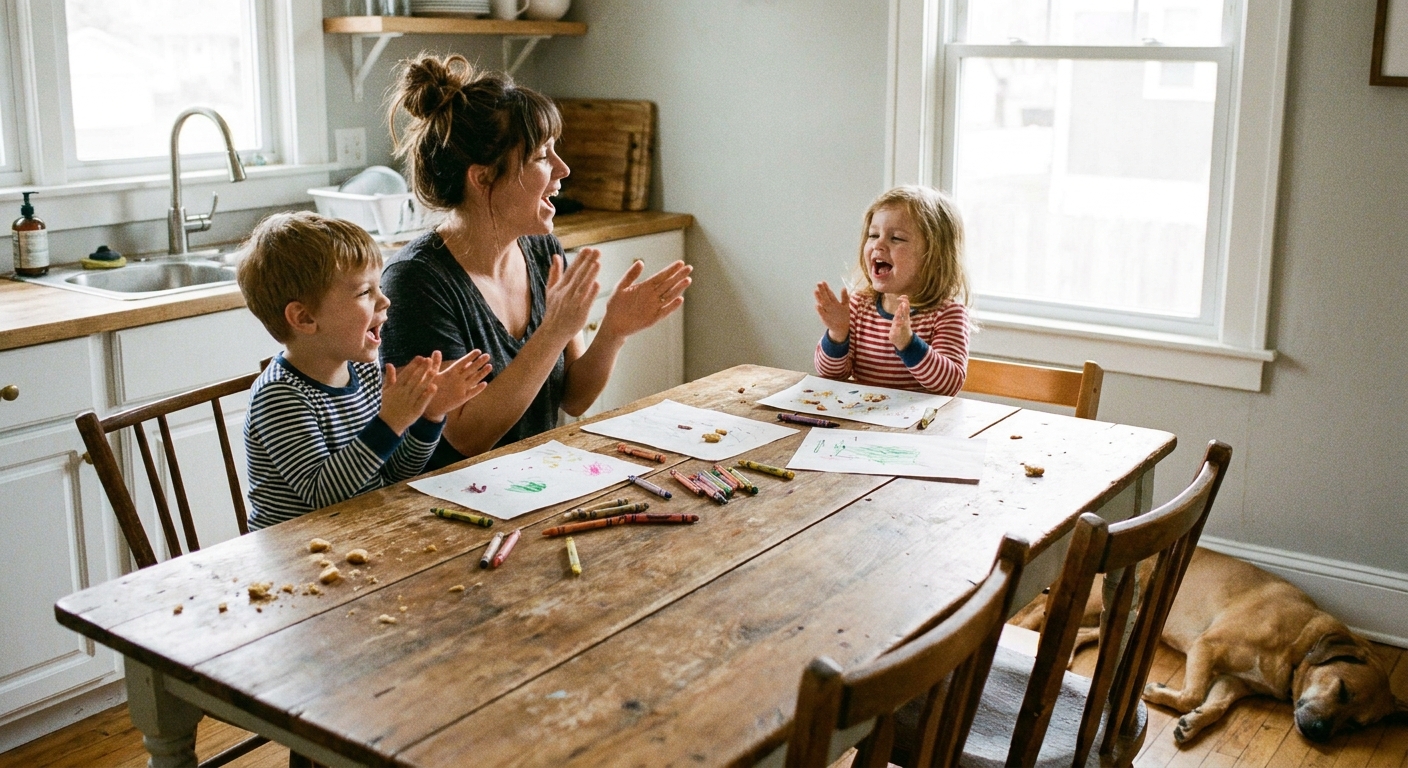
- It is a ring game, meant for movement and group play, and ring games naturally include a dramatic “drop” or “fall” moment.
- There are many variants of the words in different regions and different decades.
A gentler variant to know
If your child is sensitive, you can skip the plague talk entirely and focus on what is right in front of you: a circle game with flowers, giggles, and a silly flop to the floor. If you want a softer-sounding option, one common variant swaps a key word:
“Ring a ring o’ roses,
A pocket full of posies,
Hush, hush, hush, hush,
We all fall down.”
Make it feel fresh
- Swap “posies” for a real-life prop: everyone holds a scarf “posy” and drops it gently at the end instead of falling.
- Try it outdoors and, if you prefer, replace “ashes” with “petals” for a softer sound for littles.
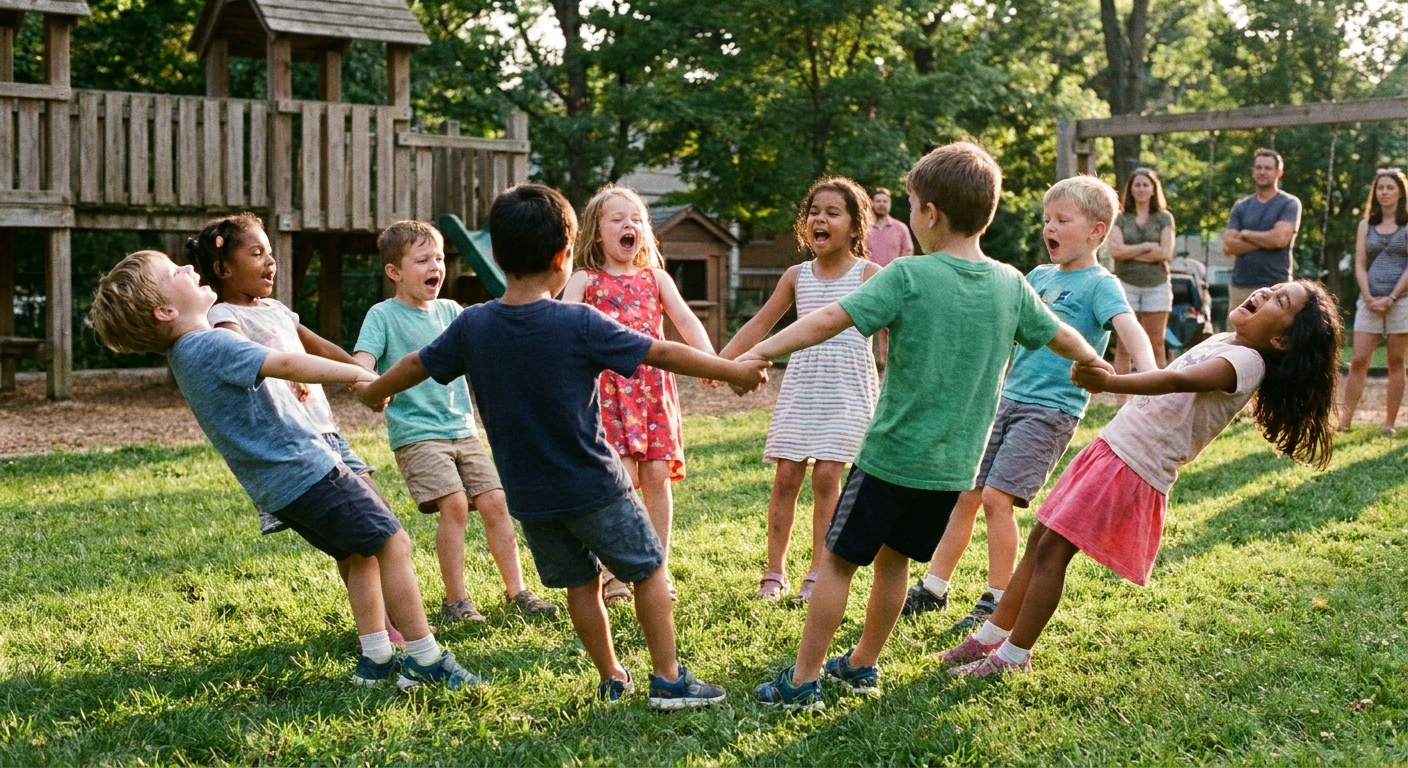
5) “Twinkle, Twinkle, Little Star”
What we sing today: a bedtime staple that feels like it has always existed.
Where it comes from: The lyrics come from an English poem by Jane Taylor, published in the early 1800s. The melody is commonly linked to an older French tune that also appears in classical variations. That is a fancy way of saying: this little lullaby has both a literary parent (a poem) and a musical family tree (a melody that traveled).
More verses exist
Most families sing one verse, maybe two if everyone is feeling ambitious. But longer versions continue with that wide-eyed “what is the sky doing?” wonder. Here is a verse many of us do not sing day to day:
“When the blazing sun is gone,
When he nothing shines upon,
Then you show your little light,
Twinkle, twinkle, all the night.”
And here is another verse I like when a child asks big questions at bedtime:
“Then the traveler in the dark
Thanks you for your tiny spark,
How could he see where to go,
If you did not twinkle so?”
When my kids were in their biggest “why” phase, adding an extra verse felt like giving their curiosity somewhere cozy to land.
Pair it with a calming routine
If you are building a gentle bedtime flow, you might like The Science of Lullabies: 7 Calming Bedtime Songs to Help Babies Sleep. Even if your child is well past babyhood, the ideas about pacing and repetition still apply.
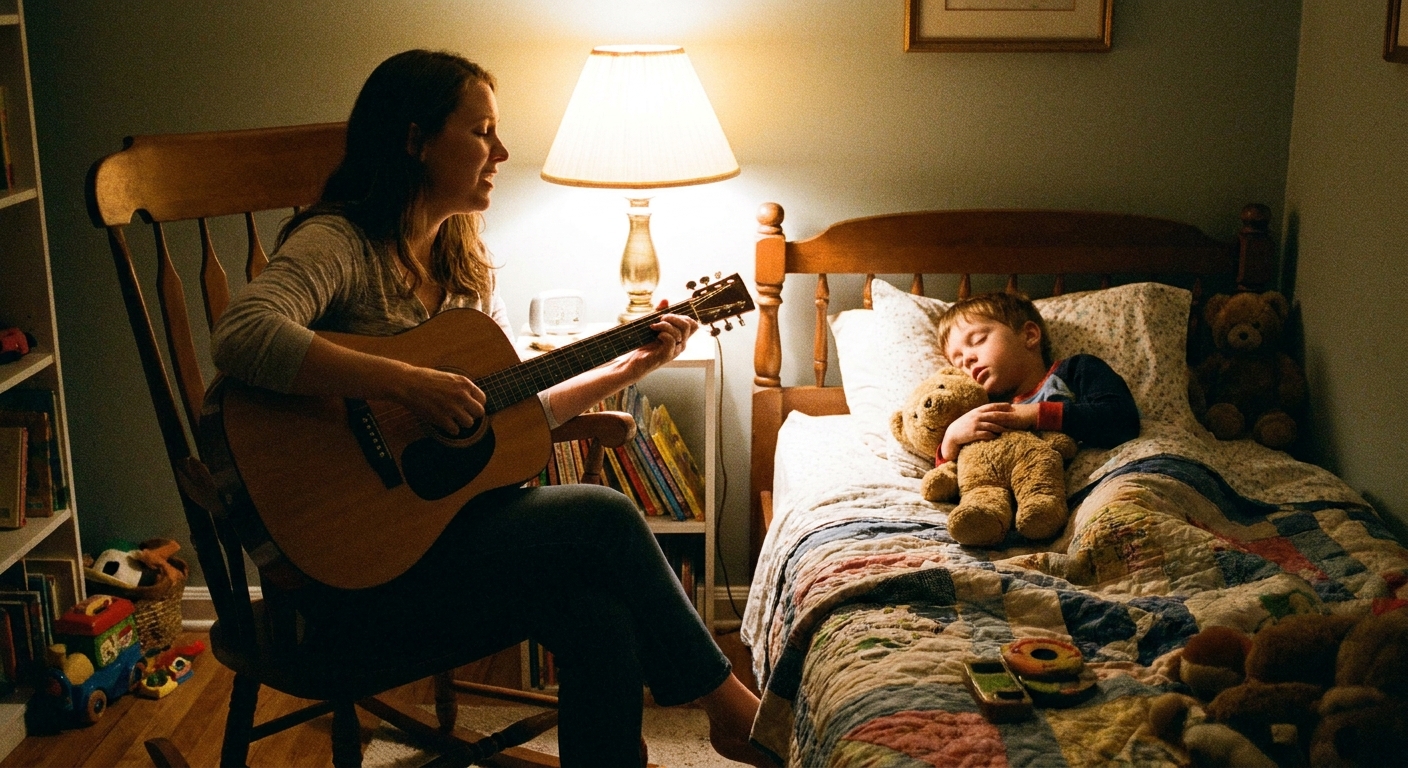
Talking origins with kids
Some nursery rhymes have clear paper trails. Others are more like whispered secrets that changed shape every time they were repeated. When you are sharing origins with older kids, I like these three phrases because they keep things accurate and still fun:
- “One theory is…” (for the famous but unproven explanations)
- “One early printed version says…” (for what we can document)
- “Different places sang it differently…” (for variants and extra verses)
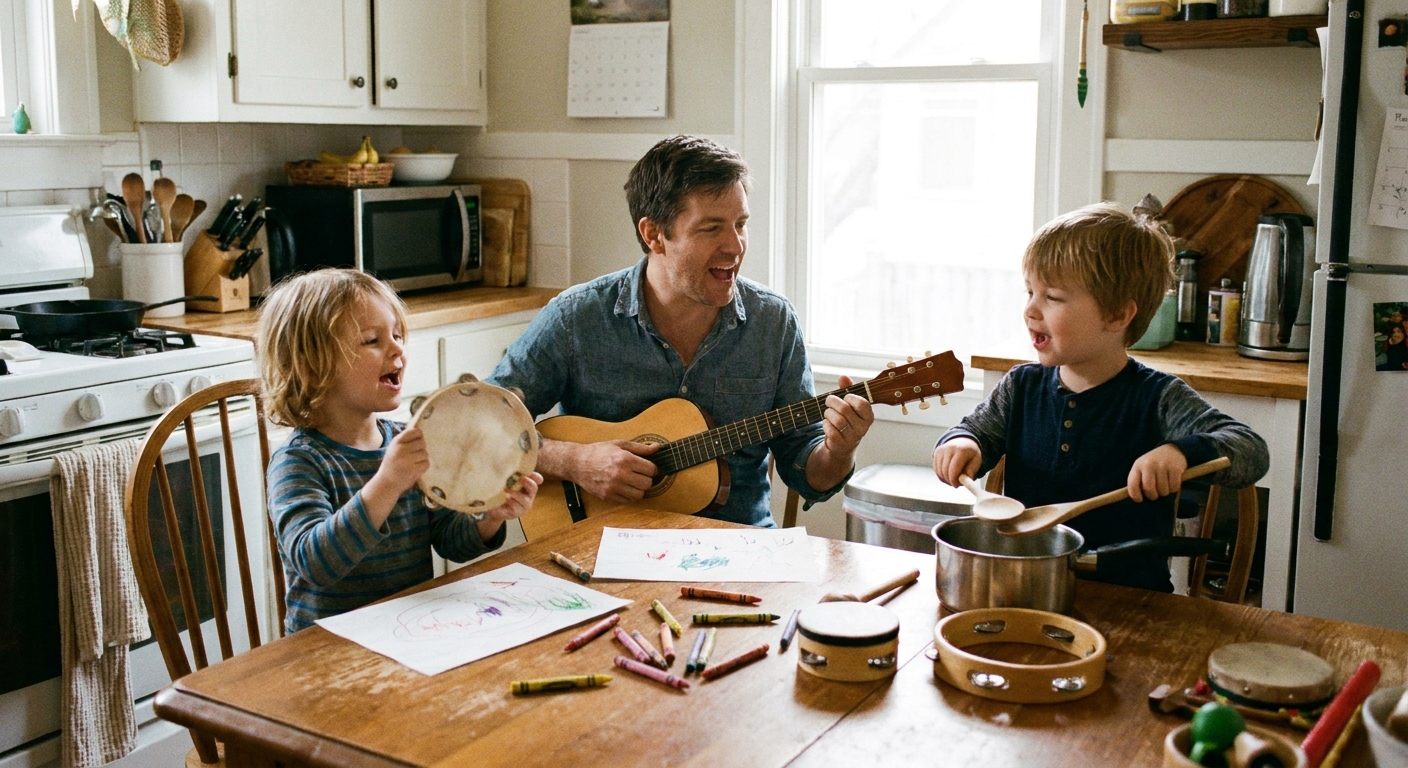
And if your child wants to turn the whole thing into a performance, add homemade instruments. I keep a little basket of noisemakers near our books, and this simple project is perfect for it: DIY Shakers and Rhythm Sticks for Family Sing-Alongs.
Quick rhyme trivia
- Many nursery rhymes were printed for adults first, then slowly drifted into children’s culture.
- Extra verses often disappear because families naturally shorten songs to fit routines like bath time and bedtime.
- Ring games keep rhymes alive because movement helps memory. Your body becomes the “sheet music.”
For more singable favorites, you can wander through our Kids Songs guide whenever you need a fresh tune for the carpool line or the kitchen cleanup chorus.
Sources I trust for rhyme history
- Encyclopaedia Britannica for high-level, carefully edited background on well-known songs and poems.
- Vaughan Williams Memorial Library (English Folk Dance and Song Society) for folk song context and archival rabbit holes.
- Library of Congress for primary sources and digitized historical materials in the United States.