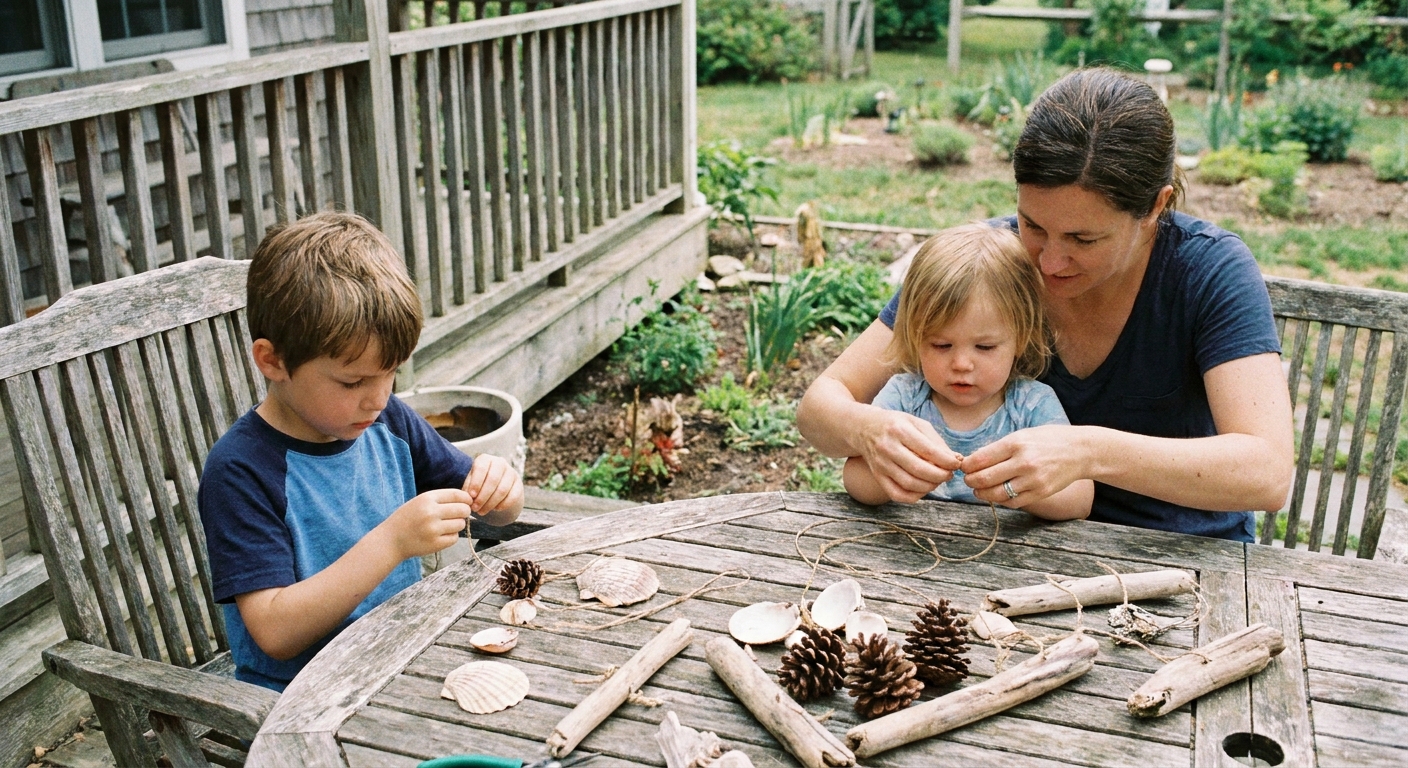

The fastest way to get my kids excited about being outside is to give them a mission and a song. Not a serious, clipboard mission. More like: “Find something tiny!” and then we all burst into a ridiculous little tune right there by the hydrangeas.
A musical nature scavenger hunt is exactly that: each nature find triggers a specific nature-themed song, chant, or sound game. It works in a big backyard, a postage-stamp patch of grass, or even a driveway with a few potted plants and a tree nearby. You get movement, observation, and singing all braided together, which is my favorite kind of family magic.
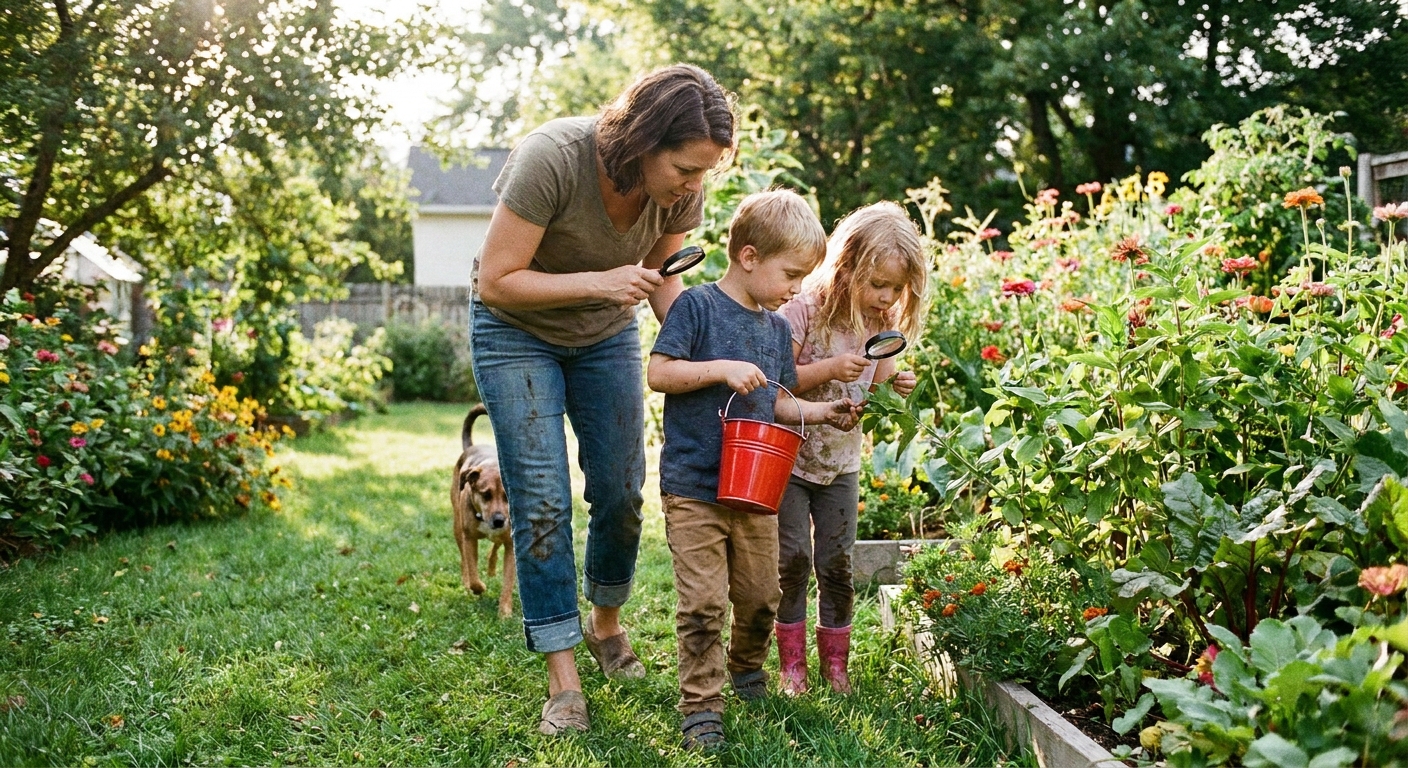
How it works (the simple version)
You choose a handful of easy-to-spot outdoor items. Each item has a matching song, rhyme, or call-and-response prompt. When your child finds the item, everyone does the song right on the spot.
This is not a test. No one needs to find all the items. The goal is to notice the world and play together.
- Find something in nature.
- Sing (or chant, or drum) the matching prompt.
- Do a little movement (hop like a bunny, flutter like a leaf, tiptoe like an ant).
- Repeat until you are hungry, muddy, or giggling too hard to continue.
What to gather (no fancy supplies)
I like a “grab it in 2 minutes” setup, because that is the only setup that actually happens on a busy day.
- A small basket, bucket, or paper bag for treasures
- Sidewalk chalk or a few index cards (optional)
- A scarf or ribbon for dancing (optional but very fun)
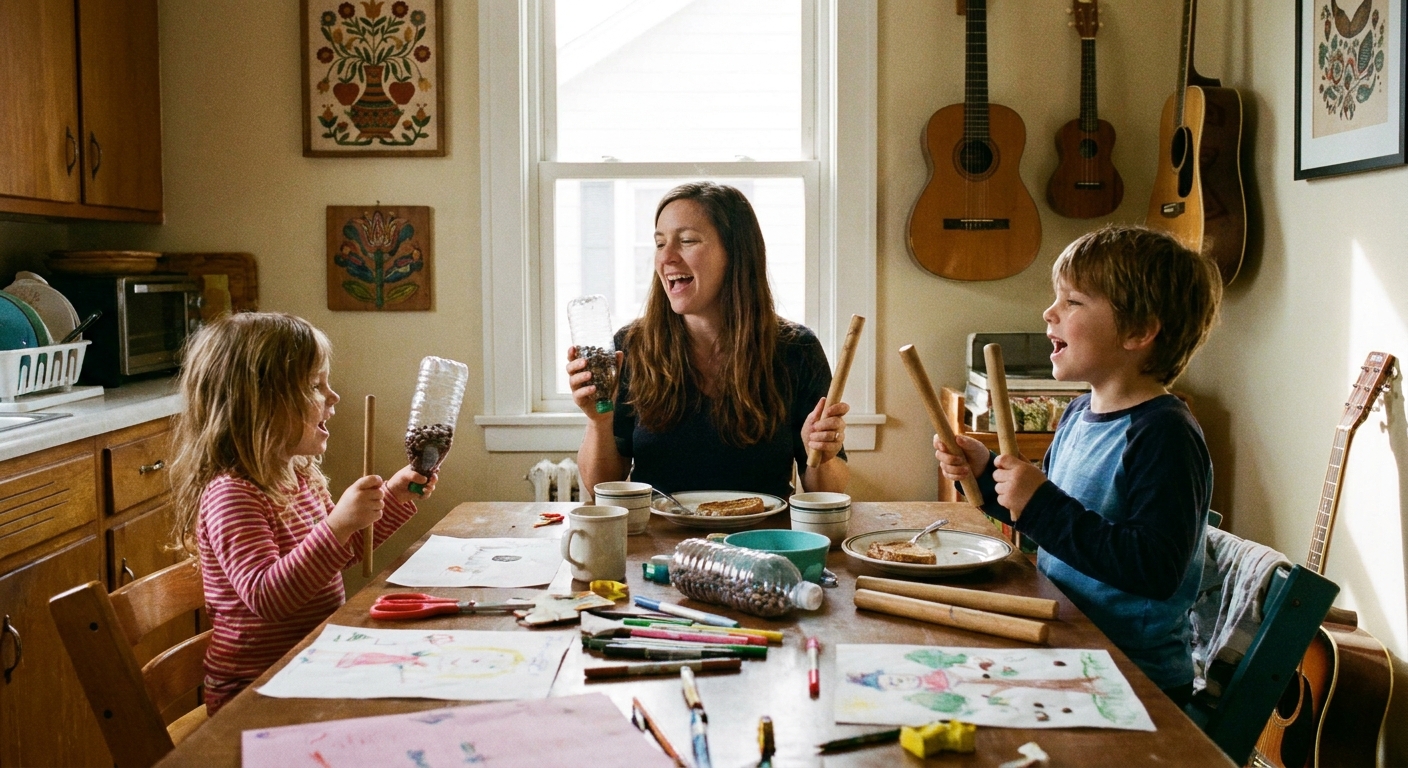
- A simple instrument (optional): shakers, rhythm sticks, or a drum
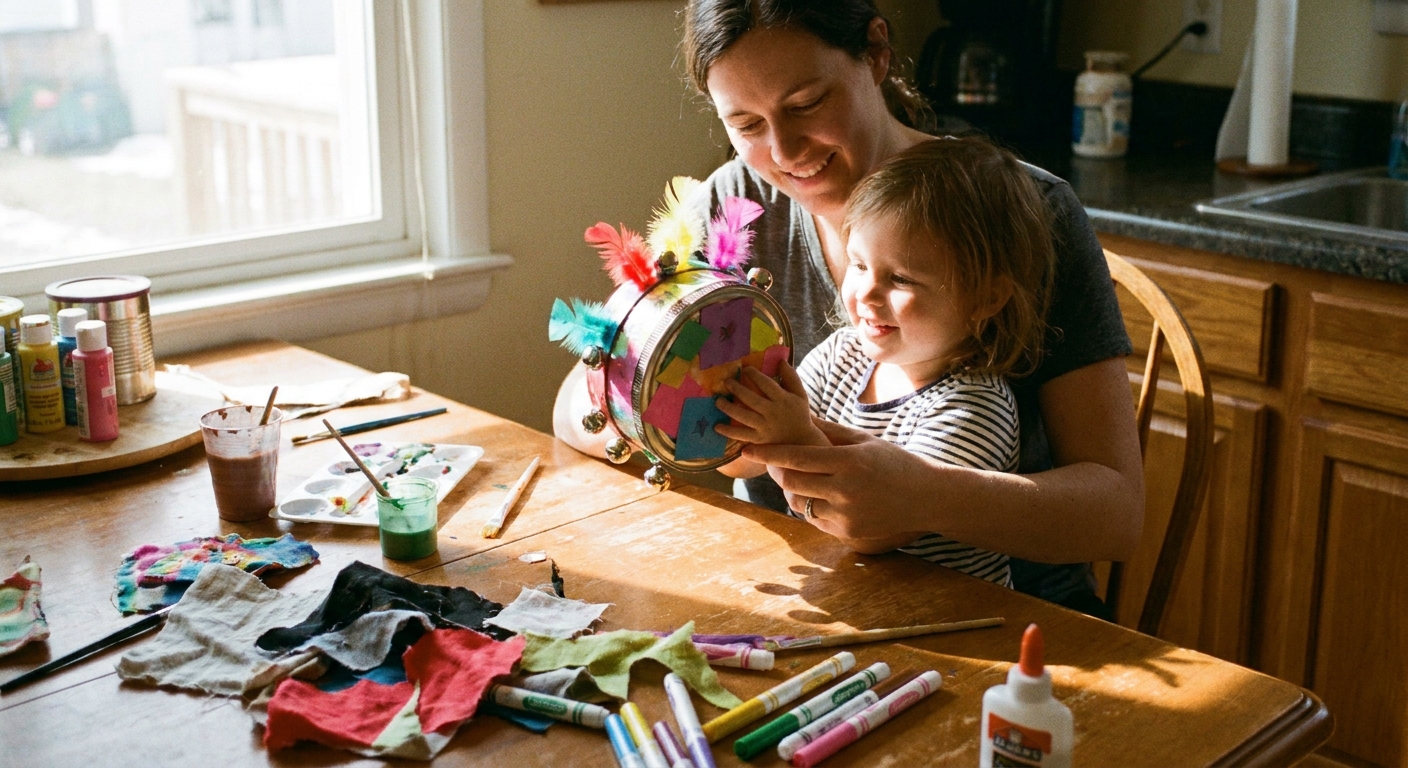
If you want quick DIY instruments for the hunt, I keep these two favorites on repeat:
No yard? Still works
You do not need a yard to do this. You just need a few “nature-ish” things to notice.
- Porch or stoop: wind, clouds, pigeons, plant pots, sidewalk cracks with brave little weeds
- Apartment courtyard: trees, fallen leaves, sprinklers, ants, birds
- Local park: pick a short loop and keep the boundaries clear (“we stay on the path and within my sight”)
- Driveway: chalk a few “stations,” then hunt for leaves, pebbles, and listening spots
Set your song triggers (pick 6 to 10)
Choose items that exist in your space right now. If it is summer, lean into grass, bugs, and flowers. If it is chilly, lean into pinecones, bare branches, and crunchy leaves. Here are options that work in many places.
Easy outdoor finds
- A leaf (any leaf counts)
- A small rock
- A stick
- A flower or petal
- Something soft (moss, grass, a fluffy seed head)
- Something that makes noise (dry leaves, gravel, a windy corner)
- Something that flies (a bird, butterfly, or even a drifting leaf)
- Something that crawls (ant, beetle, worm, snail)
- A cloud (yes, sky items count)
My favorite rule
If you cannot find the exact thing, you can find a “close cousin.” No worms today? An ant counts. No flower blooming? A bud counts. No bird in sight? We listen for one.
Song ideas for each find
You do not need perfect lyrics. Little chants, familiar melodies, and sound games are all “real music” in kid land.
Leaf song (to the tune of “Twinkle, Twinkle”)
Prompt: “When you find a leaf, we sing it and make it float down.”
Chant: “Leafy, leafy, floating down, spinning, softly, to the ground.”
Rock rhythm (clap pattern)
Prompt: “Rocks mean rhythms.”
Clap: clap-clap (pause) clap. Let your child copy, then let them invent one.
Stick tapping song
Prompt: “Tap-tap sticks!”
Tap two sticks together or tap a stick on the ground to a steady beat while you chant: “Tap, tap, tap the stick, make a forest music trick.”
Flower hello (call and response)
Grown-up: “Hello, little flower!”
Kids: “Hello, hello!”
Repeat in different voices: whisper, robot, opera, baby squirrel.
Bug tiptoe chant
Prompt: “Bugs mean tiptoes so we do not startle them.”
Chant while tiptoeing: “Tiny bug, tiny feet, tiptoe, tiptoe, soft and sweet.”
Bird listening song (a calm one)
Prompt: “Birds mean we freeze and listen.”
Hum a gentle “mmm mmm mmm” together for 5 seconds, then pause and listen for a chirp. Repeat once.
Cloud song (big body movements)
Prompt: “Clouds mean slow motion.”
Sing slowly: “Clouds roll by, soft in the sky, floating, floating, way up high.”
Wind song (breath and whooshes)
Prompt: “Wind means whoosh sounds.”
Make a long “whoooooosh” together, then do short ones. Add arm swirls like you are stirring soup in the sky.
Three no-lyrics sound games
For the days when singing feels like too much, I lean on these. They are still musical, and kids love them.
- Echo me: you clap (or stomp) a pattern, your child echoes it back. Then switch.
- Nature volume dial: whisper for “breeze,” talking voice for “birds,” big stomps for “thunder.” Call out the weather and change the sound.
- Body beat: tap knees, then clap, then snap (or rub hands if snapping is hard). Keep a steady beat like a tiny marching band.
If your kids love higher-energy movement songs, you can borrow the “do what I do” style from action rhymes and bring it outside. I pull ideas from our indoor favorites and just rename the actions as nature actions. This list is a great starting point: 15 classic action songs for preschool fine motor skills.
Two ways to set up the hunt
Option 1: The wandering loop
You walk together and call out one prompt at a time.
- “Let’s find a leaf.”
- Sing the leaf song.
- “Now let’s find a rock.”
- Clap the rock rhythm.
This keeps little ones from getting overwhelmed and keeps you in charge of pacing.
Option 2: Stations
Place simple “stations” around your space. A station can be an index card on a fence, a chalk circle on the patio, or a pinecone perched on a stump.
- Leaf Station: card says “Find a leaf, sing the leaf song.”
- Rock Station: card says “Clap a rhythm, stomp it back.”
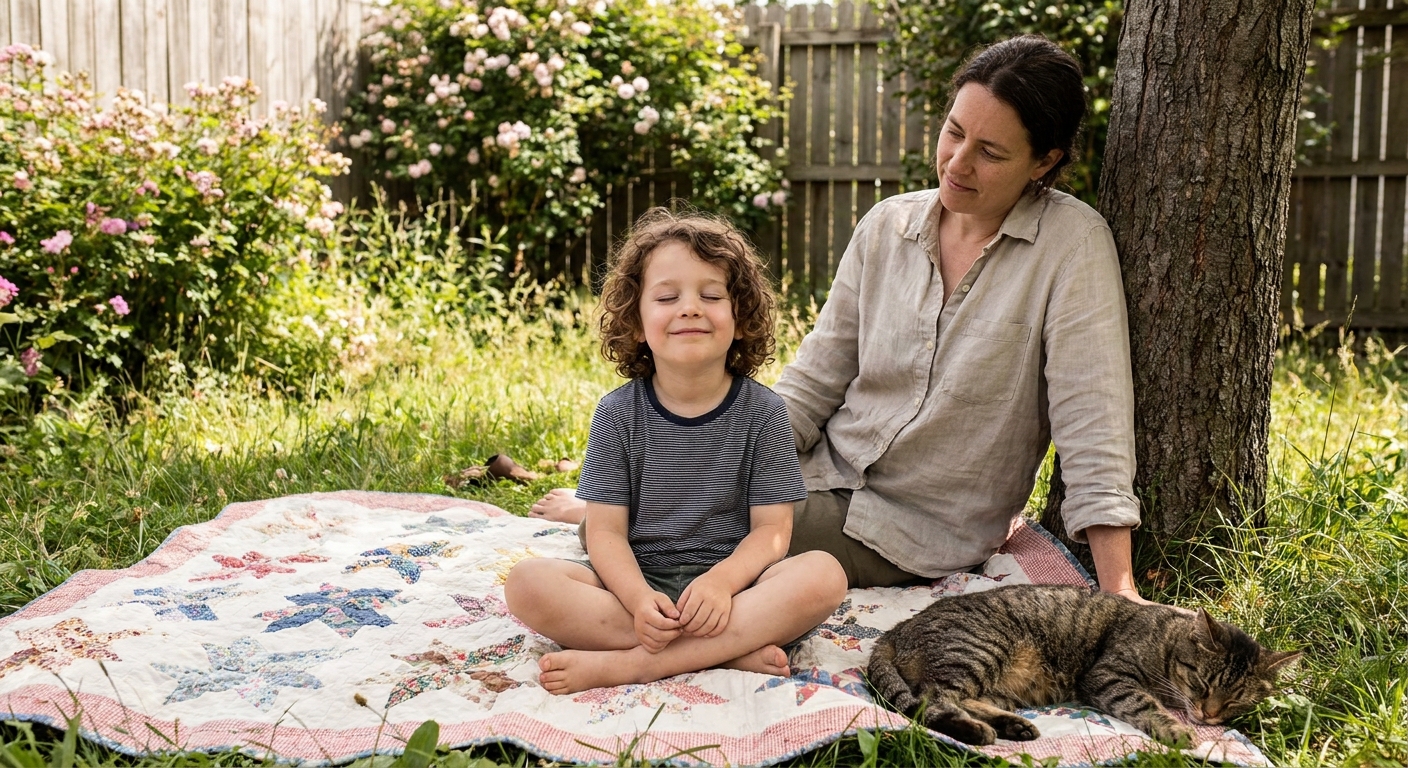
- Listening Station: sit spot for 10 seconds of bird listening.
Be kind to nature
My kids would happily fill a bucket with half the yard if I let them, so we use a couple simple rules that keep the hunt fun and respectful.
- Look first: you can point, describe, and sing without picking.
- Leave living things where they are: bugs, worms, flowers still growing, nests, and mushrooms stay put.
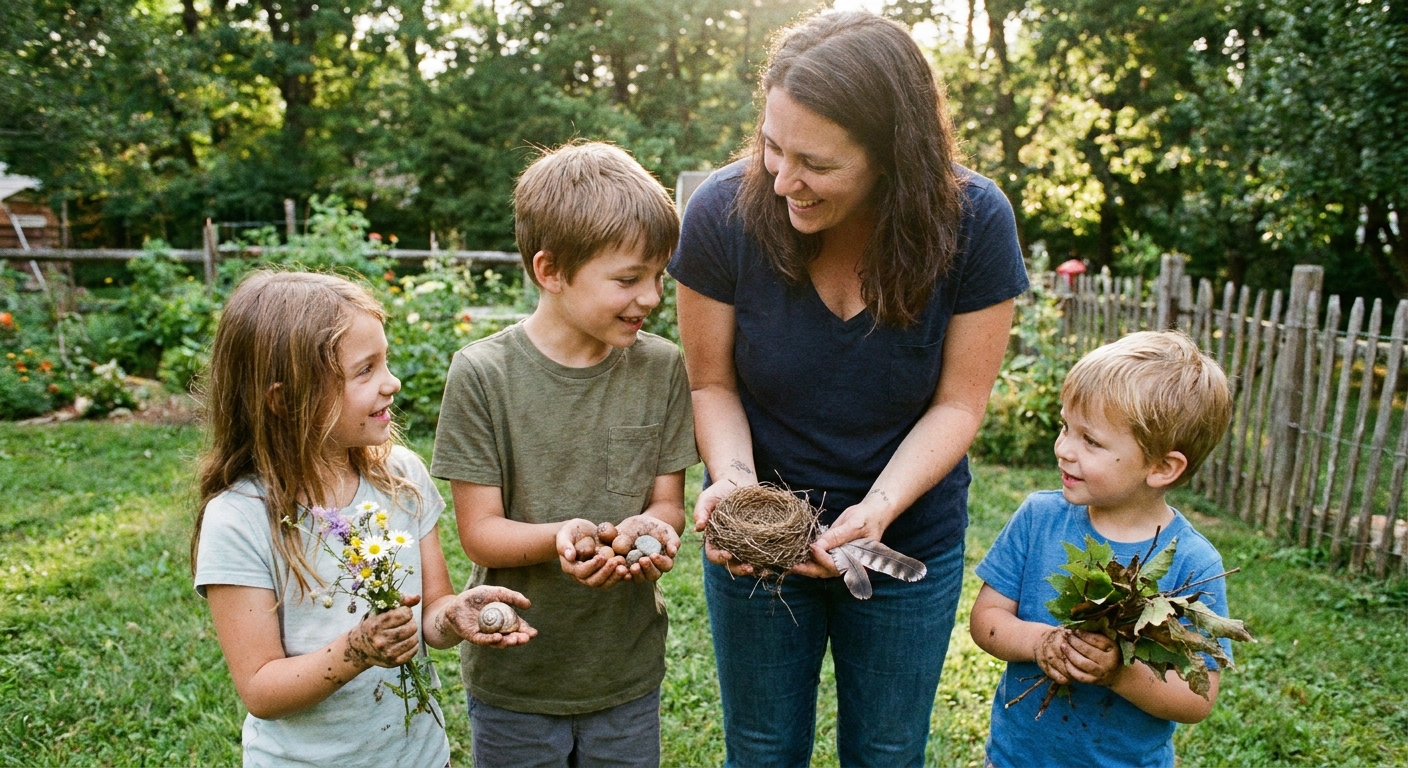
- Take “treasures” lightly: fallen leaves, sticks, and rocks are usually fine. We return them to the yard at the end.
- Skip feathers: in some places it is not allowed to collect wild bird feathers. We treat feathers as “look-and-cheer” finds.
- When in doubt, take a photo: it counts, and it keeps hands cleaner.
Make it musical (even if you do not like your voice)
If singing feels intimidating, you are not alone. My trick is to treat singing like play acting. You are not “performing,” you are “pretending to be a leaf in a musical.” That is a completely different job.
Also, kids do not need a polished voice. They need a present one. If this topic hits a nerve, I wrote you a whole pep talk right here: Sing to your baby even if you hate your voice.
Three low-pressure swaps
- Chant instead of sing: speak in a rhythm.
- Hum instead of lyrics: pick any three notes and repeat.
- Use a drum or shakers: the beat carries the moment.
Safety and comfort (quick checklist)
- Choose boundaries: “We stay between the porch and the big tree.”
- Skip touching unknown bugs: look, point, describe, and move on.
- Watch what goes in the bucket: avoid anything moldy, sharp, sticky, or suspicious (including animal droppings).
- Hand washing: especially after handling sticks, rocks, or garden soil.
- Sunscreen, hats, water: put them out first so you do not stop mid-adventure.
- Tick check: if you live in a tick-prone area, do a quick check after outdoor play.
- Allergy note: if pollen is a problem, lean more into rocks, clouds, wind, and listening games.
Age tweaks
Ages 1 to 2
- Pick 3 to 5 items total.
- Repeat the same song each time they find the item.
- Let them carry one “special treasure” like a leaf (until they forget and drop it, which is fine).
Ages 3 to 5
- Offer two prompts: “Leaf or rock first?”
- Let them lead the chorus.
- Add movement challenges: hop to the next find, tiptoe, crab walk.
Ages 6 and up
- Have them create the song triggers.
- Time each station like a mini obstacle course.
- Add a “composer rule”: each find earns one new line in a made-up backyard anthem.
Rainy-day backup: bring it inside
If weather ruins your plans, you can still keep the idea. Bring in a few nature items that are safe and clean, like a pinecone, a smooth rock, or a fallen leaf, and do an indoor “find and sing” hunt from room to room.
For calm indoor sound play, this craft pairs beautifully with nature listening themes: Calming sensory rainstick from a paper towel tube.
A starter hunt you can do today
If you want a done-for-you plan, try this 15-minute version:
- Set boundaries (30 seconds).
- Find a leaf, sing “Leafy, leafy, floating down” and let it fall (2 minutes).
- Find a rock, clap a rhythm and copy each other (3 minutes).
- Find a stick, tap a steady beat while marching (3 minutes).
- Listen for a bird, hum for 5 seconds then pause (2 minutes).
- Find something soft, do a slow swaying cloud song (3 minutes).
- Final bow: everyone takes one big “forest breath” and says, “Hooray, backyard musicians!” (1 minute).
Keep it going
Once your family has a few favorite triggers, this becomes the easiest outdoor routine. You can do a mini version while dinner cooks or while you are waiting for siblings to finish an activity.
- Make it seasonal: spring buds, summer bugs, fall leaves, winter wind.
- Give it a theme day: “All listening games today” or “All marching beats today.”
- Invite a neighbor kid: scavenger hunts get delightfully chaotic in the best way.
If you want more ideas that fit this same cozy, low-prep family play vibe, you can browse our Family Activities guide.