
The year my oldest started kindergarten, my dad took a job a few states away. Suddenly the grandparent hugs that used to happen in the kitchen were replaced with a tiny face in a little rectangle on my phone. It felt… thinner, somehow. But then one afternoon my son started belting out a made-up “put your shoes on” tune into the camera, and my dad sang right back. The connection snapped into place. Not perfect. Not the same. But real.
If your grandparents are far away, songs and stories are a sneaky kind of magic. They give everyone something to do together, not just something to talk about. Here are seven meaningful, very doable ways to turn a video call into shared family time.
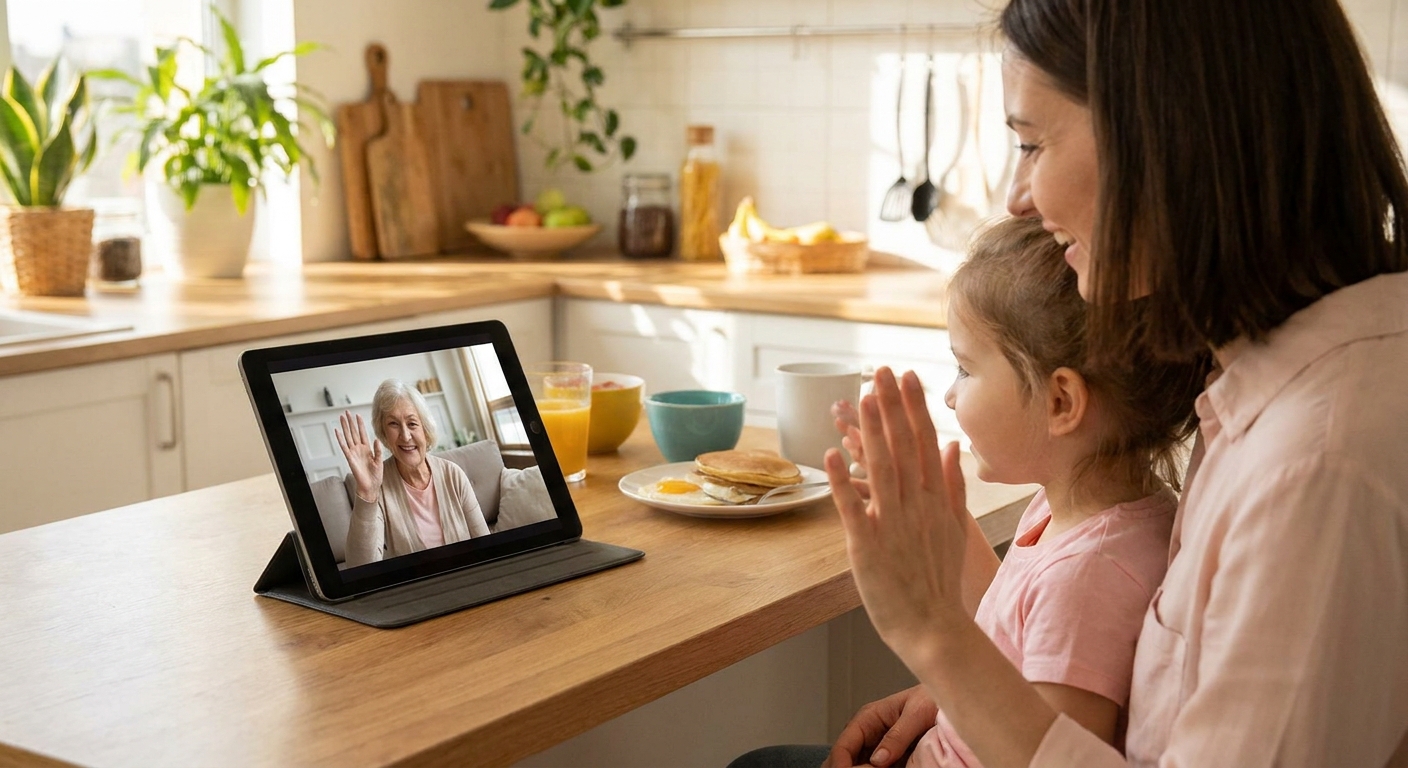
1) Start with a hello song that never changes
Kids love repetition, and grandparents love knowing exactly how to begin. A simple hello song turns the first 30 seconds from awkward to warm, especially for toddlers who freeze when a screen suddenly says their name.
Make it easy
- Pick one tune and keep it the same for a month. Any familiar melody works.
- Keep the words predictable: “Hello Grandma, hello Grandpa, we are glad you are here.”
- Add one tiny motion: a wave, a heart hands sign, or a blown kiss.
Little trick from my house: Let the grandparent be the “song starter.” Kids perk up when someone else leads.
2) Do a call-and-response song so everyone gets a turn
If you have more than one child, or a shy kid, call-and-response is your best friend. It creates a built-in rhythm for taking turns, and it keeps the grandparent from feeling like they are performing the whole time.
Try:
- Name echoes: Grandparent sings, “I say Liii-ly,” and the child echoes, “Liii-ly!”
- Sound echoes: “Clap clap,” “stomp stomp,” “shh shh,” “la la.”
- Question echoes: “How are you today?” with the child replying by singing “I’m happy” or “I’m sleepy.”
If you want a ready list of kid-tested options, our call-and-response songs work beautifully on video calls too.
3) Let grandparents be the bedtime storyteller, even from far away
Bedtime is emotional territory in the best way. When grandparents own one small piece of it, kids feel held by more than one set of arms, even across the miles.
Two formats that actually work on a screen
- The short chapter: Grandparent reads one chapter (or just 5 pages) from a longer book and leaves on a cliffhanger.
- The repeated favorite: The same picture book every week. Toddlers will happily hear it 50 times, and grandparents will start “performing” it without realizing they are doing it.
If the call time is earlier than bedtime: Make it “pajama practice.” Kids can wear pajamas for the call, hear the story, then move on with the evening.
If bedtime songs are more your family’s thing, I keep a cozy list in The Science of Lullabies that grandparents can borrow from too.
4) Mail a “story prop envelope” and use it like a surprise bag
This one is ridiculously effective, because kids love physical objects and grandparents love having something in their hands besides a phone.
You send grandparents a regular envelope with 5 to 10 flat items, like:
- a paper heart
- a sticker sheet (they can peel one per call)
- a small photo of the child
- a drawn character face
- a few cutout shapes (moon, star, leaf)
On the call, the grandparent pulls one item out and says, “This is today’s story helper.” Then they build a tiny story around it, and your child adds one detail. “The heart went to the park.” “It met a dog!” “The dog wanted pizza!”
Keep it low pressure: The story can be 60 seconds long. A short shared story beats a long forced one every single time.
5) Sing with homemade instruments so it feels like a jam session
Video call audio can be glitchy, and trying to sing in perfect sync can make everyone feel a little bonkers. Instruments fix that, because you can take turns making sound rather than trying to line up every beat.
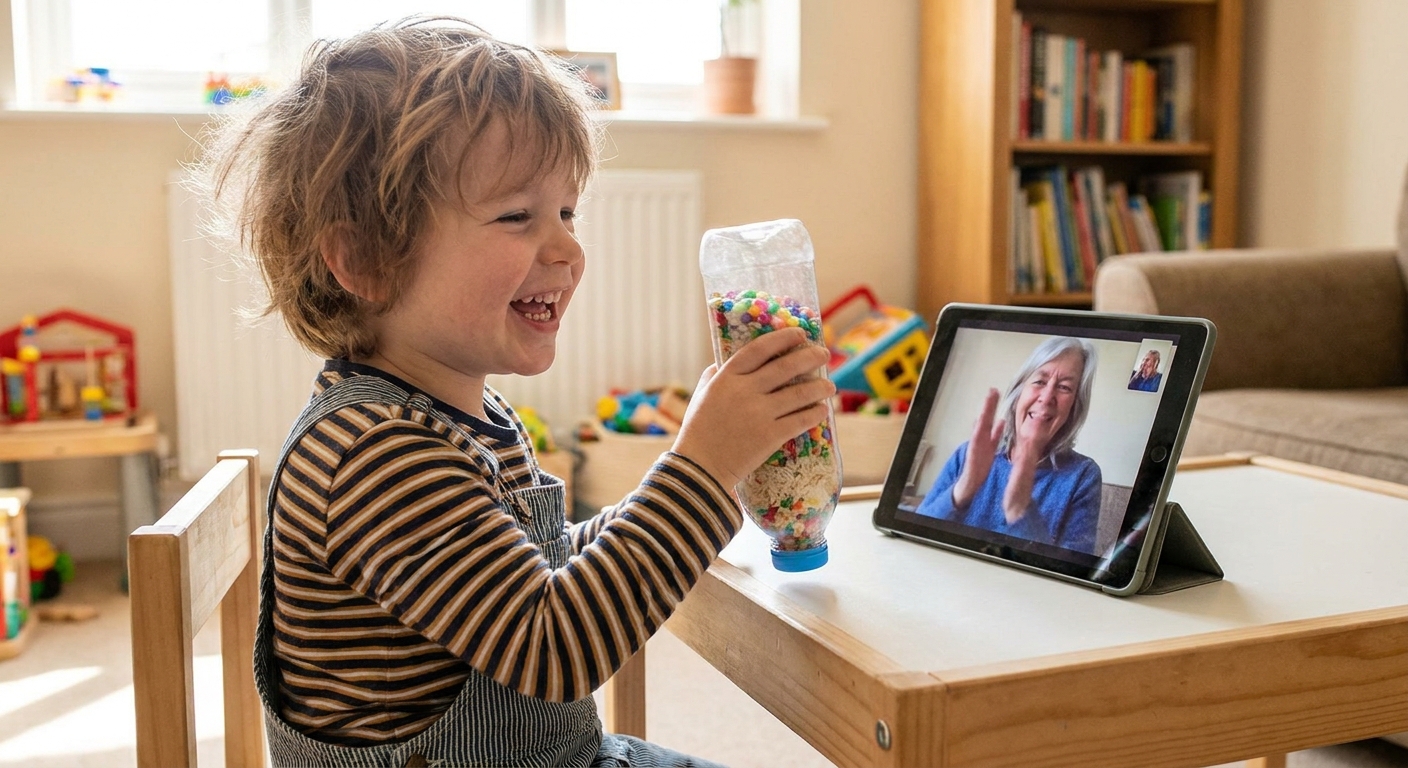
Easy instrument plan
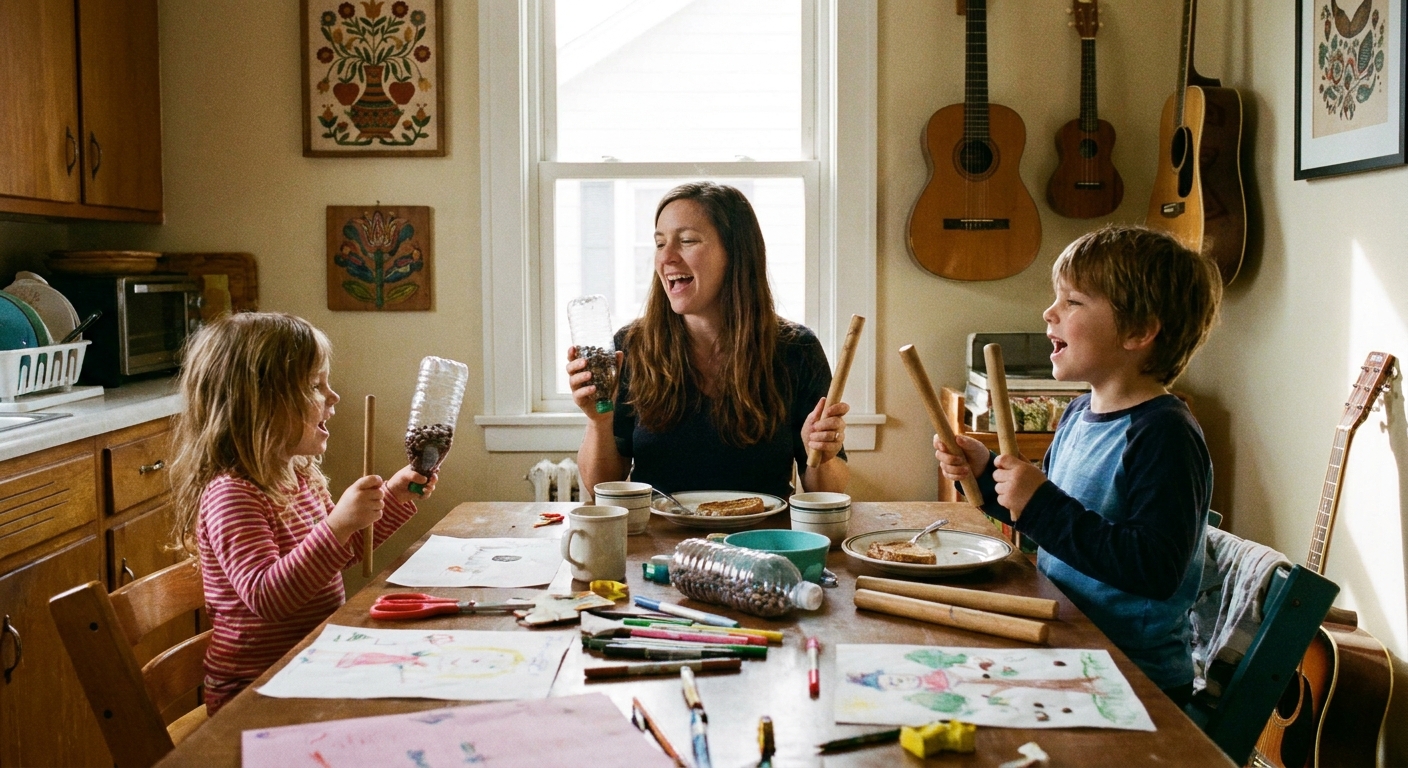
- Kids use anything safe and noisy: a shaker, a wooden spoon on a pot, a tissue box guitar.
- Grandparents use what they have: keys as a jingle, a container as a drum, clapping, or tapping a table.
- Take turns: “Grandpa plays first,” then “My turn,” then “Together for the last 10 seconds.”
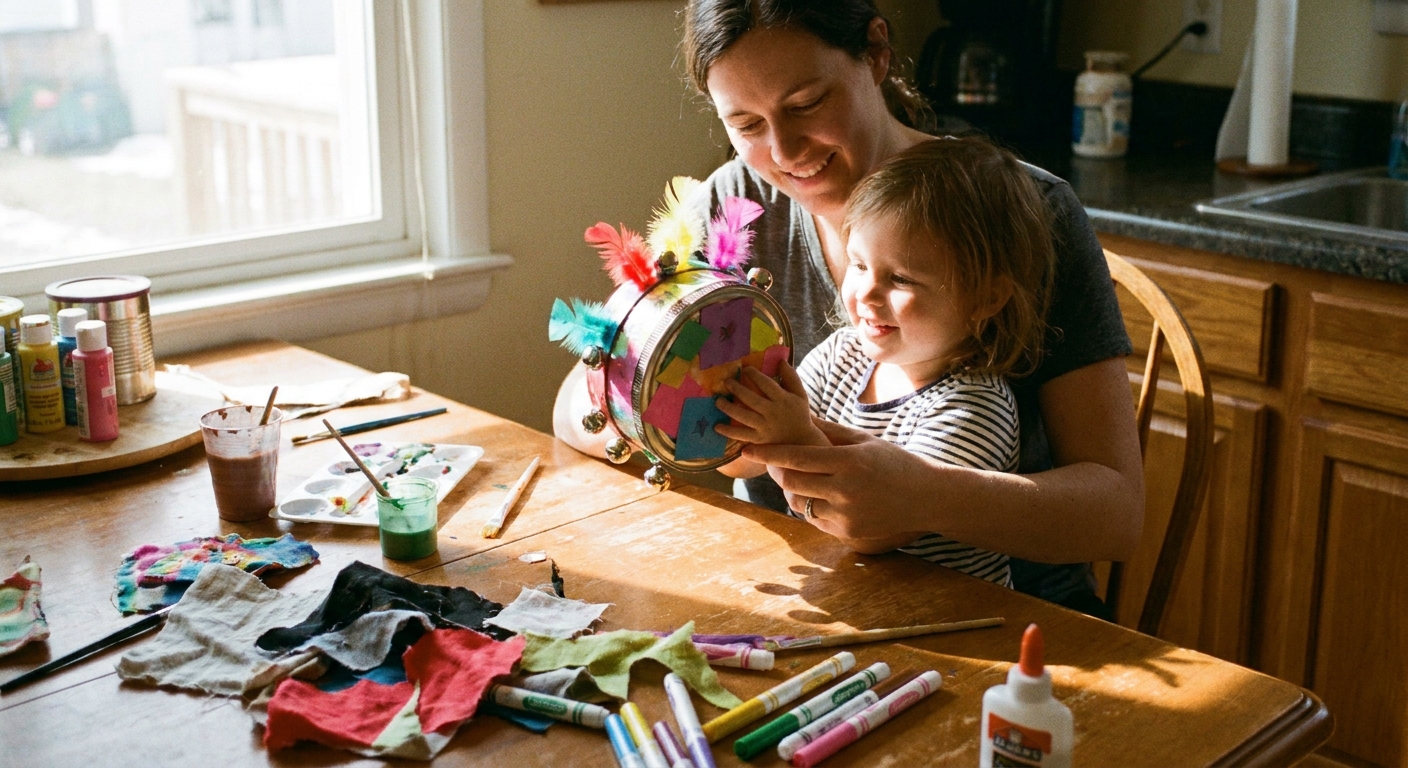
If your family wants a simple DIY instrument to make once and use for months, try our DIY shakers and rhythm sticks or the wonderfully loud coffee can hand drums.
6) Build a shared “song scene” as a mini craft project
When kids are wiggly on calls, a craft gives their hands a job, and it gives grandparents something to talk about besides “How was school?”
Here’s the version I like because it is quick and not precious: make a little background scene for a song, then sing it while you point to the parts.
- Choose a simple song: animals, weather, bedtime, anything.
- Make a background: a paper plate sun, a blue paper “pond,” a cardboard “barn.”
- During the call, the child moves one character around the scene while the grandparent sings.
You can use our paper song scene idea as a starting point and adapt it for whatever your child is into this week.
7) Create a recurring “grandparent soundtrack” ritual
This is the long-game idea. It turns random calls into something kids anticipate, and it helps grandparents feel woven into the week.
Pick one tiny repeating role
- Monday Morning Song: A quick upbeat tune to start the week. If mornings are your chaos zone, borrow from upbeat morning songs.
- Wednesday Silly Song: Grandparent teaches one silly song or makes up a new verse each week.
- Sunday Story Starter: Grandparent begins a story with one sentence, your child adds one, you add one, and you stop there. Next call, you recap and continue.
My best advice: Keep it short enough that it can survive real life. Ten minutes done consistently beats forty minutes that happens once a month.
Quick setup tips for smoother calls
These are the little practical tweaks that can make the difference between “This is frustrating” and “That was sweet.”
- Prop the device at kid height. A stack of books on the table works great.
- Use a lamp facing the child. Grandparents read facial expressions, not pixels.
- Have one “call basket.” Put the book, a shaker, and a few crayons in it so you are not hunting around mid-call.
- Expect a warm-up minute. Some kids need time to watch and listen before they join in.
- Choose turn-taking over perfect harmony. Echo songs and instrument turns are less glitchy than trying to sing simultaneously.
When kids are shy, wiggly, or totally uninterested
It happens. Even with my three, the same child who begs for a call one day will hide under the table the next day like I have asked them to perform on Broadway.
Try these gentle pivots
- The “show and tell” bridge: Kid shows one toy, grandparent gives it a silly voice and tells a 20-second story about it.
- The movement reset: Switch to an action rhyme. Our classic action songs are perfect for quick wiggle breaks.
- The side-by-side option: Your child colors while the grandparent reads. Participation can be quiet.
- The parent-as-narrator: You describe what your child is doing, and the grandparent reacts. That still builds connection.
A simple closing that feels like a hug
Endings can get abrupt on video calls. I like a predictable closing that gives kids a last moment of connection before the screen goes dark.
- Sing a 10-second “goodbye” song.
- Blow three kisses together.
- Do one family sign or gesture (a wave, heart hands, a silly salute).
If you want to weave in a little extra communication help for babies and toddlers, pairing a goodbye song with a sign can be lovely. We have a gentle intro in baby sign language with nursery rhymes.
Across the miles, you are not just filling time. You are building family muscle memory. A familiar tune, a repeated story voice, a silly shared ritual. Those are the threads kids carry for years.