
There is a particular kind of silence that shows up at the dinner table right before a tiny voice announces, “I do not like any of this.” I have lived that silence. More than once.
When one of my kids was deep in a picky phase, I started treating mealtime like storytime. Not a performance, not a bribe, not a “take three bites.” Just a little rhythm, a little silliness, and something predictable to hold onto while new foods felt unfamiliar. The funny thing is, when the table feels safe, curiosity can wander in on its own.
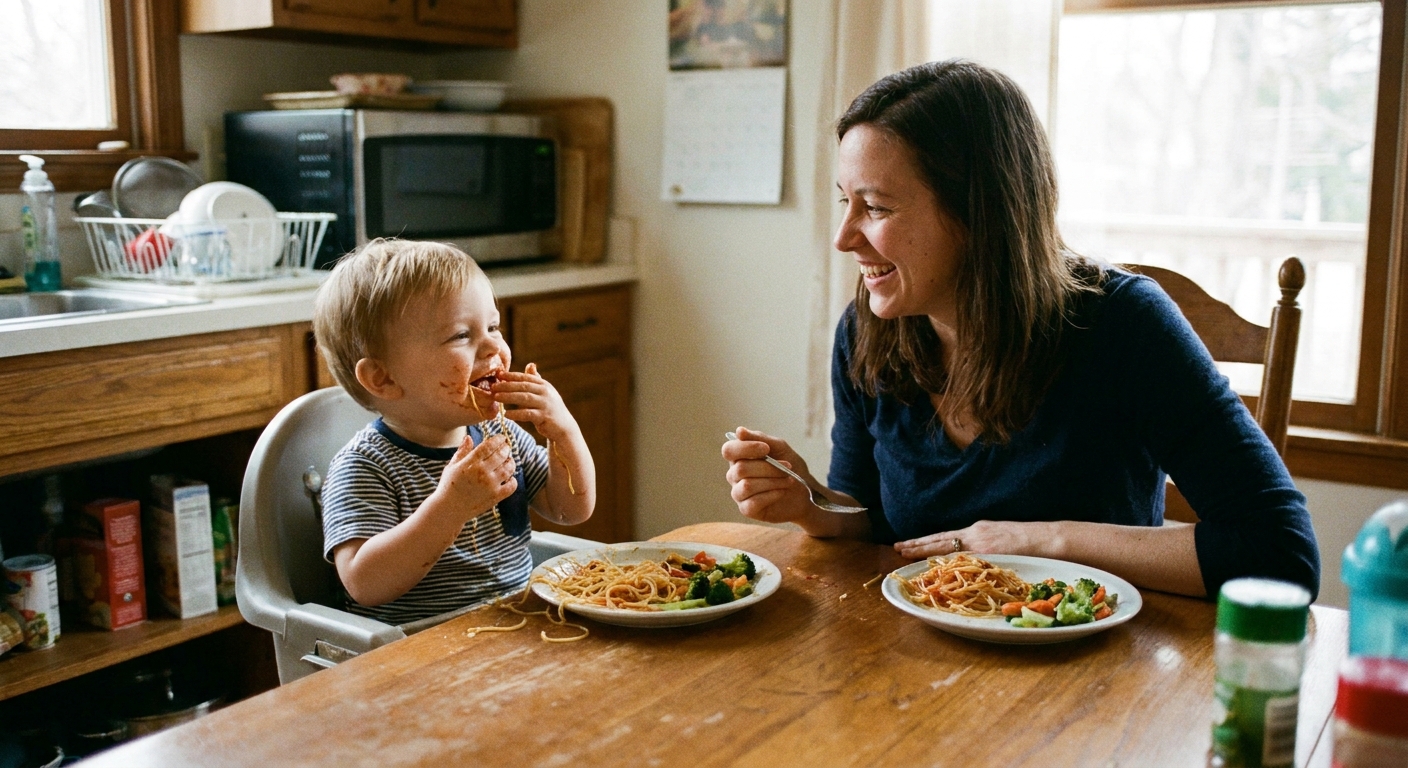
Below are 9 food-themed nursery rhymes and chant-like little songs you can use right at the table. Each one includes an easy way to do it and a gentle “picky-eater friendly” twist so no one feels put on the spot.
How to use table rhymes
- Keep it short. Two verses is plenty. Stop while it’s still fun.
- Sing about the food, not about eating the food. Your goal is comfort and curiosity, not compliance.
- Offer a “participation choice.” Kids can sing, tap the table, point, smell, lick, or simply listen.
- Let the food be the “character.” When broccoli gets a voice, it feels less like a demand and more like play.
- Keep it safe. Save singing for before and after bites (no songs with food in mouths), prep choking-risk foods appropriately for your child, and keep utensil “drumming” gentle and supervised.
- Watch the energy. Some kids find singing overstimulating. If it ramps your child up, switch to a spoken chant, a slow tap-tap rhythm, or go back to quiet for a bit.
If you want more everyday rhythm helpers, our transition songs for tidy-up time use the same idea: predictable words that can make tricky moments smoother.
9 food-themed nursery rhymes
1) Pat-a-cake (dinner twist)
Try it at the table: Do the traditional clapping pattern or tap knees under the table if you’re balancing plates.
Words to use:
Pat-a-cake, pat-a-cake, baker’s pan,
Bake me a dinner as fast as you can.
Roll it, and stir it, and make it just right,
Put it on the table for our hungry delight.
Picky-eater friendly twist: Let your child “bake” the meal by choosing the last word: “delight,” “tonight,” or “all right.” Tiny control, big payoff.
2) Hot Cross Buns (any little bites)
This one works well because it’s repetitive and soothing. (It’s traditionally about buns, but the tune is great for swapping in whatever you’re serving.)
Try it at the table: Tap three times on the table for “one a penny, two a penny.”
Words to use:
Hot cross buns, hot cross buns,
One a penny, two a penny, hot cross buns.
If you have no daughters, if you have no sons,
One a penny, two a penny, hot cross buns.
Picky-eater friendly twist: Swap in whatever is on the plate: “warm soft peas,” “tiny fish sticks,” “buttered noodles.” The tune stays, the food changes.
3) Peas, Peas, Come Out and Play
Try it at the table: You sing the first line, your child answers with “Hooray!” or a silly sound.
Words to use:
Peas, peas, come out and play,
On my spoon just for today.
Peas, peas, bright and green,
Prettiest peas I’ve ever seen.
Picky-eater friendly twist: “Come out and play” can mean touching one pea, lining them up, or giving them a ride on a fork. Eating is optional.
4) Five Little Carrot Coins
Try it at the table: Count real carrot slices, cucumber rounds, or crackers. If you don’t have five, use the number you have.
Words to use:
Five little carrot coins, sitting in a row,
One rolled off the plate, and where did it go?
Four little carrot coins…
Continue down to one.
Picky-eater friendly twist: The “rolled off” coin can roll into a napkin, a cup, or “into my tummy” if your child is into it. Let them decide the ending each time.
5) This Is the Way We Stir Our Soup
If you already love routine songs, this one fits right in.
Tune: Sing it to the tune of “Here We Go Round the Mulberry Bush.”
Try it at the table: Sing it while stirring yogurt, soup, oatmeal, or even just pretending with an empty spoon.
Words to use:
This is the way we stir our soup, stir our soup, stir our soup,
This is the way we stir our soup, all through dinner time.
Add verses: “sip our soup,” “smell our soup,” “cool our soup,” or “dip our bread.”
Picky-eater friendly twist: Include a verse for “This is the way we take a break.” Many picky eaters do better with pauses. Normalize it.
6) Apple, Apple, Round and Bright
Try it at the table: Hold up the fruit or point to it. Invite a sniff. That’s it.
Words to use:
Apple, apple, round and bright,
Red or yellow, what a sight.
Crunchy, juicy, sweet to smell,
Apple, apple, you taste well.
Picky-eater friendly twist: Replace “you taste well” with “you sit here well” if tasting feels like too much today.
7) Little Bowl of Rice
This is a steady, almost-lullaby rhythm. It can help when the table is getting wiggly.
Try it at the table: Say it slowly, like a chant, while everyone takes a breath.
Words to use:
Little bowl of rice, warm and white,
Soft like snow in kitchen light.
One small bite or just a smell,
Either way, you’re doing well.
Picky-eater friendly twist: That last line is your secret tool. It praises participation, not consumption.
8) Banana Phone (made-up rhyme)
This one is pure play. If you have a banana, it becomes a phone. If you don’t, a spoon works too.
Try it at the table: Whisper into the “phone” and let your child answer.
Words to use:
Ring, ring, ring, it’s the banana phone,
Calling my tummy, saying “Hello!”
“Dear little eater, what do you say?”
“I might try a nibble, I might just play!”
Picky-eater friendly twist: Let the banana phone call the food instead: “Hello, broccoli forest, who lives in there?” It turns the plate into a story scene.
9) Pizza, Pizza, On My Plate
Try it at the table: Use it for anything customizable: tacos, sandwiches, bowls, even “snack plates.”
Words to use:
Pizza, pizza, on my plate,
Cheese and sauce are feeling great.
One topping, two topping, choose what you see,
Make a happy dinner, just for me.
Picky-eater friendly twist: The “toppings” can be on the side. A toddler can “choose what you see” by pointing, not eating.
If your child won’t eat
On the hard nights, I stick to rhymes that give kids a graceful exit. Here are three lines that can work with almost any meal:
- “You can look, you can smell, you can pass.”
- “New foods can feel funny, take your time.”
- “We all listen to our tummies.”
If bedtime is where food worries finally show up, you might also like these calming bedtime songs for settling bodies and minds after a big day.
Tiny table games
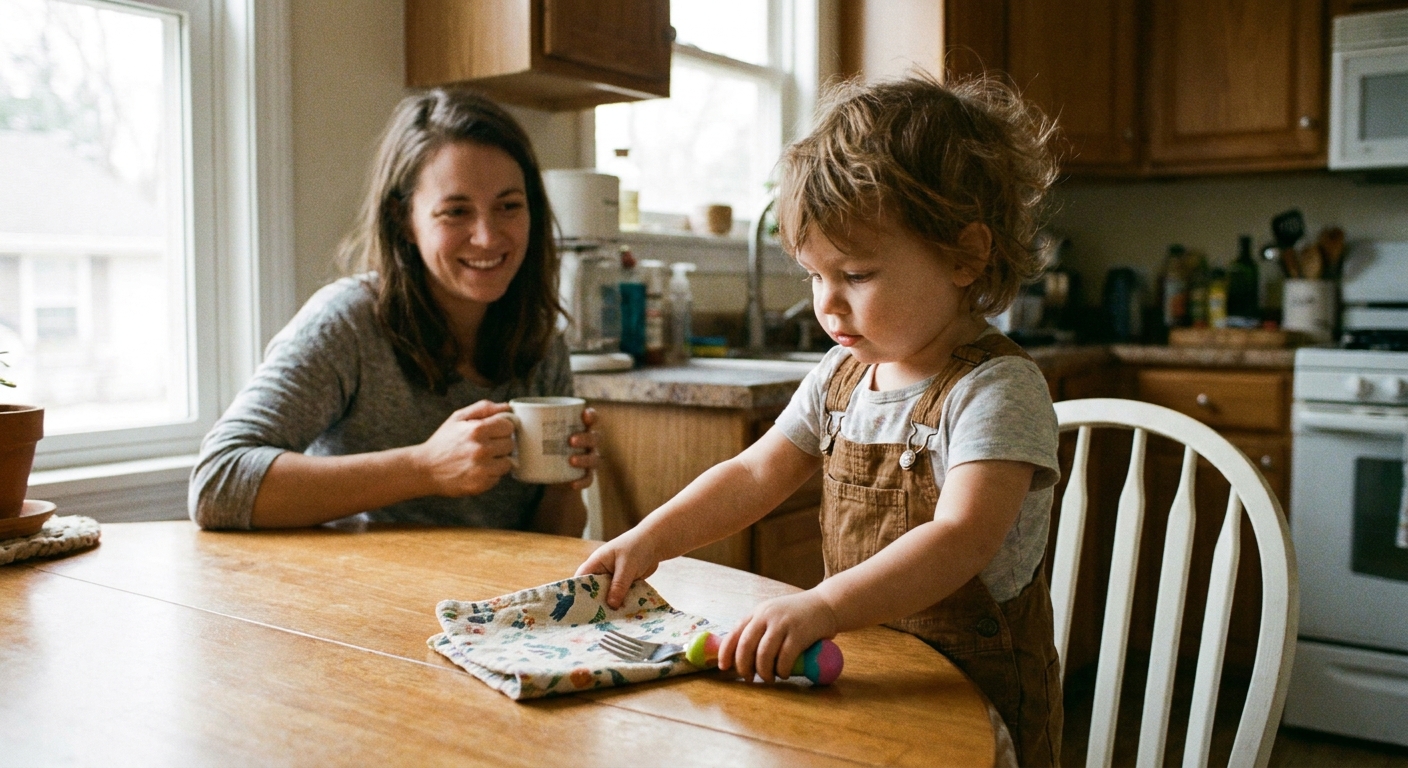
- Food parade: March one pea, one noodle, one blueberry across the plate while you chant.
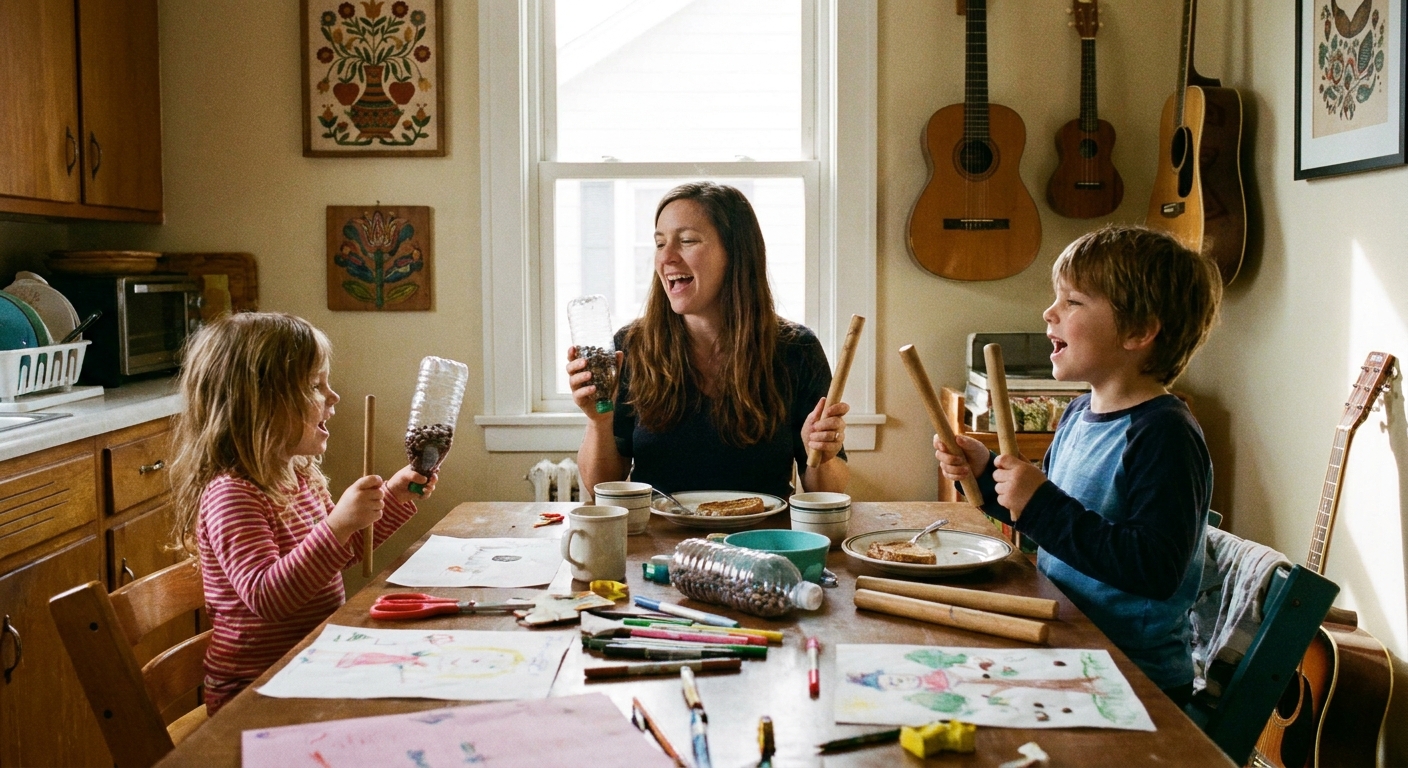
- Spoon drummer: Tap a gentle beat on the table (or your thigh) while you sing. Quiet beats count.
- Chef choice: Ask, “Should we sing the soup song fast or slow?” Let your child pick the tempo.
- Two-word review: After a rhyme, invite two words only: “warm,” “slippery,” “tiny,” “loud crunch.” No “good” or “bad” needed.
For more rhythm tools you can make with what you already have, see DIY shakers and rhythm sticks for family sing-alongs. A soft shaker in the kitchen can turn waiting for dinner into a mini concert.
Quick FAQ
Will singing at meals distract my child from eating?
Sometimes yes, and that’s not always a problem. For some toddlers, a calm distraction can lower pressure and help them stay at the table long enough for curiosity to show up. Keep songs short and return to regular conversation.
What if my child gets silly and starts throwing food?
Switch to a “hands busy” verse like stirring, tapping, or clapping under the table. If throwing continues, pause the song and move food out of reach for a moment. Songs are helpers, not handcuffs.
What age are these best for?
Most work from about 18 months through preschool, and older siblings often ham it up too. If your child is younger, slow the pace and focus on one repeated line.
Can I use sign language with these rhymes?
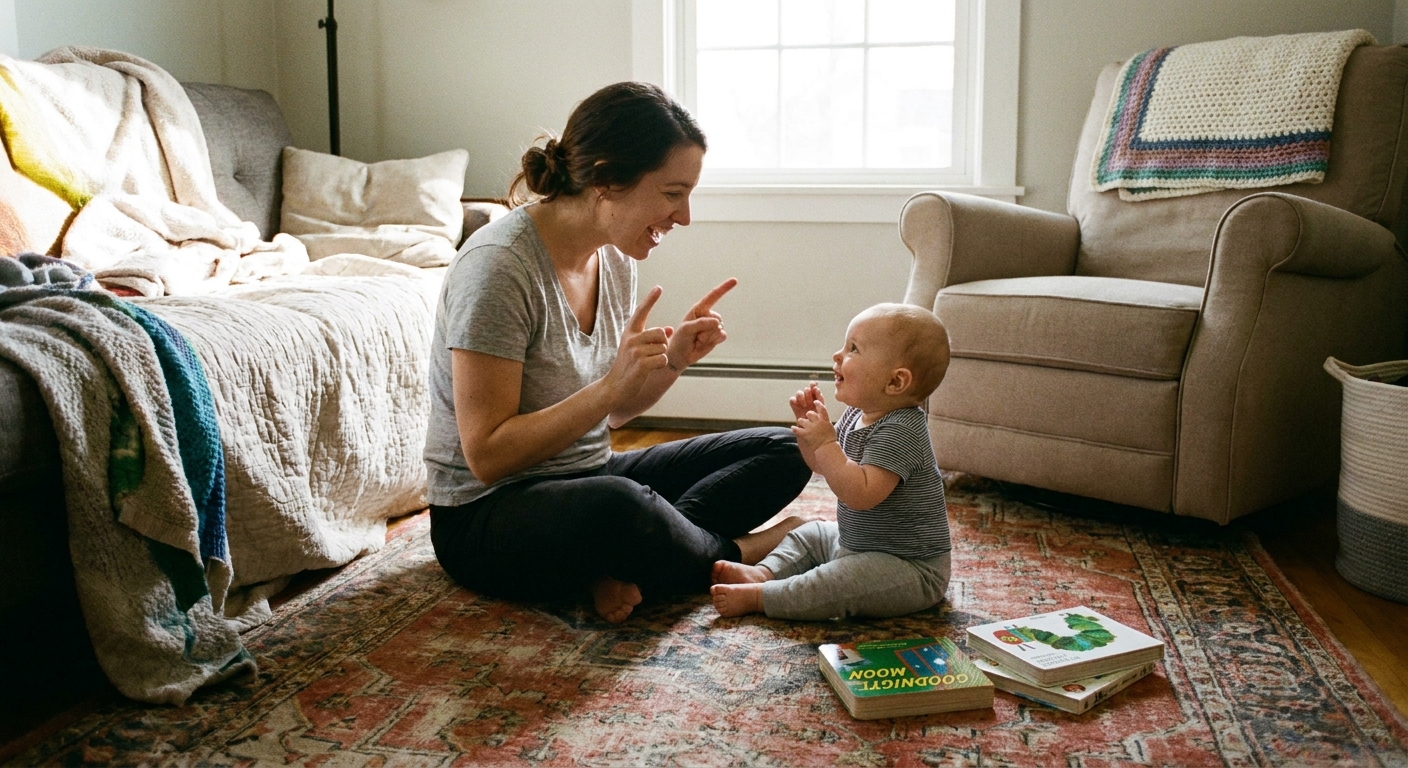
Yes. Simple signs like eat, more, all done, help, and please can make mealtime feel more predictable. Our guide on baby sign language with nursery rhymes has easy ideas for pairing signs with songs.
What if singing is too much for my child?
That’s okay. Try a spoken version, a whisper, or just a steady tap-tap rhythm. Some kids do best with fewer words and more predictability.
A gentle goal
My favorite mealtime goal is not “clean plate.” It’s “calm table.” If your child only sang and sniffed and stayed near you while you told a silly story about a runaway pea, that still counts as connection. And connection is often the first ingredient in trying something new.
If you want more rhymes for everyday routines, you can browse our Nursery Rhymes guide anytime.