
The fastest way I know to make a counting song “stick” is to give little hands something to hold. Years ago at a neighborhood playgroup, we kept losing track of our “five little monkeys” because someone would shout, “I’M THE MONKEY!” and the whole counting line fell apart. So I grabbed a handful of wooden clothespins, a marker, and a cereal box. Ten minutes later, we had a tiny cast of characters that could clip, hop, and tumble right on cue.
These clothespin characters are simple, sturdy, and just interactive enough to help toddlers connect the number word they sing to the quantity they see. Plus, clothespins offer sneaky fine-motor practice.
Why clothespins work for early counting
- One-to-one correspondence: one clothespin equals one monkey, duck, or speckled frog.
- Counting backward feels real: you physically remove one character each verse.
- Fine motor practice: pinching a clothespin can help build hand strength and control over time.
- Low-prep repetition: you can reuse the same set for dozens of songs.
If your little one loves movement songs, you can pair this craft with ideas from 15 Classic Action Songs for Preschool Fine Motor Skills to keep the energy happy and purposeful.
Materials (keep it simple)
- 10 wooden spring clothespins (start with 5 if you want the classic “Five Little…” set)
- Washable markers
- Optional: paint pens or acrylic paint (less washable, grown-up help)
- Cardstock or thin cardboard (a cereal box works)
- Scissors
- Optional: glue stick, googly eyes, yarn scraps, washi tape
- Optional: clear tape for a tougher finish (grown-up step)
My safety note from the craft table: clothespins pinch. If you have a baby sibling nearby, this is an “older toddler with grown-up supervision” activity, and the finished characters should be stored out of reach of mouthing babies. Also, little add-ons (like googly eyes, yarn, and washi tape) can become choking hazards if they come loose, so skip them for chewers and check them now and then.
Make the character set
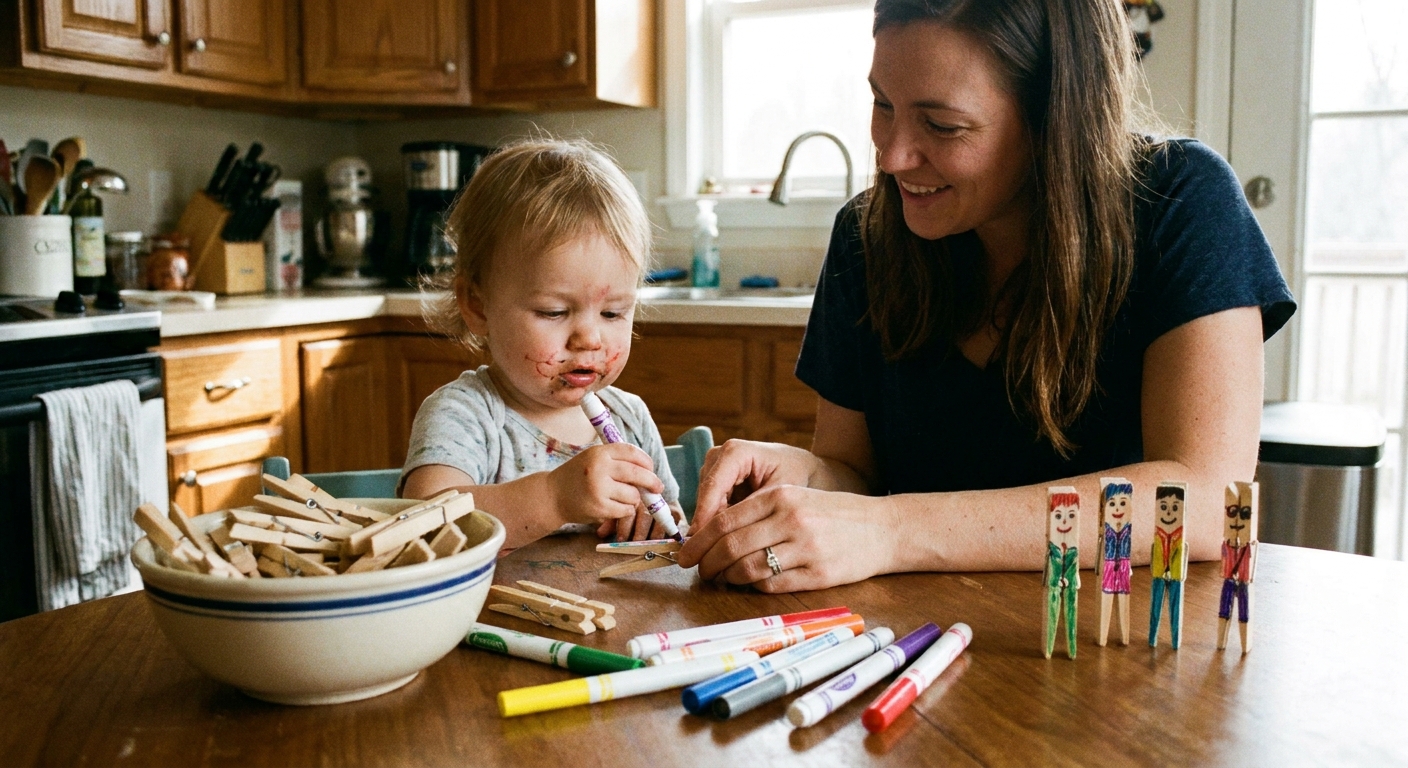
Before you start decorating, pick which side is your “front.” I like putting faces on the non-pinching, solid wood side so little fingers do not rub the design every time they squeeze.
Step 1: Decide your cast
You can do five monkeys to start, or make ten so you can use them with more counting and number songs. I like ten because it opens up so many options later.
Step 2: Color-code for instant counting
For toddlers, matching is magic. Give each character a simple colored “shirt” (a band across the clothespin) so they are easy to spot and easy to recount when someone bumps the pile.
- Same color set: calmer, more uniform, great for “how many left?”
- Rainbow set: great for sorting and pattern play after the song
Step 3: Add faces toddlers can read
Keep the facial features bold and friendly: two dots for eyes and a curved smile. You can absolutely add googly eyes, but marker faces are less likely to pop off during enthusiastic singing.
Step 4: Add clip-on hats or ears (optional)
Cut a small shape from cardstock (monkey ears, a frog headband, a little crown). Slide it into the open jaws of the clothespin and close the pin to hold it in place. No glue needed, which is my favorite kind of crafting on busy days.
Step 5: Toughen them up (optional)
If you used markers and you know these will be played with daily, you can seal the colored areas with clear tape. If you choose to use any craft sealant, keep it as a grown-up-only step and let it dry fully before little hands take over.
Make a simple stage
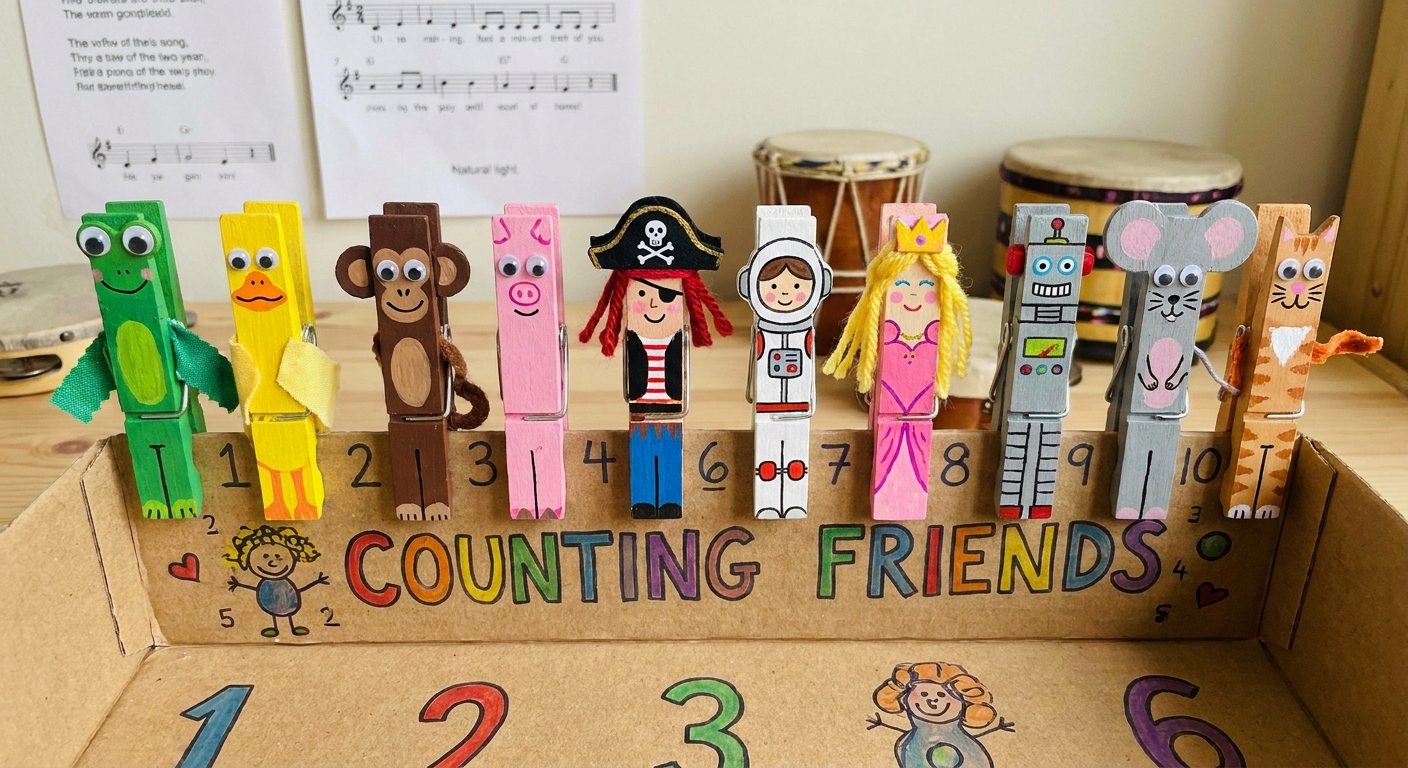
You do not need anything fancy. A stage just helps toddlers see the group clearly and understand what it means when “one falls off.”
Option A: Cardboard ledge
- Cut a strip of sturdy cardboard about the length of your clothespin lineup.
- Fold it into an L shape so it can stand up.
- Clip your characters along the top edge.
Option B: Bowl, box, or basket
Put the “waiting” characters in a small bowl. Each time you sing, a child clips the next one onto the stage. This is wonderful for kids who want a job.
If your family likes creating little song props, you might also enjoy Make a Paper Song Scene for another easy, story-like way to bring rhymes to life.
Use them with Five Little Monkeys
Here is the simple routine that works in real living rooms with real wiggles.
- Line up five monkeys clipped on your stage.
- Point as you sing “one, two, three, four, five” before you start the verses.
- On “fell off,” let your child unclip one monkey and drop it gently into a “bed” box or a basket.
- Pause and ask: “How many monkeys are left?” Then count the remaining pins together.
- Repeat until zero. Celebrate zero. In my house, that “none!” moment gets a big grin.
Little tip from my own kids: if a toddler insists on being the monkey who fell, let them. Have them be “Monkey Helper” who unclips the clothespin. Everybody wins.
Other songs that work well
Once you have clothespin characters, you can swap costumes or simply rename them. Toddlers are delightfully flexible about this.
- Five Little Ducks: ducks clip to a “pond” (blue paper on the table). Each verse, one duck swims away.
- Five Speckled Frogs: frogs sit on a paper “log.” Each frog jumps into the “pool.”
- Ten in the Bed: make ten simple “kids in pajamas” pins and slide one away each time.
- Counting and alphabet songs: use numbered dots on the backs of the pins so you can mix counting with early symbol recognition.
For more ideas to stretch beyond the usual starter songs, visit Counting and Alphabet Songs Beyond the ABCs.
Make the math visible
Add number dots on the back
Put one dot on Monkey 1, two dots on Monkey 2, and so on. Toddlers can match quantity to the number word, even if they are not ready to recognize numerals.
Try a simple “how many left?” chant
After a monkey falls, pause and say:
“Let’s check, let’s see. How many can it be?”
Then count together, touching each clothespin as you say the number.
Sort after the song
Sorting is early math too. Invite your child to sort by color, by “hat” type, or by “happy face” versus “sleepy face.”
Toddler troubleshooting
“My child keeps snapping the pins.”
Totally normal. Start by letting them practice opening and closing on something sturdy like a strip of cardboard or the edge of a shoebox. Then switch to clipping on the stage. Keep sessions short, like one song, not a whole concert.
“They just want to play and not count.”
That is still a win. Narrate lightly: “You have three monkeys in your hand!” Over time, counting sneaks in.
“Markers rub off.”
Use a darker marker, let it dry, and wrap the colored band with clear tape. It is quick and surprisingly durable.
Storage and cleanup
I like to keep the characters clipped to a piece of cardboard and slide the whole thing into a gallon zip bag or a small shoebox. For cleanup, a quick wipe with a slightly damp cloth is usually enough. Try not to soak wooden pins, since they can swell and get stiff.
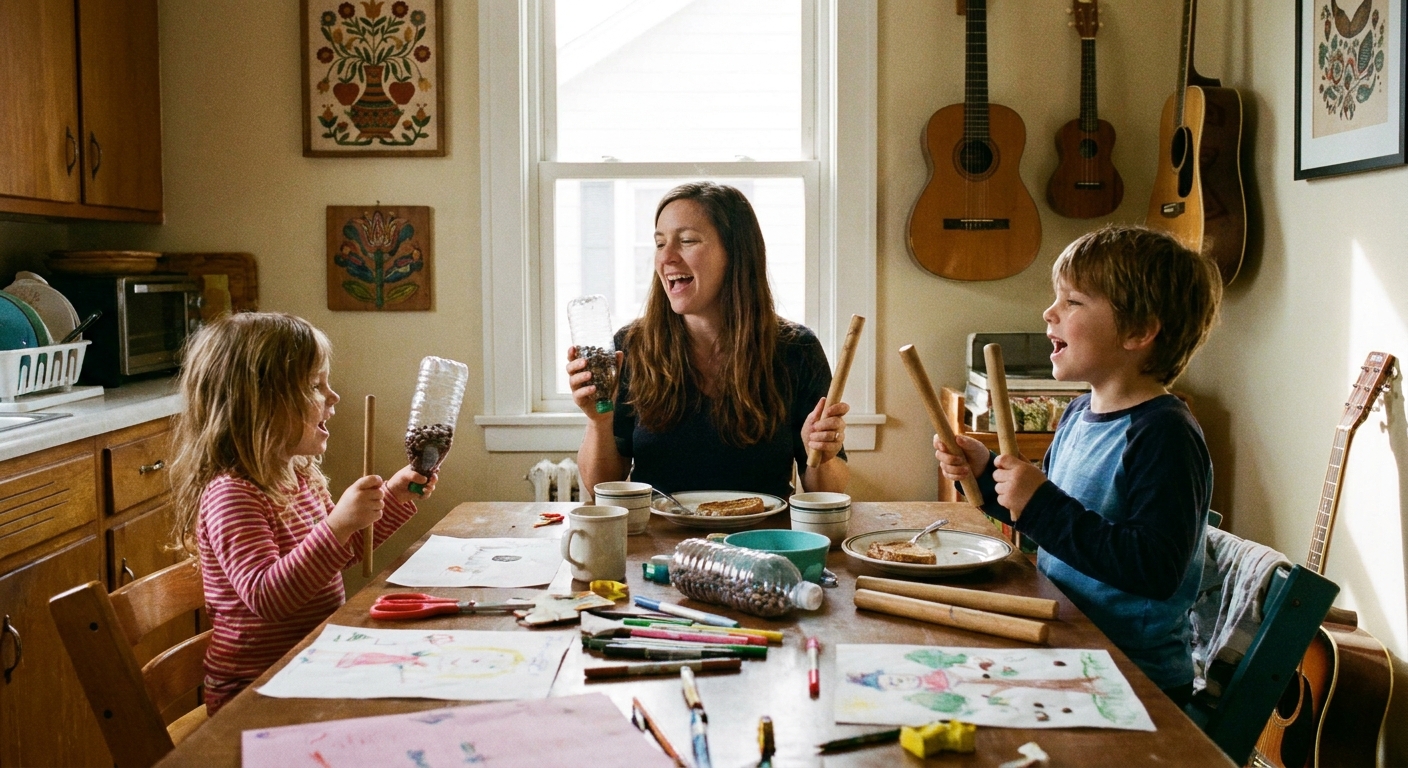
If you are already in a music-making mood, our DIY Shakers and Rhythm Sticks for Family Sing-Alongs pairs nicely with these counting characters for a full “kitchen table band” moment.
FAQ
What age is this best for?
I love it for ages 2 to 5, with close supervision for younger toddlers because of pinching and small add-ons that could come loose.
Do I need five or ten characters?
Start with five if your child is brand new to counting songs. Make ten if you want the set to grow with you and support counting up and counting down later.
Can I do this without any glue?
Yes. Markers alone work, and clip-in paper accessories (ears, hats) are a wonderful no-glue trick.