
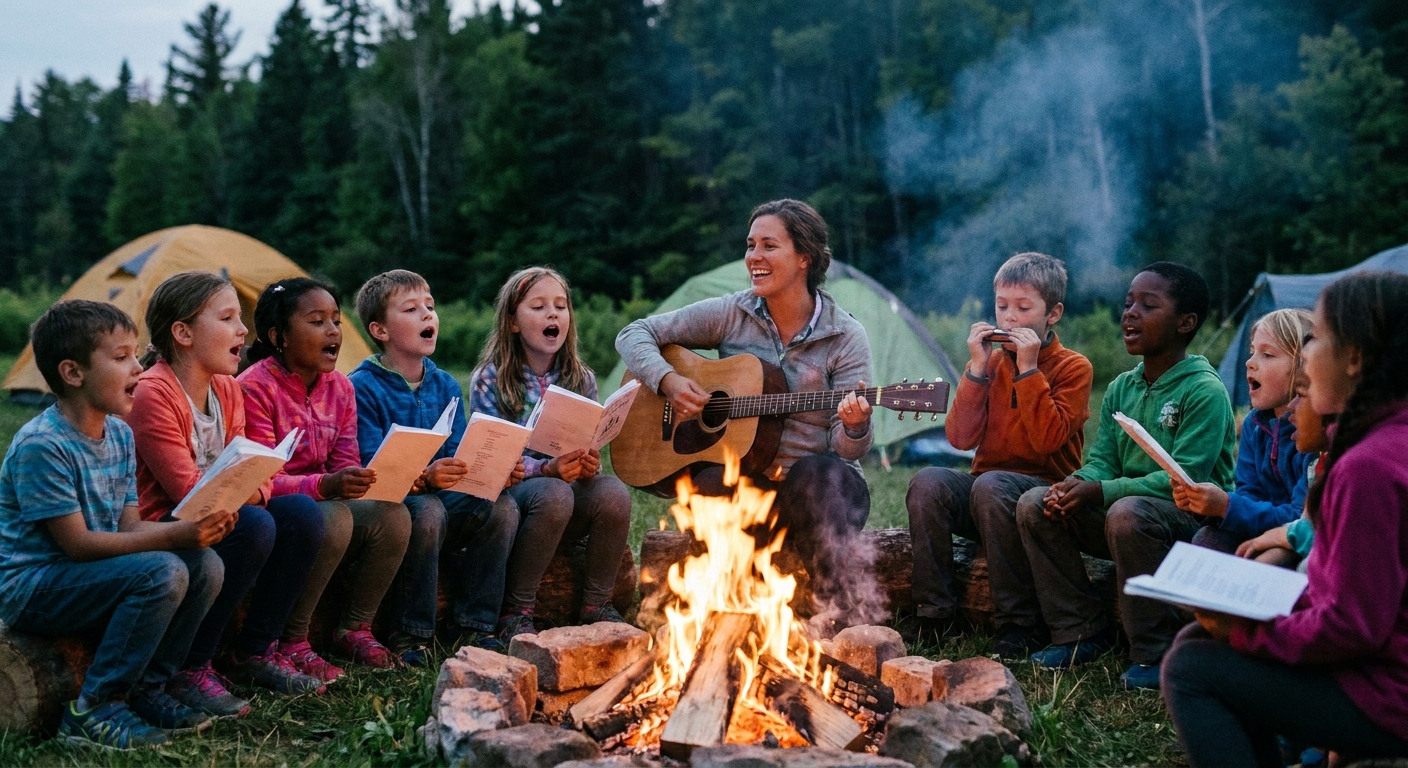
Campfires have a funny way of turning even the shyest kid into a bold performer. Something about the crackle, the snacks, and the circle of faces makes everyone want to sing. These silly campfire songs are my go-to picks when I want kids laughing, moving, and joining in fast, even if nobody remembers all the words.
Before you sing
Keep it short. A chorus kids can learn in one minute beats a long verse every time.
Use call-and-response. You sing a line, they echo it back. This helps younger kids who can’t read yet.
Set a volume rule. Quiet verses, loud chorus, or vice versa. It adds structure and keeps the group from getting too wild.
Campground manners. If you’re in a campground, assume sound carries. I like to keep the loudest songs early, then switch to quieter echoes and humming once it gets dark.
Safety note. If you’re near a real fire, keep kids seated behind a clear boundary and assign one adult to “fire watching” so you can lead without multitasking. Tie back long hair, skip running games near flames, and keep roasting sticks pointed down when not in use.
Best by age
- Toddlers and preschoolers: Boom Chicka Boom, Animal Sound Song, If You’re Happy and You Know It
- Kindergarten and up: Moose Song, B-I-N-G-O, Princess Pat
- Mixed ages: Repeat After Me, Peanut Butter and Jelly
1) The Moose Song
Best for: Big laughs and repeating patterns
How it goes: This is the classic “great big moose” camp song. It works because the lines are short and the ending is silly. Add motions like antlers and a dramatic “drinking” action.
Starter lines: “There was a great big moose” (echo) “there was a great big moose.” Then: “He liked to drink a lot of juice” (echo) “he liked to drink a lot of juice.”
Make it kid-proof: Keep verses to two or three, then end on purpose while they still want more.
2) Boom Chicka Boom
Best for: Instant participation, all ages
How it goes: Leader calls: “I said a boom chicka boom,” group repeats. Then you switch up the style: whispering, robot voice, opera voice, baby voice, sleepy voice.
Tip: Avoid any style prompts that make kids tease others. Keep it silly, not personal.
3) Repeat After Me (Silly Echo Song)
Best for: Younger kids and mixed ages
How it goes: You make up short lines and they echo. Examples:
- “My marshmallow fell,” (echo) “my marshmallow fell.”
- “Now it is black,” (echo) “now it is black.”
- “I still will eat it,” (echo) “I still will eat it.”
Make it yours: Swap in camping details like tent zippers, flashlight beams, or owl hoots.
4) Peanut Butter and Jelly
Best for: Rhythm and clapping
How it goes: Lots of camps use a chant-style song with a steady clap. It’s more about the groove than perfect lyrics.
Starter chant: “Peanut, peanut butter” (clap clap). “Jelly, jelly” (clap clap). “Peanut butter and jelly” (clap clap clap).
Optional add-on: Tap knees, then clap, then snap in a repeating pattern. If snapping is tricky, tap shoulders instead.
5) The Princess Pat (With motions)
Best for: Keeping hands busy, preventing fidgeting
How it goes: This one usually includes color or object callouts and simple motions that repeat.
Starter lines: “The Princess Pat” (pat your head). “Lived in a tree” (raise your arms like branches). “She sailed across” (hand like a boat). “The seven seas” (wave your hands).
Important: Some versions include outdated or unkind lyrics, and some groups skip certain verses. I always preview the words first and choose a modern, respectful version that fits the kids in front of me.
6) Baby Shark (Campfire remix)
Best for: When you need a guaranteed hit
How it goes: Keep the familiar pattern, then remix it with camping roles:
- “Flashlight shark,” (make a flashlight beam with your hands)
- “S’more shark,” (pretend to stack graham crackers)
- “Sleeping bag shark,” (zip motion)
Why it works: Kids already know the structure, so even new words feel easy.
7) B-I-N-G-O (With a twist)
Best for: Memory and listening
How it goes: The classic clap-out-a-letter pattern is perfect around a fire.
Camp twist that keeps the rhythm: Keep “BINGO,” but change the story. For example: “There was a happy camper and BINGO was their name-o.”
If you want to rename the dog: It can be fun, but five letters matters for the clap pattern. If your word has a different number of letters, the rhythm will change, and that’s okay if your group rolls with it.
8) If You’re Happy and You Know It (Camp version)
Best for: Movement breaks
How it goes: Add camp actions:
- “Stomp your boots”
- “Zip your tent”
- “Shine your light”
- “Roast that marshmallow”
Keep it safe: If you’re close to a fire, choose seated actions like clapping, patting knees, or humming.
9) The Singing Repeat Song
Best for: Big groups where you want everyone included
How it works: Pick one simple line, then go around the circle and each person repeats it in a different voice. Examples:
- “The stars are bright tonight.”
- “We love gooey s’mores.”
- “I hear an owl.”
Why it’s great: Kids get a turn without needing to invent new lyrics.
10) The Animal Sound Song
Best for: Wiggles, giggles, and preschoolers
How it goes: Choose an animal, sing one line, make the sound. Then repeat with a new animal. Camping-friendly picks: owl, cricket, bear, raccoon, frog.
Make it calmer: Use only “night sounds” and keep the volume low, like a quiet game.
Easy props
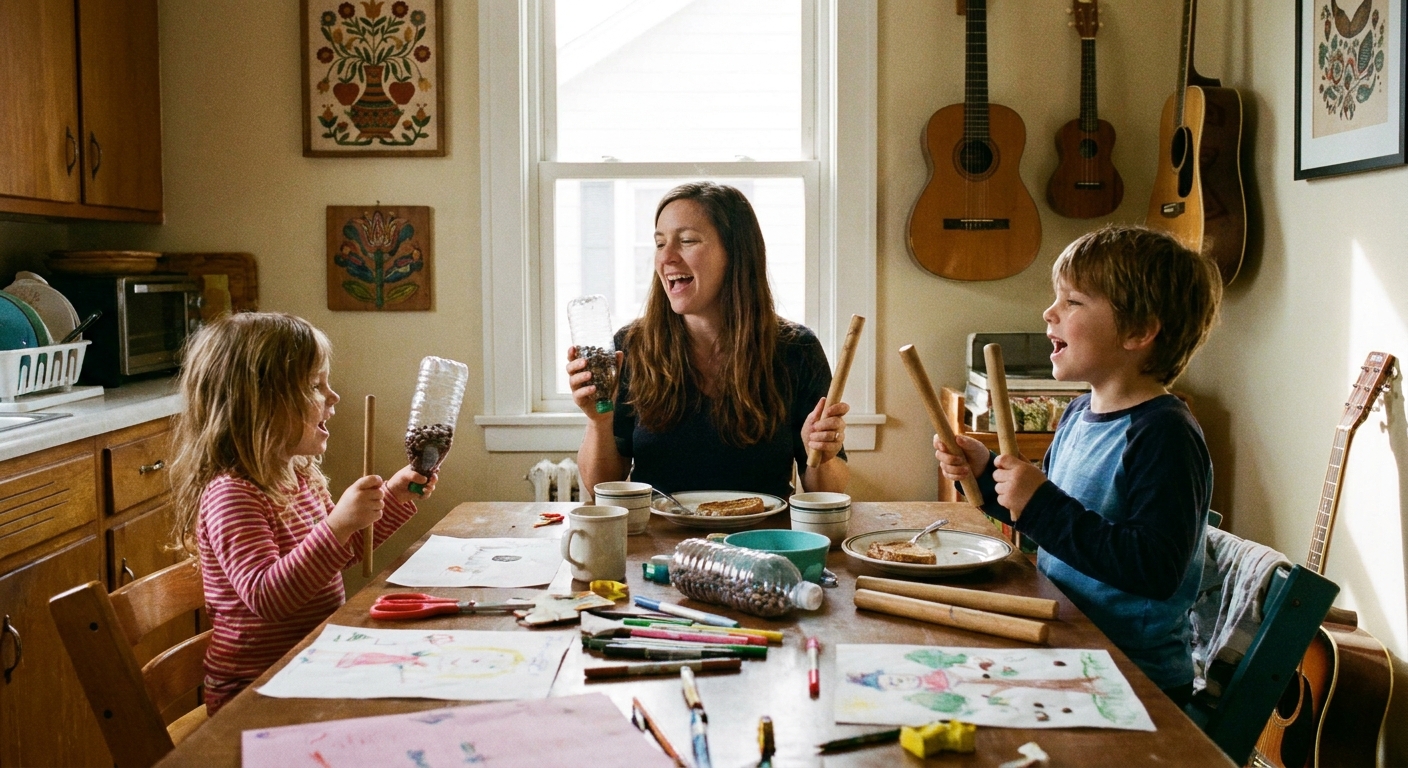
If you want to add rhythm without hauling instruments, homemade shakers and rhythm sticks are a lifesaver. You can make them with kid-safe materials before your trip and bring them in a bag.
Try this simple guide: DIY Shakers and Rhythm Sticks for Family Sing-Alongs.
More movement songs
Sometimes kids have energy to burn before they can settle into quieter singing. Action songs can help get the wiggles out.
Here are two favorites from Kididdles:
- 15 Classic Action Songs for Preschool Fine Motor Skills
- 10 Upbeat Morning Songs to Speed Up Your Toddler’s Routine
Wind-down idea
When you’re ready to calm things down, I like this simple transition: do one last loud chorus, then repeat it again as a whisper, then hum it together. It feels like a game, and it nudges everyone toward bedtime energy.
Quick set list
If you only want a simple plan, this order usually works well:
- Boom Chicka Boom
- If You’re Happy and You Know It (camp actions)
- Peanut Butter and Jelly
- B-I-N-G-O
- The Moose Song
- Quiet Animal Sound Song to wind down
Pick the songs that match your group’s age and energy, and remember: the best campfire songs are the ones kids can jump into without feeling like they have to be perfect.